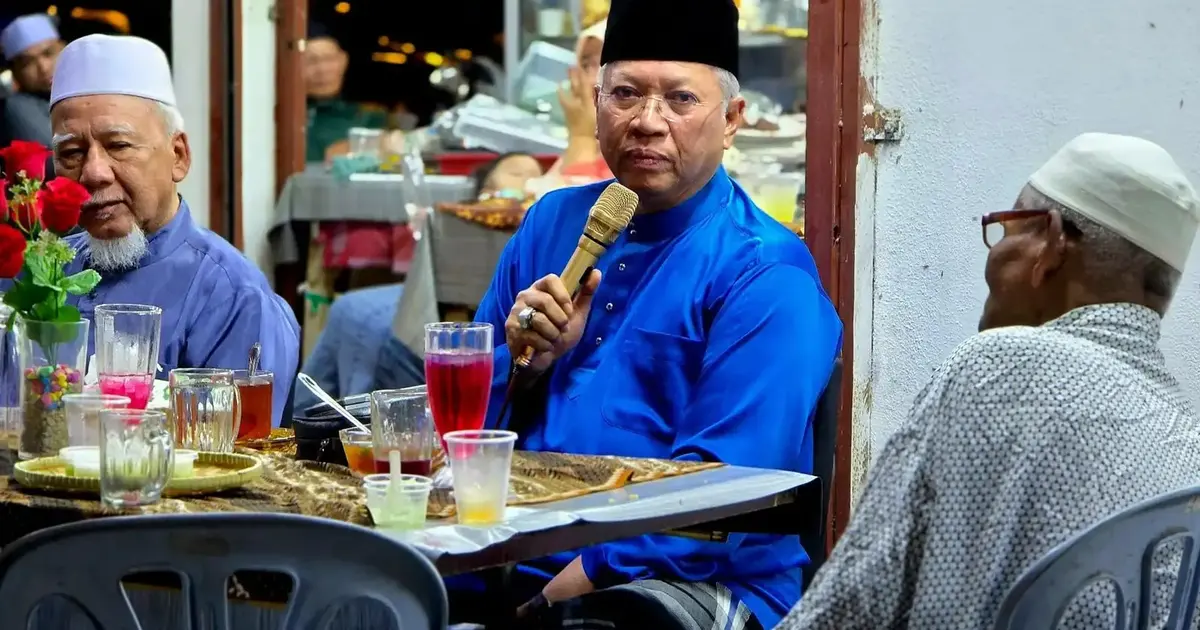
Senior PAS official Annuar Musa has dismissed as unworkable Bersatu's request to contest 15 seats in the forthcoming Negeri Sembilan state assembly election, signalling deepening tensions within the Perikatan Nasional coalition over seat allocation and electoral strategy in the traditionally competitive state.
The PAS information chief's comments reflect mounting friction between coalition partners as they prepare for what is expected to be a fiercely contested election in Negeri Sembilan, where power has alternated between different political alignments in recent electoral cycles. Annuar's rejection of Bersatu's demand suggests that fundamental disagreements over resource distribution within PN are threatening to undermine the alliance's effectiveness in crucial battleground states.
Bersatu's appetite for 15 seats in Negeri Sembilan appears to stem from the party's desire to strengthen its parliamentary presence and state-level influence following internal party restructuring and leadership changes. However, such ambitions collide with the mathematical reality of seat availability and the competing interests of other coalition components, particularly PAS, which seeks to consolidate its own organizational gains across the peninsula.
The dispute highlights a recurring pattern in Malaysian coalition politics whereby smaller or newer partners attempt to punch above their weight in seat negotiations, often triggering friction with larger coalition members who view such demands as disproportionate to actual electoral strength or organizational capacity. Bersatu's request appears to fall into this category, prompting pushback from PAS officials tasked with managing the coalition's electoral arithmetic.
For Malaysian observers, this PN internal conflict carries significant implications. Negeri Sembilan has emerged as a swing state where coalition stability and unified messaging can determine electoral outcomes. A fractious PN entering the state election with unresolved internal disputes risks allowing opposition parties to exploit divisions and court fence-sitting voters who might otherwise support the government alliance.
Annuar's public statement suggests that PAS leadership is unwilling to sacrifice the party's own electoral interests to accommodate Bersatu's expansion plans. This defensive posture, while protecting PAS's immediate interests, risks creating the kind of coalition dysfunction that ultimately benefits opposition coalitions like Pakatan Harapan, particularly in competitive states where every seat margin proves decisive.
The timing of this disagreement is noteworthy. As Negeri Sembilan moves closer to a state election, PN partners should ideally be consolidating their coalition machinery and coordinating campaign strategies. Instead, public disputes over seat allocation consume political oxygen and suggest insufficient coordination mechanisms exist to resolve such disputes quietly before they escalate into public relations problems.
Bersatu's 15-seat demand likely reflects the party's broader strategic calculation that it needs visible electoral success to justify its continued existence as a distinct political entity within PN. The party has faced criticism over its relevance following defections and internal upheaval, making strong electoral performance crucial to its long-term viability. From this perspective, Bersatu's aggressive seat demands represent an existential challenge rather than mere coalition negotiating posturing.
PAS, by contrast, benefits from the current coalition arrangement and sees little reason to diminish its own seat allocations to benefit Bersatu. The party has successfully expanded its organizational footprint across multiple states and enjoys strong rural support, particularly in Negeri Sembilan's heartland areas. This structural advantage gives PAS leverage in seat negotiations and explains Annuar's blunt rejection of Bersatu's demands.
The dispute also raises questions about PN's overall coalition governance framework. Mature political alliances typically establish pre-negotiated seat-sharing formulas based on factors like previous electoral performance, organizational capacity, and projected voter appeal. The public nature of this disagreement suggests PN either lacks such mechanisms or they have proven insufficient to manage current partner aspirations.
For Negeri Sembilan voters, coalition infighting of this nature creates uncertainty about PN's actual electoral strategy and whether the alliance can present the unified front necessary to compete effectively against well-organized opposition forces. Public disputes over seat allocation, while internally resolved, leave lingering questions about coalition cohesion that opposition strategists will certainly attempt to exploit during campaign season.
Moving forward, PN leadership faces pressure to resolve this Bersatu-PAS dispute through backroom negotiations before it causes further reputational damage. The coalition's credibility rests partly on demonstrating it can manage internal differences professionally and present voters with a coherent electoral platform. Continued public disputes over seat allocation risk undermining that credibility precisely when PN needs to project strength and unity heading into a crucial state election.

