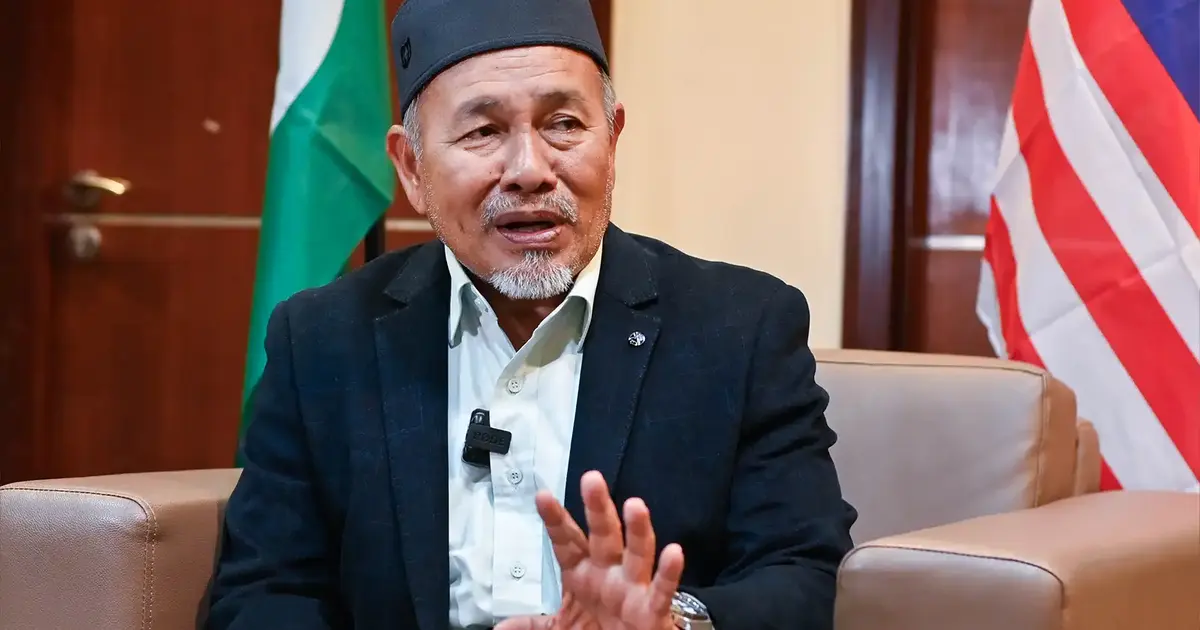
Senior opposition leader Tuan Ibrahim Tuan Man has downplayed concerns about contentious seat-sharing arrangements between Perikatan Nasional and Barisan Nasional ahead of forthcoming Melaka state elections, signalling that despite the absence of formal negotiation rounds, either coalition possesses the maturity to navigate any disagreements constructively.
The PAS deputy president's remarks represent an attempt to project unity and pragmatism within both coalitions as they prepare for electoral competition in the southern state. His confidence stems from what he characterises as established patterns of collaborative problem-solving, suggesting that historical precedent would govern how competing territorial interests get resolved.
Seat allocation has proven historically contentious across Malaysia's coalitional political landscape, with competing blocs frequently haggling over which candidates contest which constituencies. The process becomes particularly fraught when two alliances with overlapping ambitions, such as PN and BN, seek to contest the same state simultaneously. Melaka presents an especially delicate scenario given its strategic significance and the respective electoral strengths both coalitions have demonstrated there.
Although Tuan Ibrahim acknowledged that dialogue between PN and BN's leadership structures had not yet formalised into substantive seat discussions, he projected an air of unflappable optimism about the eventual outcome. This stance suggests either advance-stage behind-the-scenes coordination, or alternatively, a calculated effort to prevent public anxiety about potential fractures that could undermine either coalition's electoral prospects.
The absence of formal seat talks at the time of his statement underscores how Malaysian coalition politics often operates through informal channels and back-channel diplomacy rather than through publicly announced negotiations. Senior party leaders frequently establish broad parameters of understanding before lower-level committees hammer out constituency-level details. This layered approach allows leadership to maintain face while technical teams address the granular disputes.
PAS's positioning within this equation deserves scrutiny, as the Islamic party operates within PN alongside PKR and Amanah, whilst simultaneously maintaining strategic relationships with BN-aligned parties in certain contexts. This multi-directional alignment gives PAS particular leverage in brokering arrangements, though it also exposes the party to accusations of playing multiple sides. Tuan Ibrahim's public expression of confidence may therefore serve as a signal to both coalitions about PAS's preferred pathway forward.
Historically, Melaka has alternated electoral control between competing coalitions, with recent years demonstrating that state politics there operate according to distinct local dynamics rather than purely national currents. The state's relatively compact size means seat negotiations involve fewer constituencies than larger peninsular states, potentially simplifying haggling processes. However, the concentration of marginal seats also intensifies competition over the highest-value electorates.
For Malaysian observers, PN-BN seat dynamics carry implications extending well beyond Melaka's boundaries. Any acrimonious dispute would signal deepening fractures within Malaysia's opposition landscape at a moment when PN has sought to consolidate itself as a credible national alternative to the ruling coalition. Conversely, successful seat arrangements would demonstrate that both coalitions can manage competing interests without public rupture—a reassuring message for voters evaluating which opposition force merits their confidence.
The timing of Tuan Ibrahim's statement appears calculated to pre-empt media speculation about coalition tensions, setting positive expectations before seat talks formally commence. By publicly declaring confidence in amicable resolution, PN's deputy leadership has raised the cost of subsequent public bickering—any subsequent disputes would now contradict these optimistic baseline projections, potentially damaging coalition credibility.
Looking forward, the actual seat negotiation process will determine whether Tuan Ibrahim's confidence reflects genuine consensus or merely diplomatic posturing. Early signs of serious disagreement could quickly dissolve the cooperative atmosphere he has worked to establish. Conversely, if both coalitions reach accommodation with minimal public drama, it would suggest that Malaysian opposition forces have matured beyond the destructive factional conflicts that have historically plagued such arrangements.
For Melaka voters, the coalition seat dynamics ultimately matter insofar as they influence which candidates contest which seats and under which party banners. The electoral arithmetic of PN-BN arrangements will directly shape the competitive landscape across the state. Should either coalition fragment through seat disputes, it would likely advantage incumbent ruling coalition candidates by splitting opposition votes across fragmented candidatures.
The broader Southeast Asian context also merits consideration, as Malaysian coalition politics influence perceptions of democratic stability and political predictability across the region. Investors and international observers monitor how competing political forces manage internal disputes, viewing stable coalition management as a proxy for institutional strength. From this perspective, Tuan Ibrahim's public diplomacy serves purposes extending beyond mere Melaka electioneering.

