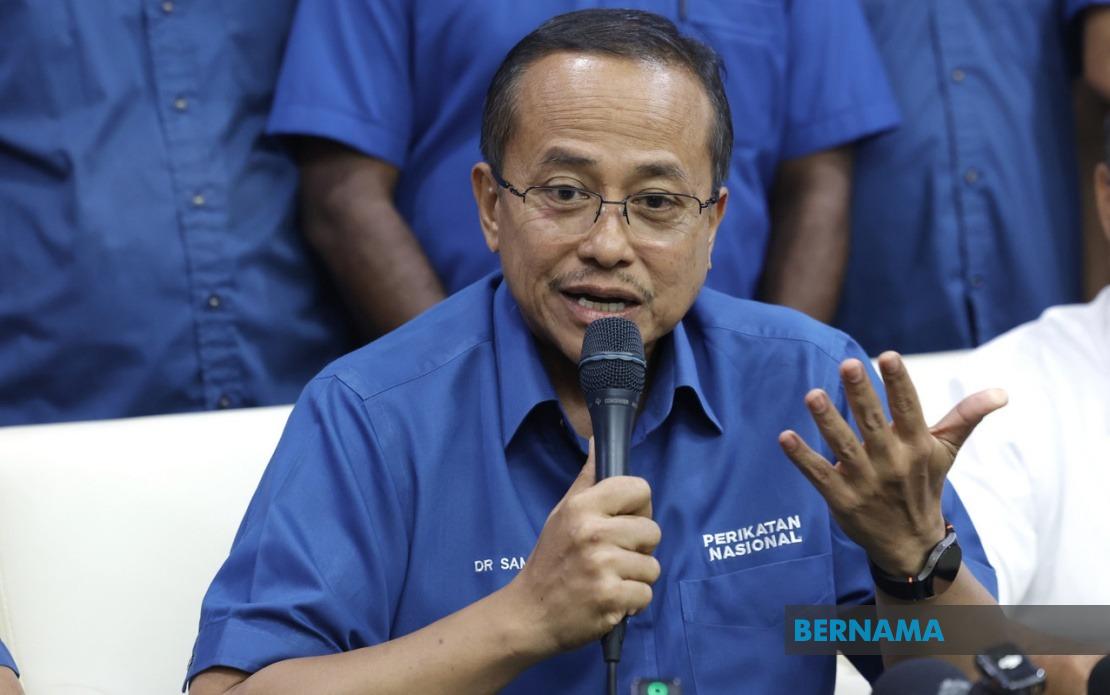
The Perikatan Nasional coalition has moved decisively to present a unified front in the 16th Negeri Sembilan state election, with PN chairman Datuk Seri Dr Ahmad Samsuri Mokhtar announcing that the coalition's Supreme Council has endorsed seat allocations across its component parties and mandated all candidates to contest under the PN logo rather than individual party symbols. This strategic consolidation reflects the coalition's determination to maximise electoral impact in the state by pooling resources and presenting a coherent party identity to voters.
The four parties sharing the PN ticket in Negeri Sembilan are PAS, Gerakan, Wawasan, and MIPP, each of which has received specific seat allocations through a vetting process that involved preliminary discussions among party leadership. According to Dr Ahmad Samsuri's statement, these arrangements were deliberately structured to ensure all preliminary engagements occurred under his direct oversight as PN chairman, with the entire framework subsequently validated through the special Supreme Council meeting held on July 16. This procedural emphasis underscores the importance PN leadership places on maintaining internal consensus and preventing accusations of unilateral decision-making by particular parties.
By opting for a single coalition logo rather than allowing component parties to use their individual symbols, PN aims to create a streamlined electoral message that resonates with voters seeking unified governance. This approach differs markedly from past Malaysian coalition strategies where component parties frequently contested under their own logos while technically remaining within broader alliances. The unified branding is intended to eliminate confusion among voters about which parties comprise the PN slate and to simplify campaign messaging around shared policy priorities, particularly regarding economic development, communal harmony, and welfare initiatives in Negeri Sembilan.
The coalition's articulated policy platform emphasises three core pillars: advancing the people's welfare through targeted government programmes, accelerating Negeri Sembilan's development agenda across infrastructure and economic sectors, and maintaining social harmony within the state's diverse, plural society. These themes reflect PN's broader positioning as a moderate, development-focused coalition that contrasts itself with competing coalitions on grounds of governance competence and commitment to interethnic cooperation. For Malaysian readers, particularly those in Negeri Sembilan, understanding these stated priorities provides a framework for evaluating the coalition's credibility and track record in delivering outcomes.
However, the PN coalition's carefully constructed unity in Negeri Sembilan has been immediately complicated by the withdrawal of Bersatu, historically one of PN's most significant components. Bersatu president Tan Sri Muhyiddin Yassin publicly stated that his party was neither meaningfully consulted nor involved in discussions regarding PN's seat allocations or potential cooperation arrangements with Barisan Nasional. This disconnect reveals fractures within PN's internal coordination mechanisms and suggests that not all coalition members were equally integrated into the planning process for the Negeri Sembilan contest.
Muhyiddin's assertion that Bersatu will independently contest the election using its own party logo directly challenges Dr Ahmad Samsuri's claim that all preliminary discussions occurred transparently with his knowledge and approval. The conflicting narratives raise questions about whether certain parties felt sidelined during the allocation negotiations or whether communication failures prevented Bersatu leadership from understanding the emerging coalition strategy until late in the process. For observers tracking PN's internal dynamics, this disagreement signals that the coalition's unity, while rhetorically strong, remains contingent on ongoing negotiations and subject to breakdown when individual parties perceive their interests as threatened.
Bersatu's independent participation has significant implications for vote fragmentation in Negeri Sembilan. With Bersatu contesting separately, voters may face confusion about which candidates represent PN and which represent Bersatu despite both nominally opposing DAP-led Pakatan Harapan or BN-Perikatan groupings. The split potentially weakens the broader opposition's consolidated challenge to incumbent political forces and may inadvertently advantage whichever coalition emerges as the presumed government alternative. For Malaysian political analysts, Bersatu's move illustrates how coalition politics in Malaysia remain volatile, with individual parties retaining the capacity to pursue autonomous strategies when partnership terms dissatisfy them.
The Negeri Sembilan contest assumes particular significance within Malaysia's broader political landscape given the state's strategic location and demographic composition. Sitting between Selangor and other central regions, Negeri Sembilan serves as a bellwether for national electoral trends, making its outcome relevant to federal coalition calculations. The PN-led arrangement, despite Bersatu's absence, represents an attempt to demonstrate coalition coherence and practical governing capability at the state level, particularly through the participation of Gerakan, which brings substantial machinery and ethnic Chinese voter reach. This combination potentially offers PN a competitive pathway in a state where no single coalition has enjoyed overwhelming dominance.
Dr Ahmad Samsuri's emphasis on procedural legitimacy—asserting that all decisions received proper approval through established coalition governance structures—appears designed to preempt internal criticism and establish that the PN Supreme Council decision binds all participating parties. By framing seat allocations as collectively endorsed rather than unilaterally imposed, PN leadership attempts to create moral and organisational authority for enforcing the unified logo requirement and preventing individual parties from freelancing. Nonetheless, Bersatu's public disagreement demonstrates that such procedural legitimacy may insufficient if certain parties feel genuinely excluded from meaningful consultation.
The timing of these announcements, with candidate names released on the same day as the Supreme Council endorsement, suggests PN intended to create a swift, accomplished-fact scenario that would inhibit last-minute internal negotiation or party-level dissent. This compression of decision-making and announcement cycles reflects common Malaysian political practice where coalitions attempt to minimise windows for public disagreement by rushing through approval processes and immediately publicising results. However, such velocity can backfire if it prevents adequate communication with all stakeholders, as appears to have occurred with Bersatu.
For Negeri Sembilan voters, the coalition realignment presents a more fragmented electoral landscape than PN presumably intended. Rather than choosing between a unified PN alternative and competing coalitions, voters will encounter multiple candidates carrying overlapping anti-establishment credentials but distinct party affiliations. This fragmentation may ultimately benefit BN or other established forces if opposition supporters split their votes among competing non-establishment options. The election thus becomes a test not only of PN's electoral appeal but of whether the coalition can maintain operational unity despite visible internal tensions and the departure of historically significant members.
Looking forward, the Negeri Sembilan contest will provide valuable data on whether PN's unified logo strategy and seat allocation framework prove durable or whether component parties continue to pursue independent strategies. The result will influence how PN structures future state and federal election contests and whether other state-level coalitions within PN follow the Negeri Sembilan model. Simultaneously, Bersatu's independent campaign will signal whether the party retains sufficient organisational capacity and voter support to contest effectively outside formal coalition frameworks, or whether separation diminishes its electoral viability. These outcomes carry implications extending far beyond one state election into Malaysian coalition politics' fundamental architecture.

