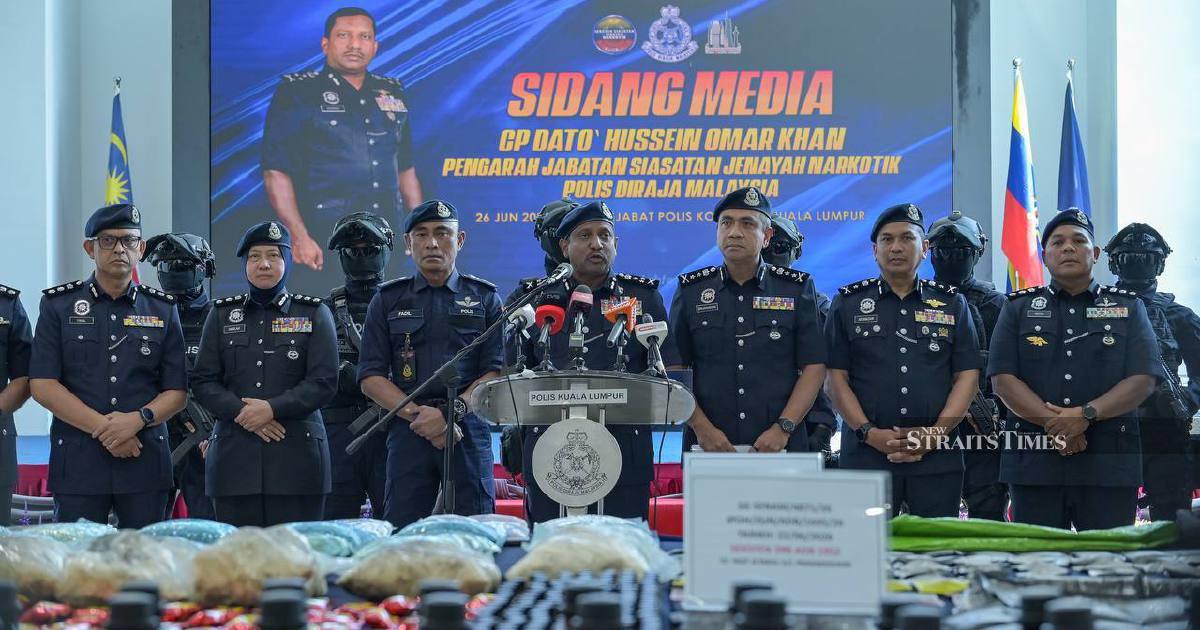
A major narcotics trafficking operation has been disrupted in Cheras following an intensive police enforcement action that saw three simultaneous raids conducted on June 20. The operation culminated in the seizure of drugs worth an estimated RM135.63 million and the apprehension of seven suspects connected to the syndicate. The busts represent a significant victory in the Royal Malaysian Police's ongoing campaign against drug trafficking networks operating within the Klang Valley.
The coordinated nature of the raids suggests that police intelligence units had been conducting sustained surveillance on the suspected trafficking operation prior to the enforcement action. Such comprehensive multisite operations typically require weeks or months of groundwork to establish patterns of movement, identify key nodes within a distribution network, and pinpoint optimal timing for arrests that maximises disruption to the entire supply chain. The decision to execute three raids simultaneously indicates police confidence in their case development and a determination to prevent key operatives from fleeing or destroying evidence.
The monetary value assigned to the seized drugs reflects the substantial scale of the operation and underscores the economic significance of drug trafficking in Malaysia's illicit economy. With street-level narcotics commanding premium prices in a market where demand consistently exceeds available legal supply, the RM135.63 million figure represents not only a major financial blow to the trafficking syndicate but also represents narcotics that would have circulated through Malaysian communities, potentially reaching thousands of users. The valuation methodology typically employed by police in such seizures accounts for the purity of substances and prevailing market rates at the time of seizure.
The targeting of Cheras reflects the continued prominence of this area as a hub for illicit drug activity. Located in the heart of Kuala Lumpur, Cheras has historically served as a convergence point for drug trafficking networks due to its proximity to major transportation corridors, dense urban population, and multiple access points for both supply routes and customer bases. The area's complex residential and commercial landscape provides operational cover for distributors and retailers seeking to evade detection. Police efforts to dismantle operations in such locations must contend with these structural advantages that trafficking organisations enjoy.
The arrest of seven suspects provides authorities with multiple intelligence sources and potential leads into the broader architecture of the trafficking network. Each individual detained typically holds specific knowledge about upstream suppliers, downstream distribution routes, customer bases, and financial arrangements. Police interrogations following such arrests frequently yield information that enables follow-up operations against related networks or larger kingpins whose identities may have previously remained obscure. The coordination and information-sharing protocols now standard among Malaysian law enforcement agencies mean that intelligence gained from this operation can be rapidly disseminated across different police districts and states.
For Malaysian policymakers and public health officials, the scale of this seizure underscores the persistent demand for illicit drugs within the country. Despite years of enforcement efforts, supply interdiction operations continue to reflect the resilience of trafficking networks and their capacity to move substantial quantities of narcotics across borders and through domestic distribution systems. The apparent sophistication demonstrated by this particular operation—as evidenced by its scale and the coordination required to sustain it—suggests that Malaysian trafficking syndicates have adapted to enforcement pressures and developed increasingly efficient operational models.
The prevention of drugs flooding the local market represents perhaps the most significant public health benefit of this enforcement action. Increased narcotics availability in any community correlates strongly with rises in addiction, overdose deaths, crime, and social dysfunction. The seized quantity, had it successfully reached end-users, would have resulted in hundreds or thousands of new addiction cases, expanded criminal activity associated with funding addiction, and increased strain on Malaysia's already-stretched rehabilitation and treatment facilities. The economic and social costs of preventing such widespread distribution extend far beyond the street value of the drugs themselves.
Regional drug trafficking patterns increasingly implicate Malaysian ports and transit routes as critical nodes in broader Southeast Asian narcotics movements. Methamphetamine, heroin, and synthetic drugs originating in Myanmar and Thailand frequently transit through Malaysian territory en route to distributors across Singapore, Indonesia, and beyond. The Cheras operation captures only one segment of these transnational flows. Coordinated regional enforcement efforts, while improving, remain hampered by differing jurisdictional capabilities and cooperation frameworks across Southeast Asia.
The June 20 enforcement action exemplifies the type of intelligence-driven policing that Malaysian authorities have increasingly emphasised in recent years. Rather than relying primarily on reactive street-level enforcement, police have invested in analytical capability and surveillance infrastructure designed to identify trafficking networks at source and intercept them before distribution occurs. This proactive approach theoretically offers superior outcomes to reactive enforcement, as disruption occurs earlier in the supply chain and affects larger quantities of drugs.
Moving forward, authorities will face the challenge of translating this operational success into prosecutorial success. Malaysian drug trafficking cases can prove complex to prosecute, requiring sophisticated evidence presentation and witness management. Defence counsel in such cases frequently challenge the chain of custody of seized materials, the reliability of asset valuations, and the sufficiency of evidence connecting individual defendants to the alleged conspiracy. The coming weeks will reveal whether police have developed a case capable of withstanding judicial scrutiny and securing convictions that impose meaningful consequences on those responsible for this operation.

