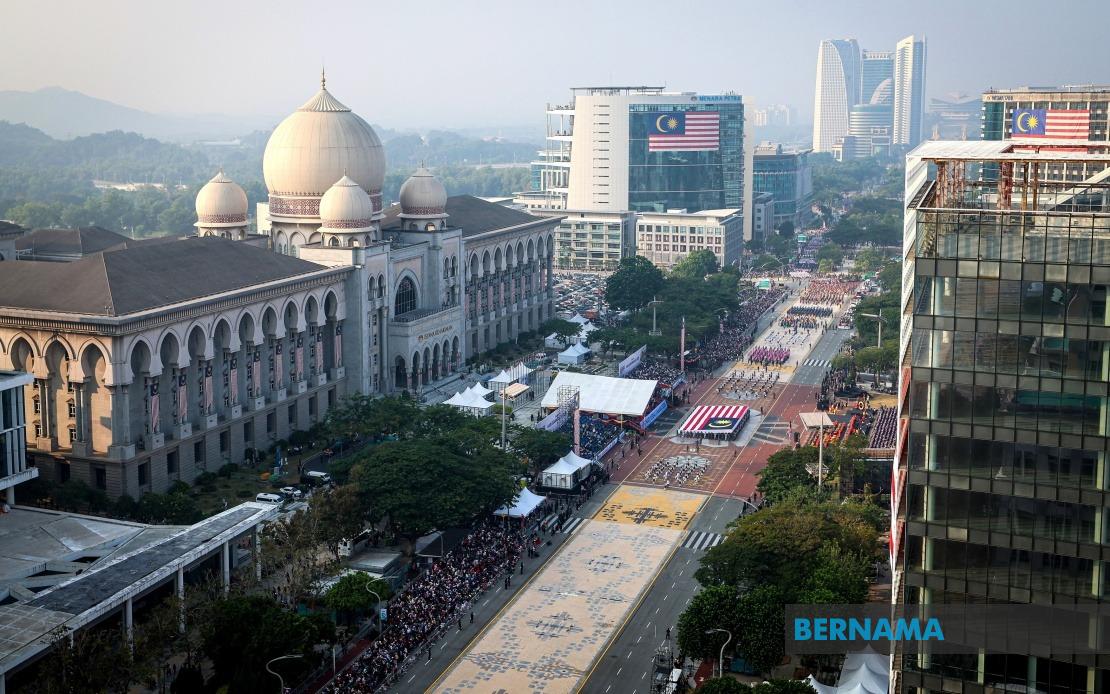
The Royal Malaysia Police has mobilised more than 2,300 personnel to oversee security arrangements during the 2026 National Day celebrations scheduled for August 31 at Dataran Putrajaya. The substantial police presence represents a comprehensive approach to managing crowd safety and traffic flow during what organisers anticipate will draw upwards of 80,000 members of the public to Malaysia's administrative capital for the 69th commemoration of the nation's independence.
Putrajaya district police chief ACP Aidi Sham Mohamed outlined the operational framework guiding the deployment, explaining that officers will be stationed at fixed checkpoints throughout the venue whilst additional units manage vehicle circulation on surrounding roads. This dual-pronged strategy seeks to balance public accessibility with stringent security protocols, particularly given the scale of attendance expected and the heightened vigilance typically observed at major national gatherings.
The police leadership has issued several directives to attendees aimed at streamlining the event experience and minimising potential complications. Aidi Sham urged visitors to arrive early at Dataran Putrajaya, allowing the police sufficient time to process crowds and establish orderly queuing. He also appealed to members of the public to observe all instructions issued by authorities, a request that encompasses conventional civic responsibilities such as refraining from parking in designated prohibited zones and maintaining clear traffic pathways for emergency vehicles.
Beyond logistical guidance, the police have articulated clear security parameters intended to prevent disruptions and safeguard attendees. A pivotal restriction involves the prohibition of weapons of any description at the venue, a measure framed as essential to protecting the sanctity of the national celebration. Aidi Sham reiterated this directive with particular emphasis, cautioning that dangerous implements would not be tolerated regardless of claimed intent.
The 2026 National Day observance carries thematic significance, branded as "Malaysia MADANI: Kesejahteraan Dinikmati," reflecting the government's broader development narrative centred on shared prosperity and societal wellbeing. This messaging framework contextualises the security deployment not merely as a protective measure but as enabling infrastructure for a celebration designed to reinforce national cohesion and demonstrate institutional competence in managing major public events.
Communications Minister Datuk Seri Fahmi Fadzil confirmed during his attendance at a full dress rehearsal that the 2026 celebration would proceed according to the established schedule and format. His participation in the preparatory exercise underscores the coordination between security agencies and civilian government bodies, signalling that the event enjoys ministerial-level attention and will unfold with the anticipated ceremonial gravitas befitting a major national occasion.
The decision to deploy such substantial police numbers reflects evolving security consciousness in Malaysia's capital region, particularly for large-scale public gatherings. With over 80,000 attendees anticipated, the ratio of approximately one officer per 34 visitors suggests a measured calibration between maintaining visible security presence and avoiding an atmosphere of excessive enforcement that might diminish celebratory atmosphere.
For attendees from across Malaysia and potentially neighbouring regions, the public safety guidance carries practical weight. The reminders regarding personal belongings and child supervision acknowledge the inevitable congestion and jostle associated with mass gatherings, whilst framing individual vigilance as complementary to police efforts. This shared-responsibility messaging has become commonplace in Malaysian public safety communications, reflecting a philosophy that security emerges through partnership between state agencies and citizens.
The comprehensive police briefing suggests that security planning for the 2026 National Day has advanced considerably beyond initial stages. The availability of detailed operational information and explicit public guidance indicates that command structures have crystallised around specific deployment patterns and contingency protocols. This level of preparedness typically emerges from extensive liaison between police hierarchy, venue management, and traffic authorities, ensuring that different agencies operate within coordinated frameworks rather than in isolation.
For regional observers and international delegations that may attend, the policing visible at Dataran Putrajaya will communicate Malaysia's institutional capacity for managing large public events safely and efficiently. Southeast Asia has experienced challenges with crowd management at major celebrations, making the Malaysian police's articulation of clear, proportionate security arrangements noteworthy from a comparative governance perspective.
The 2026 National Day gathering assumes additional significance as Malaysia marks nearly seven decades of independence, a milestone inviting reflection on national progress and social cohesion. The police role in facilitating this reflection—through enabling safe public assembly and celebration—extends beyond conventional law enforcement into institutional support for collective national identity formation. By ensuring smooth logistical execution and preventing security incidents, the police effectively become custodians not merely of order but of the conditions permitting authentic national commemoration.

