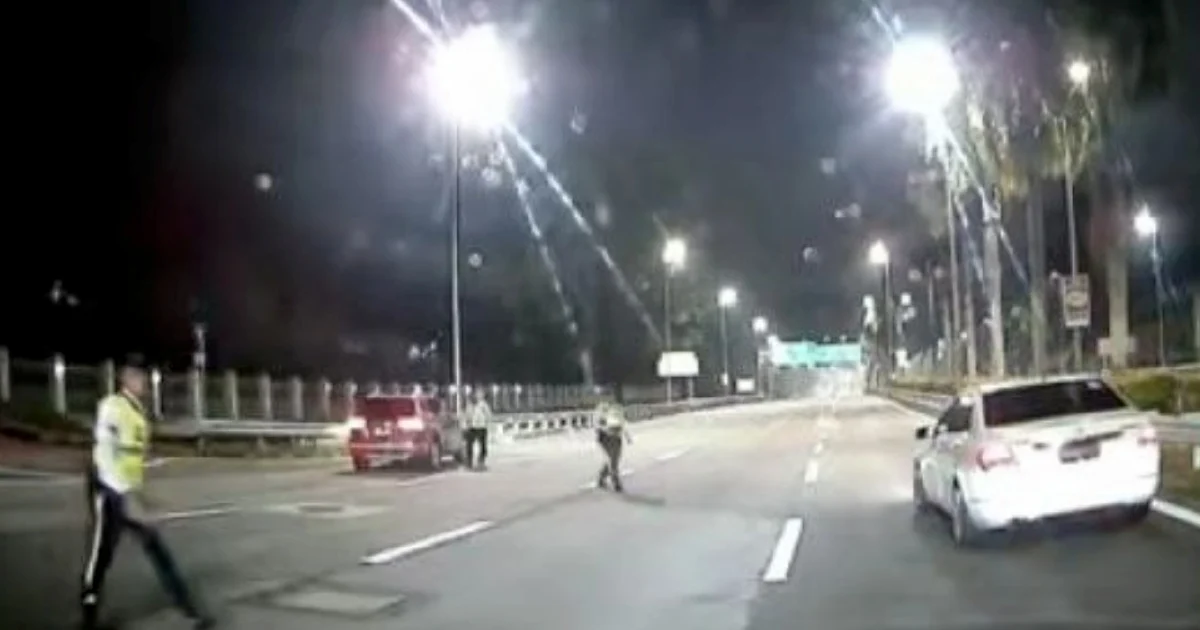
A 20-year-old motorist has been arrested and held in police custody after deliberately driving his white Mercedes through an active police roadblock along the Sprint Expressway close to the National Institute of Public Administration, in what has become a widely-shared incident across social media platforms. The breach of a controlled checkpoint marked an alarming moment for enforcement officers conducting routine traffic operations in the Kuala Lumpur area.
The incident occurred at a point along the expressway where police had established a roadblock, typically positioned to conduct vehicle inspections and identity checks as part of regular traffic management. The deliberate nature of the collision and the vehicle's subsequent high-speed departure from the checkpoint have raised concerns among law enforcement about driver compliance and public safety on major routes into and out of the capital. Officers at the scene reported that the driver accelerated directly toward the roadblock position rather than slowing or complying with instructions to stop.
The viral nature of the incident reflects a broader pattern in Malaysia where dramatic traffic incidents are increasingly documented and shared on social media platforms. Video footage circulating online has drawn widespread public attention and sparked discussions about road safety enforcement, the effectiveness of police checkpoints, and the behavior of drivers who attempt to evade authorities. Such incidents can amplify public concern about traffic law enforcement capabilities and the risks posed by reckless motorists on busy expressways.
For Malaysian readers familiar with the Sprint Expressway and its corridors linking central Kuala Lumpur to satellite areas near Intan, the breach of a police checkpoint carries implications for perceived safety on this frequently-used route. The expressway serves as a critical transportation artery, and incidents involving deliberate evasion of law enforcement can shake public confidence in the security and orderliness of major road networks. Authorities have long emphasized the role of roadblocks in maintaining traffic discipline and identifying vehicles linked to criminal activity.
The detention of the 20-year-old follows standard procedure for cases involving suspected traffic violations of this severity. During the investigative period, police will gather evidence from the scene, review any available footage from roadblock cameras or dash recordings, and conduct interviews to establish motive and intent. The young driver's cooperation with authorities and any admissions regarding the incident will likely shape the trajectory of the case and the charges that may be filed.
Such breaches of police checkpoints, while not exceptionally common, represent a serious challenge to traffic enforcement operations. Officers manning roadblocks depend on driver compliance and the visibility of their equipment to ensure safe, coordinated operations. When a vehicle crashes through a checkpoint, it endangers both law enforcement personnel positioned along the roadside and other motorists in the vicinity. The incident underscores the occupational hazards faced by traffic police and the importance of maintaining deterrent enforcement measures.
The investigation will likely explore whether mechanical failure, deliberate evasion, or misjudgment contributed to the collision. Preliminary assessments by attending officers will be cross-referenced with technical evidence from the vehicle itself and witness accounts from checkpoint staff. Understanding the driver's motivation—whether attempting to flee a prior offense, intoxicated, or simply reckless—will inform both the legal proceedings and any subsequent recommendations for enhanced roadblock safety protocols.
In the Southeast Asian context, Malaysia has worked to strengthen road safety enforcement and reduce fatal traffic incidents through checkpoint operations and public awareness campaigns. Deliberate evasion of roadblocks, however, remains a serious infraction that undermines these efforts. Regional neighbors have similarly grappled with the challenge of ensuring driver compliance and protecting frontline enforcement personnel, making this incident relevant to broader discussion of traffic management approaches across the region.
The outcome of the investigation and any subsequent court proceedings will be closely watched by road safety advocates and members of the public concerned about enforcement consistency. The case may also prompt a review of roadblock positioning and safety measures at the specific location on the Sprint Expressway, with an eye toward preventing similar incidents in future. Police have indicated that the detainee remains in custody assisting investigations, with further action anticipated pending the completion of inquiries and case file submissions to the Attorney General's Chambers.
Public comment on the incident has highlighted the importance of driver education and the need for stricter penalties against those who endanger law enforcement and fellow road users. The case serves as a reminder of the potential consequences of reckless behavior on expressways and the risks that irresponsible drivers pose to the road safety ecosystem that affects millions of Malaysian commuters daily.

