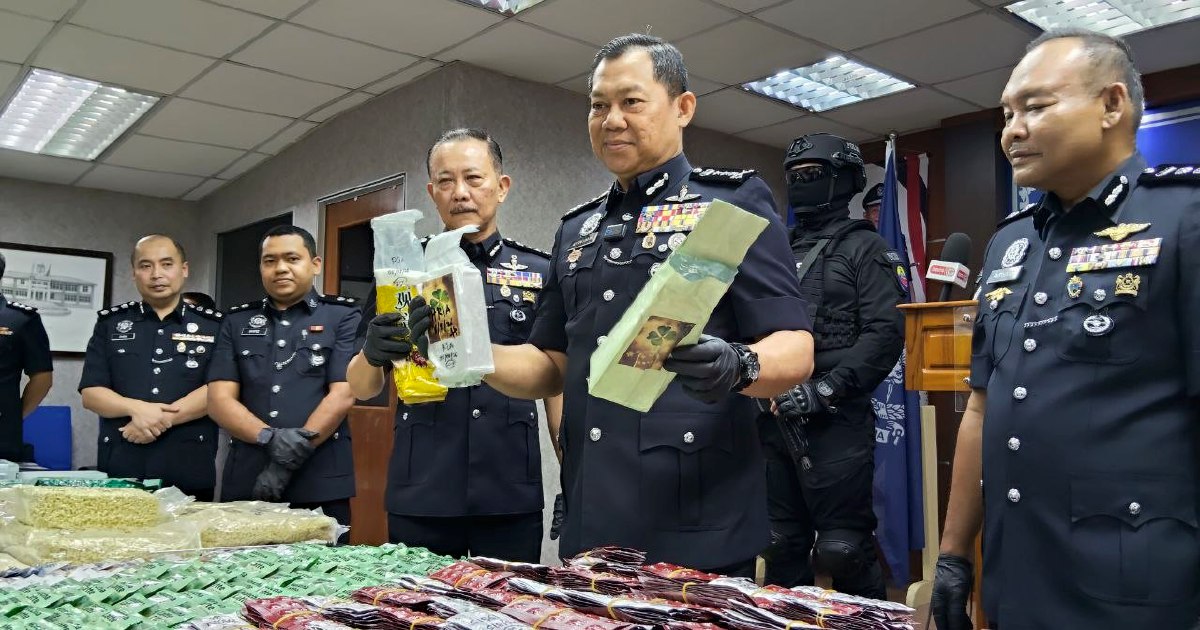
Law enforcement authorities in Johor Baru have successfully disrupted a major drug trafficking operation, confiscating 96.76 kilograms of various controlled substances valued at RM8.49 million from a residential apartment in Persiaran Senibong, Masai. The enforcement action represents a significant blow to organised drug distribution networks operating within the state, with two suspects now in custody pending investigation and prosecution proceedings.
The apartment, located in what authorities believe was a carefully selected distribution hub, had been deliberately rented to function as a storage and supply centre for the syndicate's operations. This operational model reflects an increasingly common tactic among major drug networks in Malaysia, wherein perpetrators lease residential units away from their own homes to minimise personal exposure to law enforcement scrutiny. The choice of Masai as a location suggests strategic positioning for distributing substances across Johor and potentially into neighbouring states or Singapore.
The scale of the seizure underscores the sophisticated nature of modern drug trafficking enterprises in Southeast Asia. Narcotics distribution syndicates now typically employ compartmentalised structures, where storage facilities are separated from retail operations and upper-level management, making it more challenging for authorities to trace entire criminal organisations. The apartment's function as a consolidation point indicates this network likely coordinated supplies from international sources before dispersing them through regional distribution channels.
The composition of the drug haul provides insight into current trafficking patterns affecting Malaysia. Police have not yet disclosed the specific breakdown of substance types recovered, but the substantial quantity suggests the syndicate was handling multiple categories of controlled drugs simultaneously—a practice that maximises profitability while hedging against supply disruptions in individual markets. Such diversification in product offerings allows criminal organisations to serve broader customer bases and adapt swiftly to enforcement pressures or fluctuating demand.
The monetary valuation of RM8.49 million reflects street-level retail pricing rather than wholesale acquisition costs, indicating the significant profit margins embedded within the illegal drug trade. For context, this single apartment operation represents an annual drug distribution capacity that would require an enormous law enforcement commitment to interdict through conventional street-level enforcement alone. The scale emphasises why transnational and sophisticated criminal networks pose such challenges to authorities throughout the region.
Johor has historically been a crucial nexus point for drug trafficking activities, given its proximity to Singapore and its established transport infrastructure linking it to Peninsular Malaysia and across the sea to Sabah and Sarawak. The state's lengthy coastline and numerous ports facilitate maritime smuggling operations, while its land borders create multiple vulnerable entry and distribution points. Recent enforcement successes demonstrate that police agencies are increasingly directing resources toward identifying and dismantling mid-to-high level distribution networks rather than focusing exclusively on street-level interdiction.
The arrest of two individuals connected to the operation marks an important development, though experienced investigators recognise that disrupting supply at the apartment level often represents only a partial victory. Criminal organisations typically maintain redundancy within their supply chains, meaning that other distribution points likely remain operational unless the investigation extends to identifying associated networks and senior management figures. The scope of subsequent investigation will ultimately determine whether this enforcement action represents a temporary setback or a more comprehensive disruption of the syndicate's operations.
Malaysia's ongoing battle against drug trafficking reflects broader regional challenges facing Southeast Asian nations. The illicit narcotics market continues generating enormous revenues that fund other forms of organised crime and corruption. Enforcement agencies across the region increasingly recognise the necessity of international cooperation, given the cross-border nature of major trafficking operations. Intelligence sharing between Malaysian authorities and counterparts in neighbouring countries has proven instrumental in identifying smuggling routes and identifying key trafficking nodes.
The Masai operation demonstrates that authorities are employing more effective intelligence methods to identify distribution infrastructure. Rather than relying solely on street-level informants or accidental discoveries, police are increasingly targeting the logistical architecture that modern drug networks require. This shift in enforcement strategy acknowledges that dismantling sophisticated criminal enterprises demands understanding their operational mechanics—identifying warehousing arrangements, transport protocols, and financial mechanisms rather than simply intercepting individual drug shipments.
The implications of this enforcement action extend beyond the immediate criminal consequences for the two arrested individuals. The seizure represents significant capacity reduction within regional drug distribution networks and potentially disrupts supply chains feeding addiction problems throughout Johor and neighbouring jurisdictions. Each major interdiction contributes to reduced drug availability and higher street-level prices, effects that collectively influence trafficking behaviour and criminal profitability calculations.
Continued enforcement pressure on distribution infrastructure will remain essential for Malaysian authorities seeking to manage the drug supply problem. However, enforcement alone cannot address the underlying demand factors driving the narcotics market. Complementary strategies addressing addiction treatment, community prevention programmes, and economic opportunities for populations vulnerable to drug-related criminality remain necessary components of comprehensive drug policy. The Masai seizure therefore represents both a tactical success for law enforcement and a reminder that multifaceted approaches remain essential for addressing Malaysia's persistent narcotics challenges.

