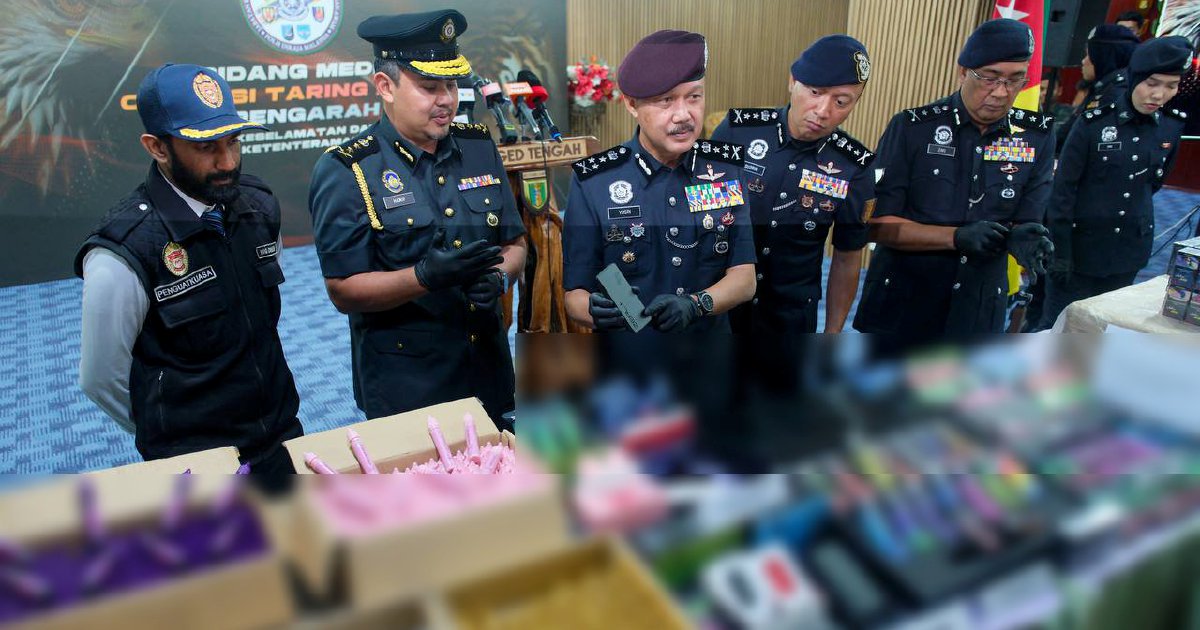
Police in Selangor have dealt a substantial blow to organized smuggling operations through two coordinated raids that netted contraband vaping devices and illicit cigarettes with an estimated street value exceeding RM15.5 million. The enforcement actions, which took place in the closing weeks of last month, represent an escalation in law enforcement's campaign against the illicit tobacco and nicotine products trade that has flourished across Malaysia's most industrialized state.
The scale of the seizure underscores the financial stakes involved in contraband cigarette and vape smuggling networks that operate across the Klang Valley and surrounding regions. These parallel markets for untaxed nicotine products have grown increasingly sophisticated, with supply chains extending from regional manufacturing hubs through port facilities and into distribution networks that service convenience stores, night markets, and street vendors throughout Selangor. The magnitude of a single operation yielding over RM15 million in illicit goods suggests these syndicates command substantial inventory and operate with considerable capital resources.
From a fiscal perspective, the confiscated merchandise represents lost excise revenue for the Malaysian government, which has progressively raised tobacco taxation as part of broader public health policy. Illicit cigarettes, typically sourced from regional manufacturers with minimal tax compliance or sourced through diversion from duty-paid supplies, undercut legitimate retail prices substantially—sometimes by fifty percent or more. This price disparity creates persistent demand among price-sensitive consumers and generates substantial profit margins for smuggling networks that can move high volumes with minimal regulatory friction.
The vaping products component of the seizure reflects an emerging dimension of Malaysia's contraband nicotine market. As the government has progressively tightened regulations around vaping devices and e-liquids, a parallel illegal market has crystallized. Contraband vape products typically originate from Southeast Asian manufacturing bases in Thailand, Vietnam, or Indonesia, or are imported through transshipment points that obscure their origin. They circumvent Malaysia's regulatory framework entirely, avoiding compliance costs and quality assurance protocols, while offering consumers access to products that would otherwise face restricted availability or prohibition.
These Selangor operations reflect police commitment to disrupting supply-side vulnerabilities within smuggling networks. Rather than pursuing individual consumers or street-level vendors, enforcement has targeted warehousing facilities, distribution hubs, and transit points where contraband moves in bulk quantities. Such operations require intelligence coordination, surveillance, and typically involve customs and excise authorities working in tandem with police units. The timing of two coordinated raids suggests authorities had developed sufficient intelligence to strike simultaneously at multiple nodes within the same criminal network, a strategy designed to prevent suspects from alerting affiliated operations and enabling fugitives to relocate inventory.
For Malaysian consumers, the proliferation of illicit cigarettes and vape products presents health and safety considerations alongside the tax evasion implications. Contraband cigarettes frequently lack proper regulatory compliance markings and manufacturing transparency, meaning consumers have limited assurance regarding ingredient composition, manufacturing standards, or authenticity. Counterfeit vape products are particularly problematic, as they may contain harmful substances, incorrect nicotine concentrations, or defective hardware that poses injury risks. The government's regulatory framework, though sometimes criticized as restrictive, exists partly to ensure product safety standards that black-market suppliers entirely circumvent.
The operations also reflect increasing sophistication within Malaysia's law enforcement intelligence apparatus. Identifying and locating warehousing facilities containing millions of ringgit in contraband requires sustained investigation, informant networks, and financial intelligence that traces the money flows sustaining these operations. Police and customs units have invested in developing expertise in supply chain analysis and organized crime patterns specific to the tobacco and nicotine sectors, recognizing that smuggling networks operating at this scale typically maintain hierarchical structures with specialized roles for procurement, transportation, storage, and retail distribution.
Regionally, Malaysia's experience mirrors challenges across Southeast Asia where porous borders, manufacturing capacity in neighboring countries, and significant price differentials between duty-paid and illicit products create persistent demand for smuggled goods. Thailand, Vietnam, and Indonesia all operate substantial legal and semi-legal manufacturing bases that supply regional smuggling networks. Transnational criminal organizations coordinate movements of contraband across maritime boundaries, through land crossings, and via air cargo, exploiting gaps in enforcement coordination between national customs authorities.
The financial implications extend beyond government revenue loss. Smuggling networks constitute criminal enterprises that often generate capital flows used to fund other illicit activities, from human trafficking to drug distribution. The RM15.5 million seizure thus represents not merely lost tax revenue but disruption to criminal financial infrastructure that sustains broader organized crime ecosystems. Law enforcement agencies increasingly recognize that tobacco smuggling networks frequently overlap with other contraband operations, making enforcement against vape and cigarette trafficking an entry point for dismantling larger criminal syndicates.
Moving forward, authorities face persistent challenges in combating a market driven by fundamental price differentials that incentivize smuggling. Supply-side enforcement operations like those in Selangor remain essential but address symptoms rather than underlying market dynamics. Demand-side interventions—whether through public education, regulatory frameworks, or pricing strategies—offer long-term solutions, though each carries implementation complexities. The ongoing operations demonstrate that Malaysian enforcement agencies remain committed to degrading smuggling networks through sustained investigation and coordinated enforcement, though the scale of seizures suggests that illicit markets continue thriving across the region despite periodic major enforcement successes.

