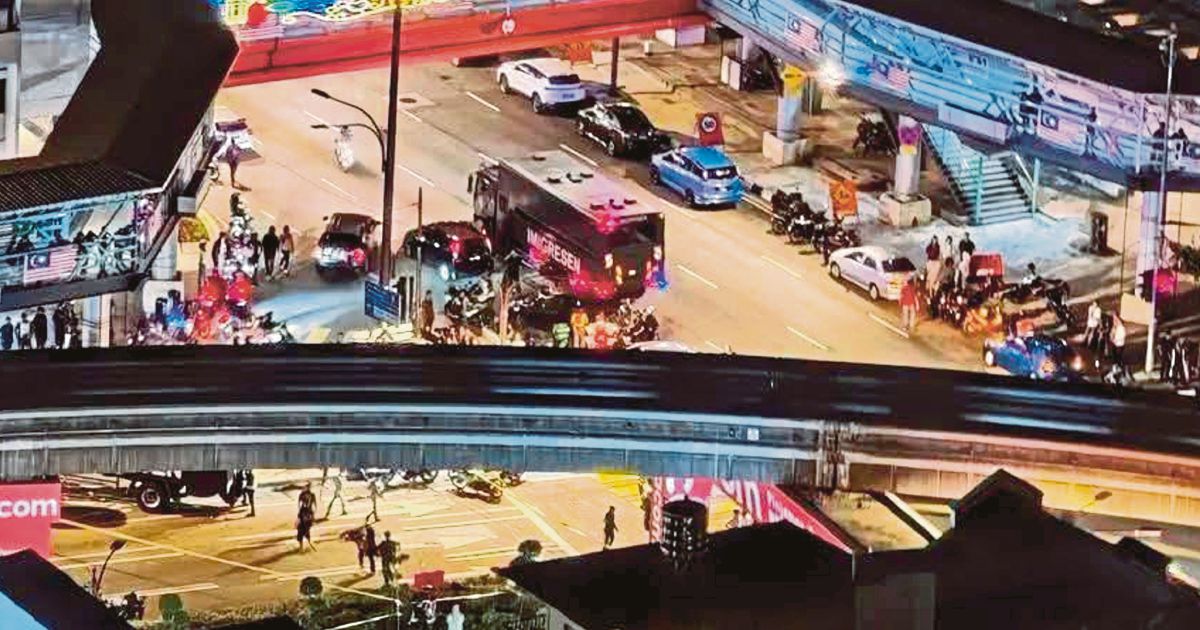
Investigators in Kuala Lumpur have turned to video surveillance and vehicle dashcam recordings as they piece together the circumstances surrounding a catastrophic collision on Jalan Sultan Ismail that claimed the lives of a father and his two young daughters. The incident, which occurred early yesterday involving a lorry operated by the Immigration Department, has prompted an intensive forensic examination of available visual evidence to establish the sequence of events leading up to the tragedy.
The deployment of dashcam and closed-circuit television footage represents a standard but critical investigative approach in high-impact vehicular accidents, particularly those resulting in fatalities. Such material can provide crucial insights into vehicle positions, speeds, traffic conditions, and driver behaviour in the moments immediately preceding impact. In urban locations like Jalan Sultan Ismail, multiple sources of video evidence including traffic monitoring systems, nearby businesses, and vehicle-mounted cameras frequently exist, offering investigators a detailed timeline of events.
The involvement of a government vehicle adds complexity to the investigation, as authorities must examine not only mechanical factors but also operational procedures and adherence to safety protocols by the Immigration Department's driver. Road traffic cases of this severity typically involve coordination between police traffic investigation units, the Public Works Department's road safety division, and relevant government agencies. The Immigration Department itself will likely be scrutinised regarding vehicle maintenance standards and driver qualification protocols.
Fatalities involving multiple family members trigger heightened public and regulatory attention in Malaysia, often prompting broader discussions about road safety infrastructure and enforcement. The Kuala Lumpur road network, particularly central corridors like Jalan Sultan Ismail, experiences substantial traffic volumes that demand rigorous adherence to safety standards from all road users, regardless of vehicle type or owner. Heavy vehicles operated by government agencies carry particular responsibility given their size and potential for catastrophic consequences in collision scenarios.
The investigation timeline remains undisclosed, but preliminary video analysis typically occurs within 48 to 72 hours of such incidents. Officers will examine footage for factors including traffic signal compliance, speed at point of impact, visibility conditions, weather effects, and any sudden manoeuvres by either vehicle. Dashcam footage from nearby vehicles can often capture detail invisible to stationary CCTV systems, including relative vehicle speeds and driver reactions immediately before collision.
In Malaysia, road fatality investigations now routinely incorporate advanced video forensics, representing evolution from earlier investigative methods. The Royal Malaysia Police Traffic Investigation and Enforcement Department maintains specialised units trained in accident reconstruction, capable of extracting maximum information from visual evidence. Digital forensics experts can now enhance, stabilise, and analyse footage at frame-level detail, potentially revealing factors invisible to initial observation.
For the families affected by such tragedies, thorough investigation provides essential information but cannot diminish the profound loss. The death of multiple family members in a single incident creates exceptional emotional and social impact, often prompting community reflection on road safety and responsibility. Malaysian society has experienced numerous high-profile accidents in recent years, yet preventable fatalities continue at concerning rates, suggesting that investigation alone, while necessary, must be paired with sustained enforcement and infrastructure improvements.
The broader context of road safety in Malaysia reveals persistent challenges despite regulatory frameworks and public awareness campaigns. Heavy vehicle operations, whether government or private, require constant monitoring and enforcement to maintain safety standards. This incident will likely contribute to departmental reviews of vehicle maintenance schedules, driver rest requirements, and route safety protocols across government agencies operating commercial vehicles.
As investigators progress through video analysis and await forensic reports on vehicle condition, the examination of available footage represents the foundation upon which accountability and prevention measures will rest. The findings may influence future safety protocols not only for the Immigration Department but potentially across other government agencies operating similar vehicles. For road safety advocates and policy makers monitoring this investigation, the conclusions reached through detailed video evidence analysis will inform whether technological or procedural deficiencies contributed to the tragedy.

