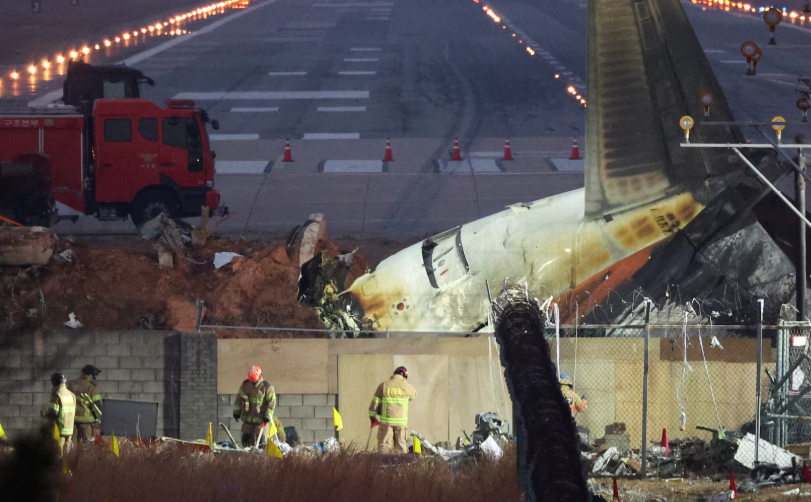
South Korean authorities stepped up their investigation into one of the nation's deadliest aviation disasters by conducting coordinated raids on the Korea Airports Corporation and related government agencies on Tuesday, August 11. The action represents a significant escalation in efforts to establish accountability for the Jeju Air crash that occurred at Muan International Airport on December 29, 2024, and resulted in the deaths of 179 people. Investigators dispatched teams to three locations simultaneously: the headquarters of the Korea Airports Corporation, which operates most of South Korea's major domestic airports with the exception of Incheon International Airport; the transport ministry offices; and the Busan Regional Office of Aviation.
The concurrent raids signal that police believe critical evidence and documentation related to potential criminal negligence may be held across multiple agencies. A special investigation team handling the probe indicated that the operations were specifically designed to gather additional material that could substantiate allegations of professional negligence resulting in death or injury. These charges currently apply to 74 suspects already identified in the inquiry, a figure that underscores the widespread nature of the investigation's scope. The authorities are casting a wide net in determining which officials, airport operators, and regulatory bodies may have failed in their duties to ensure flight safety.
Tuesday's raid marked the third time investigators had descended on the transport ministry, demonstrating intensifying pressure on the government department tasked with overseeing aviation safety and infrastructure. The repeated visits suggest that police believe the ministry possesses documents, correspondence, or records that could prove critical to establishing whether standard protocols were followed and whether there were systemic failures in safety oversight. The decision to return multiple times reflects either the complexity of the evidence trail or possible concerns that initial cooperation had not yielded all relevant materials.
Beyond the charge of professional negligence that has dominated the investigation so far, police indicated they are considering applying additional charges related to causing a serious public disaster. This more expansive legal framework could potentially implicate higher-ranking officials and organizational leadership rather than individual workers, fundamentally changing the nature and scale of accountability. In South Korean law, disaster-related charges often carry greater penalties and can extend responsibility beyond direct negligence to encompass systemic failures in oversight and safety management.
The investigation has maintained two parallel tracks since the crash occurred. One focuses on determining the precise technical and operational factors that led to the aircraft veering off the runway and colliding with a concrete structure. The other examines whether the Korea Airports Corporation, the transport ministry, and aviation regulatory bodies properly executed their responsibilities in maintaining safety standards, conducting inspections, and responding to the emergency. These inquiries are interconnected; understanding what went wrong mechanically informs assessments of whether warning signs were missed or whether established safety protocols were inadequate.
The scale of the casualty toll makes this crash one of South Korea's most serious aviation incidents in decades, and public and political pressure for accountability has mounted considerably. The decision to pursue charges against 74 individuals suggests prosecutors believe responsibility was distributed across multiple actors rather than concentrated in a single pilot or aircraft maintenance error. This reflects the complexity of modern aviation safety, where numerous systems, personnel, and organizations share responsibility for preventing disasters.
For Malaysian readers and others in Southeast Asia, the incident underscores the critical importance of rigorous oversight of airport operators and transport ministries. Regional authorities responsible for civil aviation should examine the Jeju Air case as a potential cautionary example of how inadequate safety culture, negligent maintenance practices, or insufficient regulatory oversight can culminate in mass casualties. Malaysia's Civil Aviation Authority and airport operators such as Malaysia Airports Holdings Berhad face ongoing responsibilities to ensure that similar gaps do not emerge domestically.
The raids also highlight the investigative approach adopted by South Korean law enforcement, which involves seizing physical evidence and documents from multiple agencies simultaneously to prevent destruction or concealment of materials. This coordinated strategy has become standard practice in complex institutional inquiries where organizational incentives might otherwise discourage transparency. International aviation safety standards, established by bodies such as the International Civil Aviation Organization, emphasize transparent investigations and the free exchange of information among safety regulators and operators.
The Jeju Air disaster investigation remains ongoing, with no final determination yet released regarding the primary cause of the accident. As raids continue and evidence accumulates, the emerging picture will likely inform not only criminal prosecutions but also policy recommendations aimed at preventing similar incidents. South Korea's transport ministry and aviation regulator will face considerable pressure to implement reforms, whether technological upgrades to airport infrastructure, enhanced training protocols for airport personnel, or strengthened oversight mechanisms.

