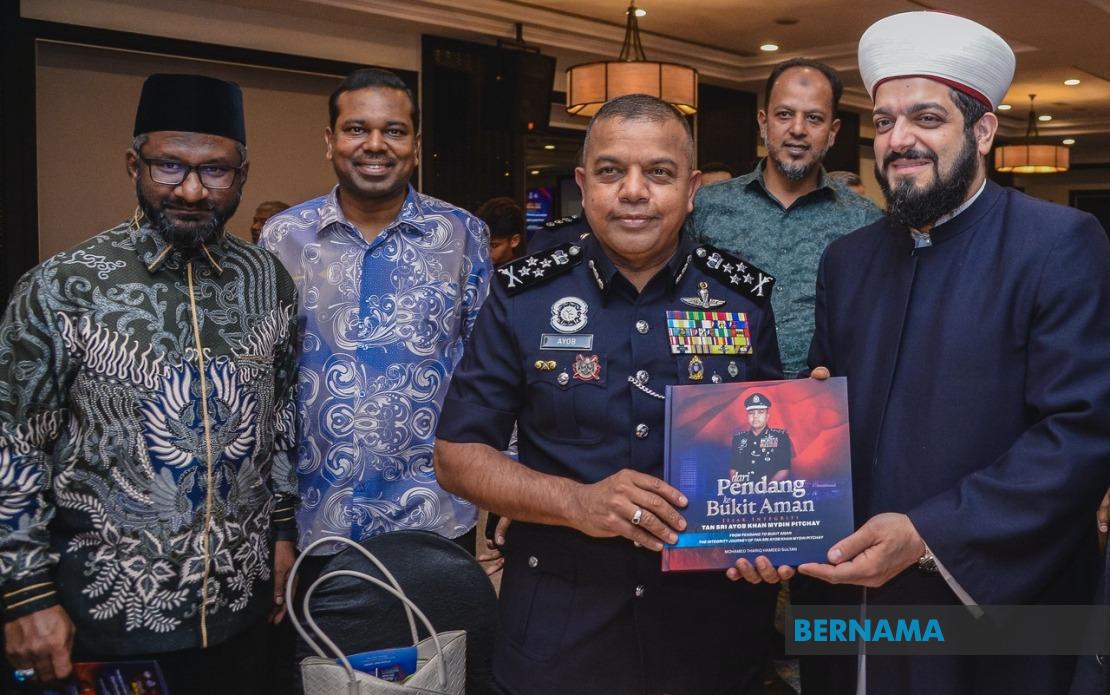
Malaysia's police hierarchy is raising fresh concerns about the persistent and adaptable nature of extremist threats facing the nation, warning that militant organisations are increasingly leveraging digital technologies and entertainment platforms to ensnare potential recruits. Deputy Inspector-General of Police Tan Sri Ayob Khan Mydin Pitchay delivered this sobering assessment at a public event in Kuala Lumpur, underscoring the strategic shift in how radicalisation campaigns are being conducted across the country and the wider region.
The evolution of recruitment methodologies represents a fundamental challenge to law enforcement agencies accustomed to monitoring traditional gathering spaces and religious study circles. Where extremist groups once relied on in-person usrah sessions and community networks to identify ideologically vulnerable individuals, they have now pivoted towards digital ecosystems that operate across borders and offer anonymity to both recruiters and targets. This transition has enabled militant organisations to cast wider nets, access younger demographics with greater technological fluency, and operate with reduced risk of physical detection by authorities.
Particularly concerning to security officials is the infiltration of mainstream gaming environments, with platforms such as Roblox being weaponised as recruitment channels. These gaming spaces attract millions of users globally, including substantial numbers of adolescents and young adults who may lack the critical awareness to identify grooming tactics embedded within seemingly innocent gaming interactions. The integration of extremist messaging into entertainment platforms exploits a vulnerability in current monitoring frameworks, which have historically focused on dedicated extremist forums and messaging applications rather than the recreational digital spaces where young people spend considerable leisure time.
The ideological drivers behind radicalisation have themselves undergone transformation, according to police observations. Extremism is no longer exclusively rooted in religious doctrine or theological grievance, but increasingly capitalises on emotional volatility, personal grievances, and generalised anger toward perceived injustices or antagonists. This broadening of motivation creates a more diffuse and unpredictable threat landscape, as individuals driven by rage or psychological distress become recruitment targets regardless of their baseline religious commitment or understanding of extremist ideology. The police have documented cases involving teenagers whose participation stems more from personal crises or emotional instability than ideological conviction, suggesting that contemporary radicalisation operates through psychological pathways previously underestimated in counter-extremism frameworks.
The tactical implications of these shifting methods demand fundamental adjustments to how Malaysia's security apparatus operates. Ayob Khan emphasised that reactive posturing—waiting to respond after attacks occur—constitutes an unacceptable failure of intelligence and prevention capacity. Instead, he advocated for aggressive proactive monitoring and intervention that identifies potential threats before they crystallise into actionable plans. The Special Branch's Counter-Terrorism Division (E8) has thus been directed to maintain heightened vigilance across digital ecosystems, requiring capacity-building in cyber-investigation techniques and social media analysis that traditional law enforcement training may not have emphasised.
For Malaysia specifically, this warning arrives amid the nation's ongoing efforts to balance security imperatives with digital freedoms. The prevalence of extremist recruitment through commercial gaming platforms raises complex questions about platform responsibility, government oversight of digital spaces, and the appropriate boundaries of surveillance. Unlike encrypted messaging services or dedicated extremist forums that operate in legal grey zones, gaming platforms occupy mainstream commercial territory, creating ambiguity about which stakeholders bear primary responsibility for identifying and removing recruitment content.
The regional dimension of this threat cannot be overlooked. Gaming platforms and social media networks operate transnationally, meaning that extremist recruitment networks can coordinate across Southeast Asian borders with minimal friction. Malaysian nationals may be recruited by foreign operatives, while radicalised Malaysians can be mobilised toward targets in neighbouring countries. This transcends traditional notions of domestic security, as digital recruitment operates on architectures indifferent to territorial boundaries and jurisdictional authority.
The emphasis on emotional triggers and psychological vulnerability as recruitment mechanisms also reflects a worrying democratisation of radicalisation. In earlier iterations, extremist movements required substantial ideological grounding and often operated through hierarchical structures with gatekeeping functions. Contemporary digital recruitment appears to operate with lower barriers to entry, potentially incorporating individuals who might previously have been filtered out as insufficiently committed or ideologically coherent. This creates a more numerous but potentially less predictable threat base, where perpetrators may lack sophisticated operational planning but compensate through sheer unpredictability and reduced decision-making thresholds.
Countering these threats demands not solely law enforcement responses but whole-of-society coordination spanning education, mental health intervention, digital platform governance, and community-level resilience building. Schools and educational institutions must develop curricula addressing digital literacy and critical evaluation of online content. Mental health services require capacity to identify and support individuals showing signs of radicalisation driven by emotional distress. Technology companies face mounting pressure to develop more sophisticated moderation systems capable of detecting recruitment networks operating across seemingly unrelated gaming and social environments.
The police leadership's public articulation of these concerns serves a dual function: it signals to relevant government agencies and international partners that Malaysia views this as an elevated threat requiring resource allocation and policy innovation, while simultaneously signalling to the broader public that security agencies are actively monitoring and responding to emerging methodologies. However, such statements also carry inherent risks, potentially amplifying awareness of gaming platforms as recruitment channels among individuals not previously aware of these vectors.
As digital technologies continue advancing and new platforms emerge, extremist recruitment tactics will inevitably become more sophisticated. Malaysian law enforcement faces a perpetual adaptation challenge, where each counter-measure creates incentives for militant groups to innovate further. The intellectual and technological arms race between security agencies and extremist networks promises to intensify, requiring sustained investment in cyber-capability, intelligence analysis, and cross-agency coordination that transcends institutional silos and territorial boundaries.

