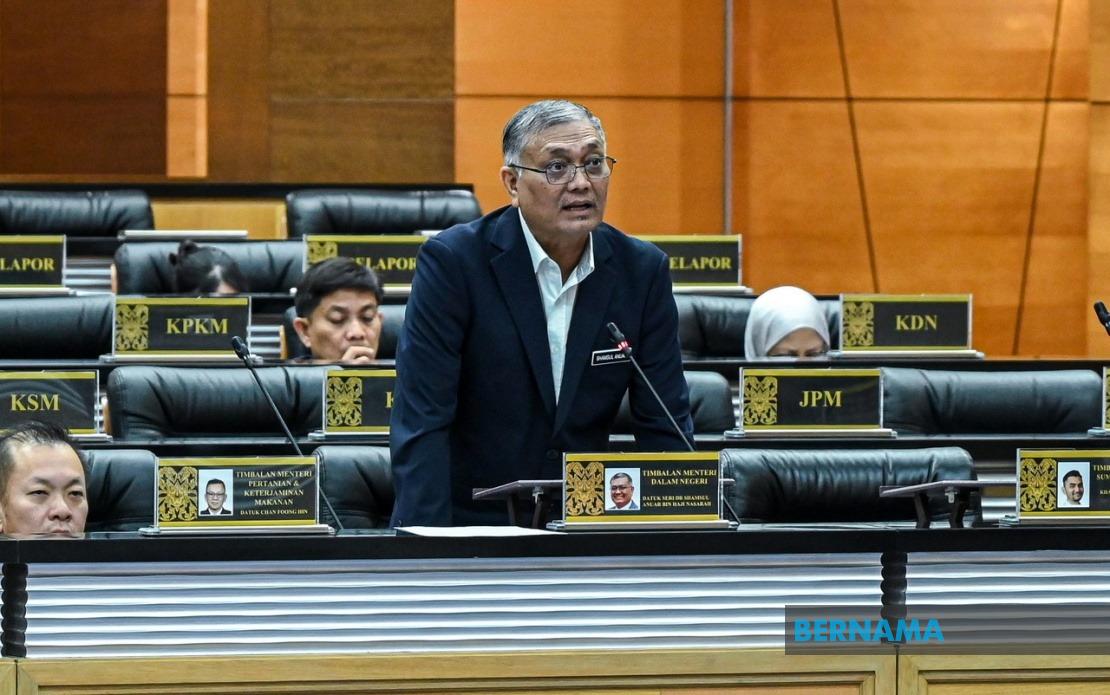
Deputy Home Minister Datuk Seri Dr Shamsul Anuar Nasarah has firmly rejected suggestions that the Royal Malaysian Police might offer preferential treatment to individuals of political prominence, declaring that all investigations are conducted on equal footing irrespective of a suspect's rank or party affiliation. His statement, delivered during a parliamentary session on July 15, addresses persistent public concern about whether Malaysia's law enforcement machinery applies its powers uniformly across the social hierarchy or bends under political pressure.
The minister's reassurance comes as the police continue their inquiry into an explicit video recording that circulated widely in 2019 and became associated with a former government minister. Shamsul Anuar explained that investigators are actively pursuing leads to recover the original footage and identify all devices and technical equipment implicated in its creation and distribution. The ongoing nature of this investigation underscores the complexity inherent in digital-era criminal cases, where tracing digital trails across multiple platforms and storage devices demands sustained forensic and technical effort.
The case is being pursued under multiple legal provisions that reflect the multi-faceted nature of such offences in contemporary Malaysia. Authorities are invoking Section 292, Section 377B and Section 504 of the Penal Code—covering indecent material, consensual intimate acts and defamation respectively—alongside Section 233 of the Communications and Multimedia Act 1998, which addresses the misuse of network facilities for harassment or offensive communications. This layered legislative approach demonstrates how digital misconduct often straddles traditional criminal categories while also engaging modern communications laws.
Shamsul Anuar's emphasis on professional, transparent and impartial investigation reflects a broader messaging initiative by Malaysia's law enforcement establishment to rebuild public confidence. For Malaysian citizens and regional observers, such assurances matter considerably, as perceptions of political interference in criminal investigation have at times undermined trust in institutional independence. The minister's explicit statement that position and political allegiance hold no sway in police decision-making represents an attempt to establish clear boundaries between law enforcement and political influence.
In a separate but equally significant development, the ministry addressed a corruption matter involving the son-in-law of former Prime Minister Tan Sri Muhyiddin Yassin. Unlike the police-led investigation into the 2019 video case, this matter falls squarely within the Malaysian Anti-Corruption Commission's jurisdiction. The MACC has already taken the step of issuing an arrest warrant, signifying that investigators have accumulated sufficient evidence to persuade judicial authorities of probable cause. Shamsul Anuar deliberately refrained from elaborating further, a measured approach that respects the independence of the anti-corruption body and the integrity of ongoing proceedings.
The willingness of different enforcement agencies to pursue cases involving high-ranking or politically connected individuals sends important signals about institutional autonomy in Malaysia's anti-corruption architecture. The MACC's action to seek an arrest warrant in a matter touching a former premier's family represents the kind of institutional assertion of independence that observers of Malaysia's governance landscape watch closely. That the Deputy Home Minister would publicly acknowledge and reference this separate investigation—without attempting to shield or minimize it—further reinforces the official narrative of non-interference.
Beyond these specific cases, Shamsul Anuar addressed the broader framework governing Malaysia's international law enforcement cooperation. The nation maintains extradition arrangements with eleven countries and has become a signatory to the ASEAN Extradition Treaty, positioning itself within regional and global networks for pursuing suspects across borders. The minister indicated Malaysia's readiness to negotiate additional extradition agreements, reflecting an openness to deepening bilateral and multilateral cooperation on criminal matters that transcend territorial boundaries.
These extradition capabilities carry practical significance for Southeast Asian readers, as they establish procedural mechanisms through which individuals fleeing Malaysian jurisdiction might be pursued and repatriated for prosecution. The Extradition Act 1992 provides the statutory framework governing such arrangements, and bilateral treaties establish the specific terms under which nations cooperate. Malaysia's incremental expansion of its extradition partnerships signals an attempt to close gaps that previously allowed fugitives to elude accountability through geographic flight.
For Malaysian observers and regional stakeholders, the Deputy Home Minister's parliamentary statement functions simultaneously as policy clarification, institutional reassurance and political messaging. It acknowledges legitimate public questioning about whether powerful individuals receive different treatment while asserting that formal policy dictates equal application of the law. Whether such assurances sufficiently address underlying concerns about selective enforcement or political manipulation remains a matter of ongoing democratic scrutiny.
The timing and substance of Shamsul Anuar's remarks occur within a broader context of Malaysia's ongoing institutional evolution regarding corruption management and law enforcement. Cases involving former political leaders and their associates have become increasingly prominent features of post-2018 Malaysian public life, reflecting both genuine expansion of accountability mechanisms and the contentious political nature of such prosecutions. That the Deputy Home Minister felt compelled to provide explicit assurance of non-interference suggests the depth of public anxiety about this question.
Moving forward, the actual outcomes of these investigations—including whether charges are filed, what verdicts emerge, and how sentences compare to those imposed on non-political offenders—will ultimately determine whether official assurances translate into demonstrated institutional independence. Public trust in police and anti-corruption agencies depends less on ministerial statements and more on the cumulative pattern of decision-making visible to the citizenry over time.

