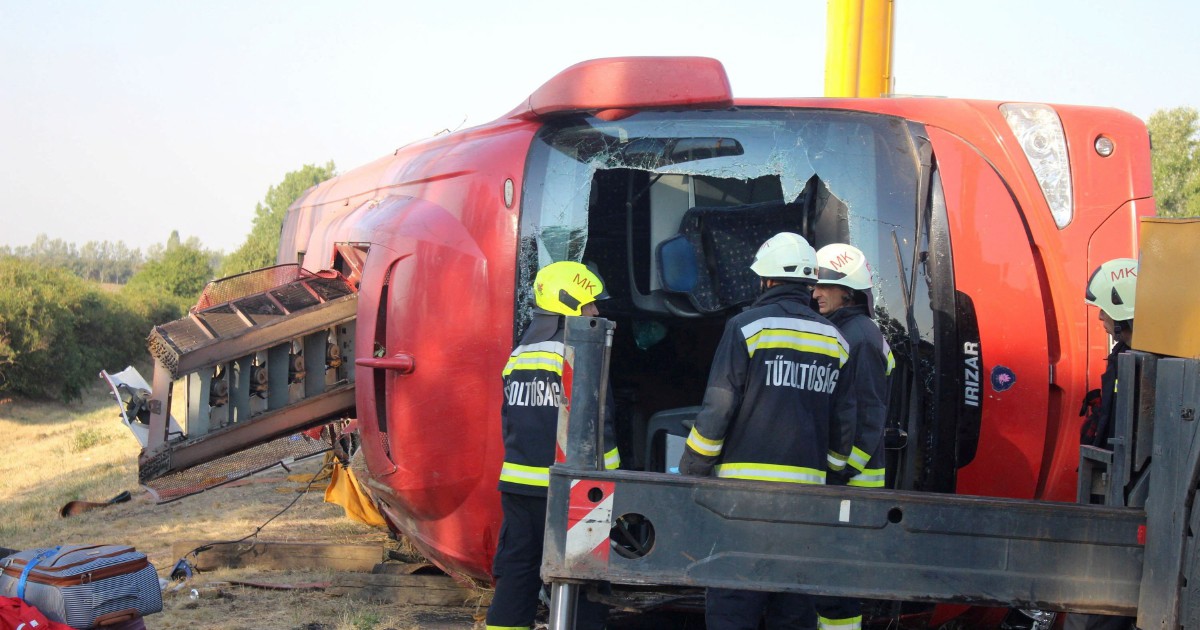
A major transport tragedy unfolded on a Hungarian highway in the early hours of Sunday when a Polish bus carrying passengers veered off the road and overturned, claiming the lives of twelve people and injuring at least ten others critically. Hungarian officials, including Prime Minister Peter Magyar, confirmed the grim toll from what authorities are treating as one of the most serious road accidents in the region in recent times.
The incident occurred during the overnight hours when traffic on Hungarian highways typically thins, raising questions about visibility, road conditions, and the circumstances that led to the vehicle losing control. Initial reports suggest the bus was travelling along a major route when it left its lane, though investigators were still working to establish the precise sequence of events that triggered the accident.
Emergency responders mobilised quickly to the crash scene, where rescue teams conducted extensive operations to extract victims from the wreckage. The scale of the emergency required coordination between Hungarian and Polish authorities, reflecting the cross-border nature of the tragedy and the established procedures that govern such incidents across the European Union.
For the families of those who perished, Sunday's collision represents an unfathomable loss. Passenger bus services form a critical transportation link for travellers throughout Central Europe, connecting cities and towns at significantly lower cost than alternative modes. The reliance on such services makes accidents of this magnitude particularly devastating within affected communities.
The investigation into the causes of the overturning will likely examine multiple factors. Road safety analysts point to the importance of driver fatigue as a potential contributing element in overnight transport operations, particularly on longer routes where consecutive driving hours accumulate. Additionally, investigators will assess whether mechanical failure, poor road conditions, adverse weather, or human error played a role in the loss of vehicle control.
This tragedy occurs against a backdrop of ongoing concerns about road safety standards across Eastern Europe and the Central European region. While the European Union has implemented extensive regulations governing vehicle safety, driver working hours, and infrastructure maintenance, enforcement and compliance levels vary across member states. Long-distance coach services operating internationally sometimes operate in legal grey areas where liability and responsibility are shared across jurisdictions.
The Hungarian authorities will likely cooperate with their Polish counterparts in a comprehensive investigation. Such incidents typically trigger formal inquiries involving multiple agencies, vehicle inspections, driver record reviews, and analysis of the physical evidence at the crash site. The findings could potentially influence safety protocols and regulations governing cross-border bus operations throughout Europe.
For the wider Malaysian and Southeast Asian context, this incident serves as a sobering reminder of the risks inherent in long-distance bus travel, a transportation mode that remains extremely popular across ASEAN countries. Many Southeast Asian nations rely heavily on affordable coach services for regional connectivity, yet road safety infrastructure and enforcement standards can be inconsistent. The Hungarian accident underscores the importance of rigorous maintenance schedules, driver training protocols, speed limit enforcement, and regular inspections to prevent similar catastrophes.
Governments and private operators throughout Southeast Asia would be wise to examine their own safety frameworks against this European tragedy. Investment in modern safety systems, including electronic stability control and collision warning technology, alongside strict adherence to driver rest period regulations, could significantly reduce fatalities. The cost of prevention measures pales in comparison to the human suffering and economic consequences of major transport accidents.
Prime Minister Peter Magyar's confirmation of the casualty figures underscores the severity of the incident at the highest levels of Hungarian government. Such accidents trigger national mourning periods and often prompt renewed public discourse about transport safety, budget allocation for road infrastructure improvements, and regulatory compliance.
The twelve fatalities represent families shattered, communities grieving, and a stark reminder that despite modern vehicles and European infrastructure standards, the fundamental risks of road travel persist. The investigation's findings will be scrutinised internationally, potentially influencing how bus operators manage risk factors and how regulators approach oversight of cross-border transport services.
As rescue operations conclude and identification of victims proceeds, attention will turn to supporting survivors dealing with both physical injuries and psychological trauma. Long-term support mechanisms, including counselling services and financial assistance for those left without income-earning family members, will be essential components of the response to this tragedy.

