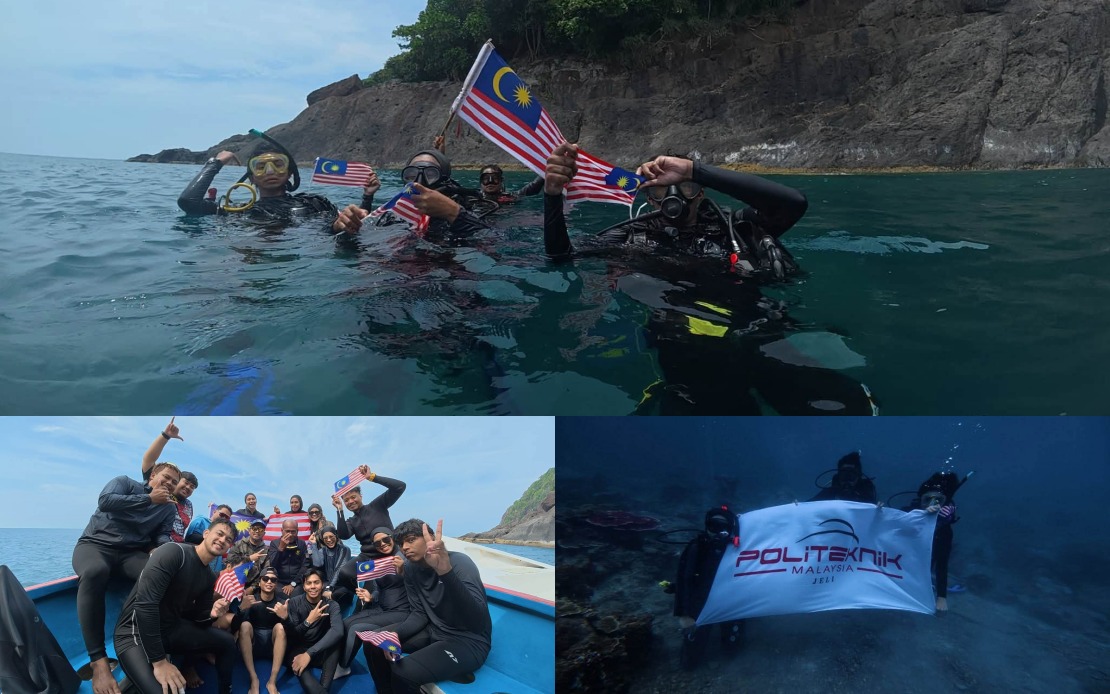
Politeknik Jeli Kelantan has combined patriotic fervour with practical vocational training in a distinctive National Day celebration that saw the national flag planted on the seabed off the coast of Terengganu. The initiative, executed 18 metres below sea level near Pulau Tenggol, represented far more than symbolic gesture-making; it demonstrated the institution's commitment to equipping aquaculture students with genuine competencies demanded by Malaysia's growing marine industries.
The underwater flag display formed the centrepiece of an intensive scuba diving training and certification programme that ran from August 27 to 30 at Dive Buddy Dungun, engaging participants from the PJK Aquaculture Technology Unit and the Department of Agrotechnology and Bio-Industry. Rather than treating diving skills as ancillary to core curricula, the polytechnic positioned underwater proficiency as an integral component of preparing graduates for careers in marine aquaculture and biotechnology—sectors where workers frequently operate in challenging marine environments after completing their studies.
According to Mohd Adam Nashriq Bani Yamin, an aquaculture lecturer at Politeknik Jeli, the programme served dual educational objectives. Beyond the patriotic symbolism of displaying Malaysia's flag at depth, the initiative exposed students to comprehensive water safety protocols and emergency response procedures they would realistically encounter during maritime employment. This pragmatic approach transforms National Day observance into meaningful professional development rather than ceremonial performance.
The diving component constituted part of a broader Water Safety course that the institution has integrated into its aquaculture curriculum. Students demonstrated sufficient aptitude and commitment were afforded the opportunity to pursue PADI (Professional Association of Diving Instructors) Open Water Diver certification—a globally recognised credential that substantially enhances employment prospects within the marine sector. This qualification represents tangible career capital in an industry where international standards increasingly govern professional practice.
Two lecturers and two fifth-semester students from the Diploma in Aquaculture Technology programme participated in the training initiative, receiving instruction from Dr Nabila Talib, a certified PADI Divemaster operating through Dive Buddy Malaysia. The involvement of advanced students alongside faculty members created a genuine knowledge-transfer environment where learners could observe experienced practitioners demonstrating proper technique and safety consciousness in live marine conditions rather than simulated training tanks.
Beyond the Jalur Gemilang, participants also positioned the institutional flag of Politeknik Jeli Kelantan at identical depth, reinforcing the symbolic connection between Malaysia's national identity and the polytechnic's broader mission. This dual-flag approach articulated institutional pride whilst simultaneously grounding patriotic sentiment in the concrete reality of professional skill-building—a particularly resonant message in vocational education contexts where students often question the relevance of traditional civic observances to their career trajectories.
Mohd Adam Nashriq emphasised that such hands-on exposure cultivates graduates equipped with both theoretical understanding and practical competencies that contemporary marine industries actively seek. Aquaculture and marine biotechnology employers increasingly demand workers capable of managing tasks that require underwater proficiency, whether in deep-water farming operations, equipment maintenance, or research activities. By embedding these skills within formal polytechnic curricula, Malaysia positions itself to develop domestic talent capable of competing within regional and global marine sectors without relying upon costly expatriate expertise.
The diving capabilities acquired through such programmes extend beyond aquaculture proper. Students completing this training develop expertise applicable to marine research expeditions, offshore farming operations, ecosystem conservation initiatives, and coastal environmental monitoring—diversifying their career options whilst broadening their utility to employers across multiple marine-related industries. This flexibility enhances individual graduate resilience whilst strengthening Malaysia's capacity to respond to evolving skills demand within blue economy sectors.
Politeknik Jeli's approach reflects broader recognition within Malaysian vocational education that traditional classroom instruction requires supplementation with immersive practical experience to produce graduates genuinely prepared for employment reality. By harnessing National Day observance as catalyst for meaningful professional development, the institution demonstrates that patriotic commitment and practical skill-building need not exist in tension but rather can reinforce one another—producing graduates who carry both national pride and genuine technical competence into careers that contribute to Malaysia's marine economic development.

