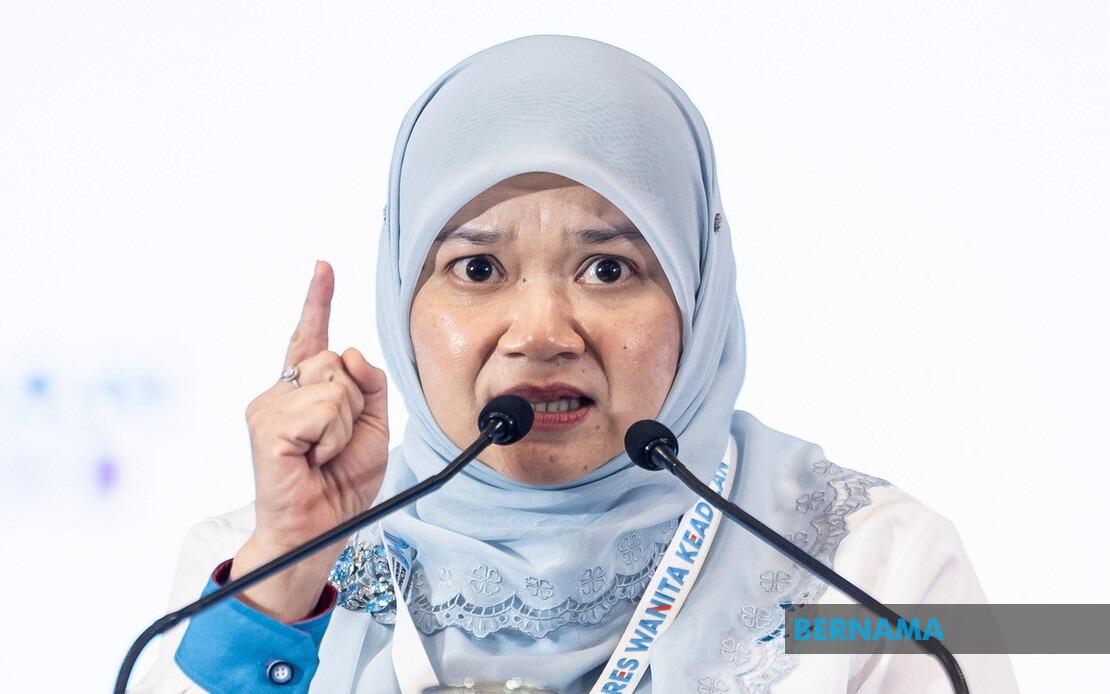
Malaysia's political landscape would benefit from a fundamental shift toward issue-driven competition, according to Wanita PKR chief Fadhlina Sidek, who delivered this message at the 2026 Wanita PKR National Congress in Melaka. Speaking at the Melaka International Trade Centre in Ayer Keroh on Wednesday, she articulated a vision for electoral politics grounded in constructive debate over policy platforms instead of appeals to religious identity. Her remarks come at a time when Malaysian politics has increasingly witnessed the weaponisation of faith-based narratives during campaign seasons, a trend that observers argue risks deepening societal divisions.
Fadhlina's central argument centres on distinguishing between legitimate political competition and the misuse of religious matters for electoral gains. She emphasised that while faith remains important in Malaysian society, it should not become a tool for politicians seeking to incite voters or manufacture divisions along sectarian lines. This distinction reflects growing concern among reform-minded politicians about the trajectory of Malaysian electoral politics, where religious rhetoric has occasionally overshadowed substantive discussion of economic management, infrastructure development, and social welfare—issues that directly affect voters' daily lives across all communities.
The PKR leader presented a clear alternative vision: that political parties should compete on the basis of their capacity to address citizens' practical needs and provide workable solutions to pressing national challenges. This framework suggests that parties ought to distinguish themselves through the quality of their ideas, the coherence of their policy programmes, and the credibility of their implementation records. By shifting competition toward these dimensions, Fadhlina argued, the political system would create space for broader engagement with voters and allow citizens to make informed choices based on substantive merit rather than emotional appeals.
Beyond her critique of religious politicisation, Fadhlina also called for a renewal of grassroots engagement within PKR, urging party leaders and members at all levels to deepen their connections with communities. Her emphasis on understanding local needs through direct interaction reflects a recognition that political legitimacy ultimately depends on demonstrating tangible concern for constituents' welfare. She specifically encouraged party members to observe their neighbours' circumstances closely and identify where assistance might be needed, positioning community service as integral to the party's political foundation.
This grassroots focus carries particular significance in Malaysia's context, where local-level politics often determines electoral outcomes and shapes public perceptions of party effectiveness. When party members are perceived as genuinely invested in community welfare rather than merely pursuing votes, they build political capital that transcends narrow factional or identity-based appeals. Fadhlina's call therefore represents an attempt to reorient PKR's political machinery toward a model that combines policy innovation with demonstrable on-the-ground presence and responsiveness.
The Wanita PKR chief also addressed internal party dynamics, urging members to maintain unwavering commitment to PKR's broader struggle despite the various difficulties and setbacks the party has encountered. This message appears designed to strengthen organisational cohesion during a period when Malaysian political fortunes have shifted considerably. Her assertion that party strength derives from sustained effort and reliable machinery at all organisational levels underscores the belief that electoral success requires consistent infrastructure and dedicated personnel rather than episodic campaigns driven by external circumstances.
Fadhlina's remarks carry implications extending beyond PKR's internal concerns. Her public advocacy for issue-based political competition represents a broader intellectual intervention in Malaysian political discourse. By a senior party figure articulating clear opposition to religious exploitation in elections, PKR signals that its approach to politics differs from alternatives that might leverage sectarian identity more aggressively. This positioning could influence how voters perceive the party relative to competitors and may contribute to broader conversations about the kind of political culture Malaysians wish to cultivate.
For Malaysian voters across the peninsula and in federal territories, Fadhlina's message suggests that political choice ultimately rests with citizens themselves. Voters retain the capacity to reward politicians and parties that engage substantively with their concerns and punish those who resort to divisive rhetoric. This framework empowers citizens as discriminating evaluators of political offerings rather than passive recipients of campaign messaging. However, it also demands that voters invest effort in assessing policies and candidates rather than relying on superficial identity markers.
The broader regional context also deserves attention. Southeast Asia has witnessed concerning trends toward electoral politics weaponising religious and ethnic identity, sometimes with destabilising consequences for social cohesion. Malaysia's experience navigating religious diversity within a constitutional framework based on Islam's federal role creates distinctive challenges. Fadhlina's call for restraint and issue-focused competition reflects an implicit recognition that Malaysia's continued stability depends on political actors exercising responsibility in how they mobilise voters, particularly around sensitive matters of faith.
Looking forward, the gap between Fadhlina's articulated ideal and actual political practice remains substantial. Many electoral campaigns across Malaysia still emphasise identity-based appeals and religious symbolism, suggesting that the shift toward issue-based competition faces significant structural and strategic obstacles. Party competition's intensity creates incentives to deploy emotionally compelling narratives, including religious ones, even if political leaders theoretically prefer substantive debate. Closing this gap will require sustained commitment from political figures willing to model different approaches and voters willing to reward such behaviour at the ballot box.

