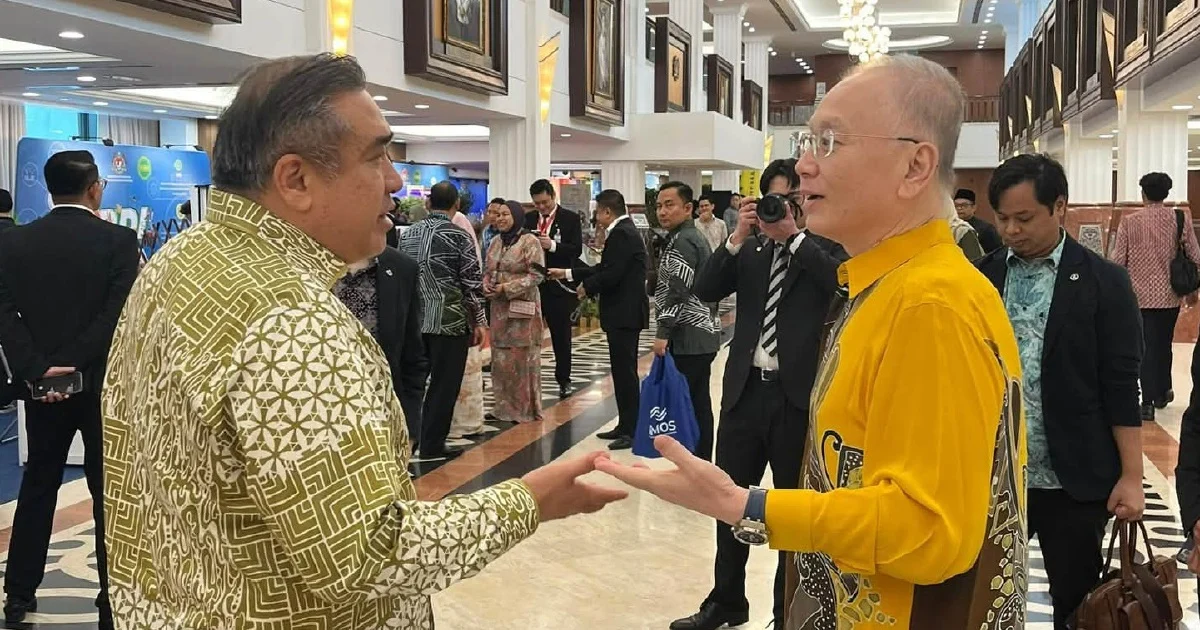
As the Johor state election campaign reaches fever pitch, opposition and government leaders have signalled their determination to preserve the dignity of parliamentary proceedings, resisting pressure to allow electoral tensions to contaminate the chamber's institutional norms. DAP secretary-general Anthony Loke has emerged as a key voice calling for the separation of electoral politics from the formal business of parliament, arguing that parliamentary debate should remain grounded in professionalism and mutual respect regardless of the hostilities playing out on the campaign trail.
The timing of this call for restraint is significant given the escalating rhetoric surrounding the Johor contest. State elections inevitably bring heightened partisan activity, with competing coalitions mobilising supporters and intensifying their messaging. However, Loke's intervention suggests that some political figures recognise the risks of allowing such campaigns to erode parliamentary standards and institutional integrity. The chamber serves functions that transcend electoral cycles—passing legislation, scrutinising government, and representing constituent interests—and these roles require a baseline of civility that can be compromised when members treat every exchange as a campaign opportunity.
Loke's position reflects a broader concern within Malaysia's political establishment about the consequences of excessive personalisation and polarisation in electoral competition. When every parliamentary intervention becomes a campaign soundbite, and when members prioritise scoring political points over substantive engagement, the institution itself suffers. This can undermine the legislature's capacity to conduct serious deliberation on complex policy questions affecting Malaysians' lives, from economic management to social welfare and infrastructure development.
The reference to Wee in the original reporting indicates that government figures have similarly indicated a willingness to maintain professional standards. This kind of cross-party understanding, even if tacit, provides a necessary check on the impulse to turn parliament into an extension of the campaign rally. When both opposition and government acknowledge the importance of preserving parliamentary decorum, it creates space for substantive debate to occur alongside electoral competition.
For Malaysian observers, this development carries particular relevance given the country's history of political tensions and the occasional crossing of lines that characterise heated election periods. Parliament functions best when members can disagree fundamentally on policy and ideology while still treating one another with basic professional courtesy. The Johor election provides a test case for whether Malaysia's political culture can accommodate both robust electoral competition and institutional restraint.
The Johor contest itself carries high stakes for national politics. As one of Malaysia's largest and most economically significant states, the outcome will influence the broader balance of power and may shape coalitional dynamics at the federal level. This raises the electoral temperature considerably, creating strong incentives for parties to maximise their campaign intensity. The pressure on individual politicians to deliver maximum partisan advantage can therefore overwhelm more measured approaches to political engagement.
Loke's call for professional parliamentary conduct during such pressure represents a form of leadership that deserves recognition. Rather than simply going along with whatever campaign tactics might be advantageous in the moment, he has articulated a principle about how political competition should operate within institutional frameworks. This position acknowledges that democracies depend on shared commitments to rules and norms that constrain even the intense competitive impulses of electoral politics.
The commitment to parliamentary professionalism also serves Malaysian voters' longer-term interests. When elections are conducted within frameworks of institutional respect, when parliament itself remains a space for substantive rather than purely performative debate, citizens gain better information about policy positions and governing capacity. Campaign rallies necessarily involve simplification and rhetorical amplification, but parliament offers opportunities for detailed examination of government performance and alternative proposals. Preserving that space requires deliberate effort, particularly during periods of electoral intensity.
There remains a practical question about how such commitments translate into actual behaviour when the heat of campaigning reaches its peak. Political impulses often overcome abstract principles, particularly when members sense electoral advantage. The true test will come in the weeks ahead as the Johor campaign progresses and parliamentary sessions continue. Whether parliamentary exchanges remain substantive and respectful or devolve into campaign theatre will reveal the depth of commitment to the principles articulated by figures like Loke.
The broader implication extends beyond the immediate Johor election. If Malaysia's political leadership can demonstrate that electoral competition and institutional integrity are compatible—that vigorous campaigns and professional parliaments can coexist—it strengthens the democratic system's resilience. Conversely, if parliamentary standards deteriorate during election periods, it sets a corrosive precedent that normalises the instrumentalisation of state institutions for partisan purposes. The decision to privilege parliamentary professionalism during the Johor campaign therefore carries significance that extends well beyond this single election cycle, affecting how Malaysia's political system functions in subsequent contests and electoral periods.

