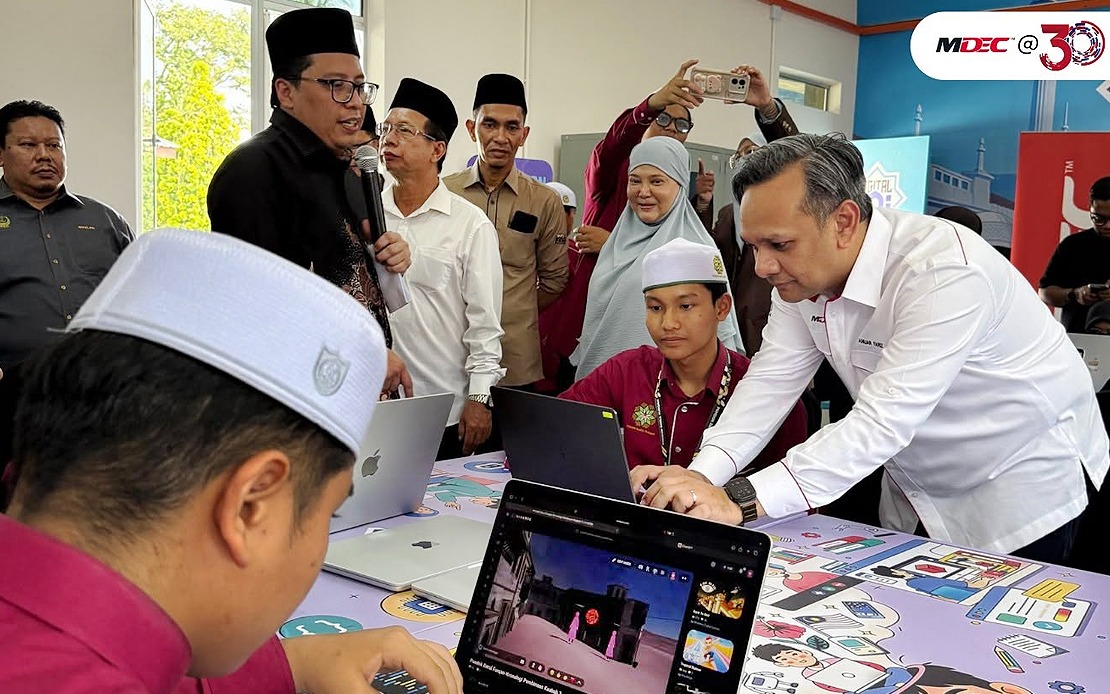
Pondok Darul Furqan in Tambun, Ipoh, has become the first recipient of a Digital Maker Hub from the Malaysia Digital Economy Corporation (MDEC) as part of a broader national initiative to integrate cutting-edge technology into Islamic education. The handover marks a significant step in democratising access to digital learning resources beyond mainstream secular institutions, recognising that technology adoption must span the entire education ecosystem if Malaysia is to realise its ambitions in the digital economy.
The Digital Maker Hub is far more than a simple computer lab. According to MDEC chief executive officer Anuar Fariz Fadzil, the facility functions as an interactive learning environment provisioned with laptops, robust internet infrastructure, smartboards, robotics kits, and microcontroller sets. These tools enable students to move beyond theoretical understanding and engage in hands-on experimentation with emerging technologies, a pedagogical approach increasingly recognised as essential for developing problem-solving skills and technological literacy in younger generations.
This initiative operates under the Islamic Education Institution Digital Transformation Programme, officially termed Digital IPI, a collaborative endeavour between MDEC and the Department of Islamic Development Malaysia (JAKIM). The programme represents a deliberate policy choice to ensure that Islamic education institutions do not fall behind in the technology curve, a concern that carries particular weight in Malaysia where Islamic schools serve a substantial student population across both urban and rural areas. By integrating digital capabilities into these institutions, authorities aim to prevent a two-tier education system where access to technology training becomes a privilege of secular or urban schools.
Anuar Fariz emphasised that Malaysia's trajectory toward becoming an AI Nation by 2030 cannot succeed if entire segments of the educational landscape remain disconnected from digital infrastructure and training. The argument reflects broader economic policy thinking that technological advancement must be inclusive to maximise both human capital development and workforce readiness. When Islamic education institutions gain proper technological resources, their graduates enter the employment market with competitive digital competencies, expanding the talent pool available to Malaysia's growing technology sector and supporting the national Digital Action Plan 2030.
At Pondok Darul Furqan specifically, 30 students and five teachers have already participated in a two-day MetaSkool Metaverse Programme, an experiential learning initiative introducing participants to metaverse technology through immersive and interactive exercises. This early exposure serves a dual purpose: it familiarises learners with emerging virtual environments while simultaneously encouraging creative thinking and innovation. For Islamic education institutions, integrating metaverse training acknowledges that digital natives in these settings need exposure to frontier technologies just as much as their peers in conventional schools.
The pilot phase extends beyond Ipoh. Four additional Islamic education institutions in Kedah, Kelantan, Negeri Sembilan, Pahang, and Penang will also receive Digital Maker Hubs, creating a regional network of digitally equipped Islamic schools. This phased rollout strategy allows MDEC to evaluate implementation effectiveness, gather feedback from early recipients, and refine support mechanisms before any potential nationwide expansion. The geographic distribution across multiple states ensures that digital transformation in Islamic education is not confined to the Klang Valley or other developed urban centres.
When fully operationalised, Digital IPI is projected to reach more than 3,000 students and 50 teachers through structured training modules addressing multiple competency areas. The curriculum encompasses digital literacy and artificial intelligence fundamentals, digital creativity and content production, immersive technology applications, metaverse platforms, and digital content development skills. This breadth reflects recognition that future workforce participation will require multifaceted digital competencies rather than single-skill proficiency, and that Islamic education institutions must prepare their students accordingly.
A noteworthy aspect of the programme's design is its attempt to integrate religious education principles with technology advancement holistically. Rather than treating technology as a secular domain separate from Islamic values, the initiative seeks to demonstrate how virtues such as trustworthiness can be embedded within digital practice and technological innovation. This integrative approach may prove particularly valuable for Islamic education stakeholders concerned that rapid technological adoption might marginalise or dilute religious instruction.
The timing of this initiative, building on groundwork laid by Prime Minister Datuk Seri Anwar Ibrahim when he launched Digital IPI in March, indicates sustained political commitment to technology democratisation across education sectors. Government backing provides legitimacy and resource assurance to institutional partners and helps overcome potential resistance to rapid change within traditional educational settings.
For Malaysia's broader digital economy agenda, the inclusion of Islamic education institutions in transformation initiatives represents pragmatic recognition that approximately one-fifth of Malaysian students attend these schools. Without ensuring comparable digital capacity and training across this cohort, national AI and digital economy ambitions risk developing on a foundation of unequal skill distribution. By contrast, equipping Islamic schools with Digital Maker Hubs and metaverse training demonstrates that digital advancement is neither culturally exclusive nor reserved for secular frameworks, potentially smoothing adoption pathways and community acceptance of technology integration across diverse educational philosophies.

