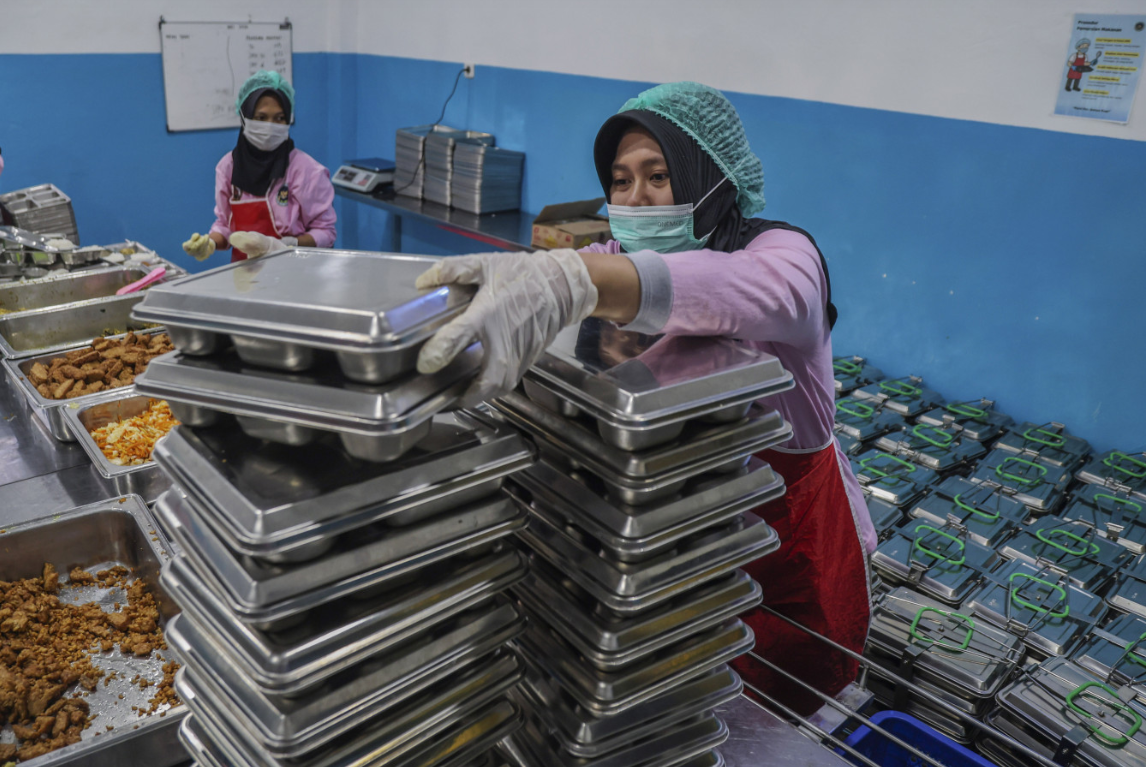
President Prabowo Subianto is undertaking a critical reassessment of two centrepiece initiatives from his administration, the free nutritious meal scheme and the Red and White cooperative network, amid mounting controversies that have tested the credibility of his young presidency. The policy review signals a possible recalibration in how these ambitious programmes will be rolled out across Indonesia, reflecting the government's acknowledgement that their current trajectories have generated substantial public concern and logistical complications that require urgent attention.
The initiative emerged as a focal point during a high-level cabinet session held at the Palace on Wednesday, July 15, where ministers responsible for programme implementation gathered for a four-hour closed-door discussion. National Nutrition Agency (BGN) deputy chief Agustina Arumsari disclosed that Prabowo has instructed the nutrition agency to conduct a meticulous evaluation of how meals are currently being distributed in educational institutions, with a mandate to complete the comprehensive assessment within one month. This timeline underscores the administration's sense of urgency in addressing criticisms that have mounted since the programmes' inception.
The presidential instruction emphasises a deliberative approach rather than hasty policy shifts. Agustina elaborated that the President has stressed the importance of thorough examination of each policy dimension, with particular attention to ensuring that any modifications are implemented equitably and with careful consideration of their downstream effects. This measured rhetoric represents a subtle acknowledgement that the programmes' initial rollout may have proceeded too rapidly without sufficient groundwork for addressing practical implementation challenges that have since surfaced in schools and communities nationwide.
A central focus of the review concerns the beneficiary eligibility framework, with government officials now reconsidering whether higher-income households should continue receiving meal provisions. The administration is grappling with a delicate balancing act: narrowing the programme to target only the most economically vulnerable families would improve cost efficiency and concentrate resources where need is greatest, yet implementing such restrictions creates pedagogical and social complications. Officials have recognised the psychological impact of selective meal distribution within classrooms, where some students would receive free provisions while their classmates from more affluent backgrounds would not, potentially creating stigma and classroom disruption that could undermine educational outcomes.
Beyond eligibility questions, the government is evaluating alternative delivery mechanisms that could improve efficiency and reduce operational costs. The administration is considering whether existing school canteen infrastructure could absorb meal distribution responsibilities, rather than maintaining parallel centralised kitchens that require substantial overhead investment and management complexity. This flexibility in delivery mechanisms suggests the government recognises that the current model, while well-intentioned, may not represent the most cost-effective or logistically sustainable approach across Indonesia's geographically diverse education system.
The free meals initiative carries an estimated budget of at least Rp 268 trillion (US$19.5 billion) for 2026 alone, positioning it as one of the administration's most expensive social programmes. The scheme aims to provide daily nutrition to approximately 83 million beneficiaries encompassing schoolchildren, university students, and pregnant women, representing an ambitious attempt to address malnutrition and childhood stunting—persistent challenges in Indonesia's health landscape. Yet this very scale has exposed the administration to intense scrutiny regarding whether such enormous expenditure represents the most efficient use of public resources, particularly when competing priorities demand funding.
The programme has become entangled in multiple crises that have eroded public confidence. Street protests erupted last month demanding the scheme's suspension, while food poisoning incidents have raised safety concerns about meal preparation and storage protocols. Most damaging has been a corruption investigation involving high-ranking officials from the National Police and Indonesian Military (TNI), suggesting that mismanagement and potential embezzlement may have characterised programme administration. These complications have transformed what should have been a flagship achievement into a credibility test for Prabowo's governance capacity, with critics questioning whether the administration possesses the institutional competence to execute programmes of such magnitude.
Parallel to the nutrition programme review, the government has announced expansions to the Red and White cooperative network, which will now serve as an official distribution channel for various government assistance initiatives and subsidised commodities. Under the revised framework, these cooperatives will also function as agricultural stabilisers, purchasing rice, corn, and other produce when market prices decline below government-set support levels. This expanded mandate attempts to integrate rural economic development with poverty alleviation and food security objectives, creating a multi-functional institutional framework intended to stimulate rural entrepreneurship while protecting farmer incomes.
However, the cooperative initiative faces its own reputational crisis. Mandatory military-style training programmes imposed on cooperative managers resulted in at least four deaths, generating public outrage and accusations that the government had implemented dangerous and inappropriate protocols. These fatalities have intensified pressure on the administration to fundamentally reconsider how the cooperative system operates and how it recruits and trains personnel. The deaths represent not merely programme implementation failures but symbolise broader questions about the militaristic approach characterising some aspects of Prabowo's governance style, raising concerns among civil society observers about the administration's commitment to civilian institutional norms.
For Malaysia and Southeast Asia more broadly, the Indonesian experience offers instructive lessons about the political and logistical complexities surrounding large-scale social programmes. As several regional governments contemplate expanded welfare initiatives, Indonesia's struggles with implementation, cost control, and preventing diversion of funds through corruption demonstrate that programme ambition must be matched by institutional capacity, transparent oversight mechanisms, and genuine stakeholder consultation. The willingness of the Prabowo administration to pause and reassess these initiatives, despite political costs, may ultimately strengthen the programmes' design and public legitimacy, though it also exposes the challenge of balancing social aspiration with administrative reality.
The review process will likely shape how Indonesia approaches major social spending going forward, with implications for regional development patterns and policy frameworks. By reconsidering programme design before irreversible institutional patterns become entrenched, the administration retains opportunity to preserve its poverty alleviation ambitions whilst addressing legitimate public concerns. Success in this recalibration will significantly influence both the government's broader policy trajectory and public perception of its commitment to effective, accountable governance—an assessment that extends beyond Indonesia's borders as regional observers evaluate whether Southeast Asian democracies can successfully implement transformative social policies without sacrificing either fiscal prudence or institutional integrity.

