President Prabowo Subianto's signature free nutritious meals initiative has hit another stumbling block with the resignation of the National Nutrition Agency (BGN) head Nanik Sudaryati Deyang, who stepped down less than two months into her tenure. Her departure underscores deepening institutional challenges within the programme, which has become one of the administration's most visible yet troubled commitments since Prabowo took office.
Nanik announced her decision to resign via Facebook on Wednesday, citing medical necessity rather than performance issues. She disclosed that doctors had identified a blockage in one of her heart arteries and that she required overseas treatment. In a particularly candid admission, she attributed her deteriorating health partly to the intense psychological pressure of overseeing the massive allocation of public funds. The responsibility of safeguarding a multitrillion-rupiah budget had proven so overwhelming that she described the experience as standing perpetually on the precipice of a steep cliff, where any administrative misstep could have catastrophic consequences.
During her brief leadership, Nanik had developed an extraordinarily cautious approach to fund management, refusing to authorise expenditures independently and subjecting every policy decision to repeated scrutiny. This defensive posture, while perhaps motivated by the need to restore public confidence following her predecessor's fall from grace, ultimately became unsustainable. She acknowledged that managing such a substantial budget had become a source of what she termed "acute trauma," demonstrating how the combination of administrative complexity and political sensitivity had created an untenable working environment.
Nanik's exit comes as the fallout from her predecessor's downfall continues to reverberate through the agency. Dadan Hindayana, the former BGN chief, was arrested in early June on corruption-related charges following his dismissal by Prabowo. Two of his deputies were also implicated in the investigation, which centred on alleged irregularities in procurement and financial management of the free meals programme. The Attorney General's Office probe exposed significant governance gaps within the agency, prompting Prabowo to seek an interim replacement who could stabilise the institution and rebuild institutional credibility.
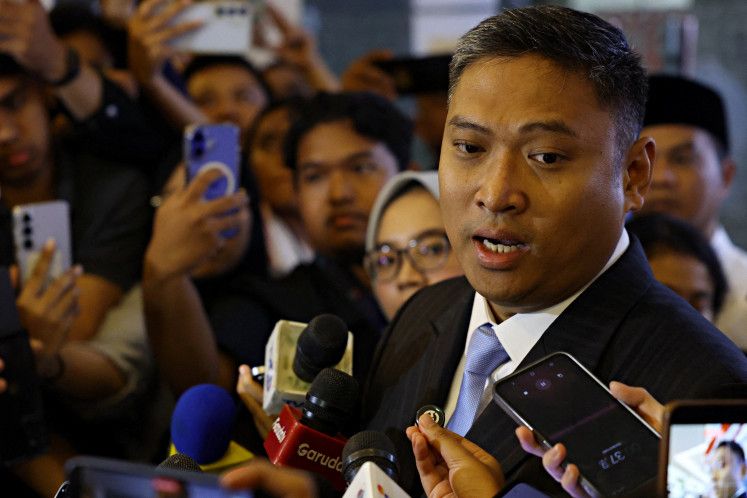
Within hours of accepting Nanik's resignation, Prabowo moved swiftly to fill the vacancy by appointing Sudaryono, the Deputy Agriculture Minister and a prominent figure within his Gerindra Party. Sudaryono brought relevant political connections, having previously served as a presidential aide during the 2010s, though his track record in managing large-scale social programmes remained unclear. At his inauguration ceremony at the State Palace in Jakarta on Wednesday, he pledged to overhaul the agency's governance structure by prioritising transparency and embracing digitalisation to replace outdated manual processes.
Sudaryono's commitment to systemic reform resonated with broader acknowledgment within Prabowo's administration that the free meals programme had suffered from inadequate institutional groundwork. State Secretary Prasetyo Hadi told reporters that the President had instructed his team to undertake comprehensive reforms at the BGN, recognising that previous leadership had operated without sufficient safeguards. The selection of Sudaryono was justified partly on the basis that he had contributed to designing the free meals initiative during its developmental phase, theoretically positioning him to address implementation deficiencies while honouring the President's original vision.
The programme itself has endured a gruelling eighteen months marked by recurring operational failures and public health concerns. Widespread reports of food poisoning incidents across multiple states compelled Nanik to impose a moratorium on establishing new kitchen facilities while existing operations underwent comprehensive review. This decision, though prudent from a food safety perspective, triggered significant social blowback when thousands of prospective kitchen operators—many of whom had invested substantial personal capital in their facilities—staged protests against the indefinite suspension.
Budgetary reallocations have further illustrated the programme's troubled trajectory. The BGN announced on Tuesday that the provisional 2026 budget would be scaled back from the originally planned Rp335 trillion to Rp229 trillion, equivalent to approximately US$12.8 billion. The reduction reflected more fundamental recalibration of programme ambitions, with the beneficiary target downsized from an initial 82.9 million people to 62.7 million. This figure encompasses schoolchildren, toddlers, and pregnant women, representing a substantial retreat from Prabowo's campaign promises regarding the initiative's reach and scope.
Agustina Arumsari, the BGN's deputy chief, articulated a strategic reorientation that elevated service quality over the pursuit of expanding beneficiary numbers. She stated that the agency would abandon fixed targets for 2026, instead prioritising improved food safety protocols and nutritional standards. This pivot away from ambitious numerical expansion goals signals institutional recognition that the programme's legitimacy had been severely compromised by its failure to deliver consistent quality outcomes alongside adequate governance oversight.
Political observers have seized upon these recurring crises as evidence of deeper structural misalignment within the initiative. Wasisto Raharjo Jati, a respected political analyst, characterised the mounting difficulties as symptomatic of inadequate foundational planning. Despite occupying central importance within Prabowo's political platform, the free meals programme appeared to have been driven fundamentally by electoral ambition rather than rigorous technocratic preparation. This diagnosis suggests that however strongly the President remains personally committed to the initiative, the institutional machinery required to execute it efficiently at scale has proven insufficient to the task.
For Malaysian and Southeast Asian observers, the Indonesian experience offers instructive lessons regarding the hazards of launching expansive social programmes without building robust governance frameworks beforehand. The cascade of leadership changes, corruption allegations, and operational failures demonstrates how political commitment alone, unsupported by adequate institutional capacity and pre-implementation planning, can transform well-intentioned policy into a source of public disillusionment. As the BGN enters yet another transition period under fresh leadership, the coming months will reveal whether Sudaryono's administrative restructuring and digitalisation initiatives can arrest the programme's deteriorating credibility and deliver on Prabowo's original vision of providing nutritious meals to Indonesia's most vulnerable populations.

