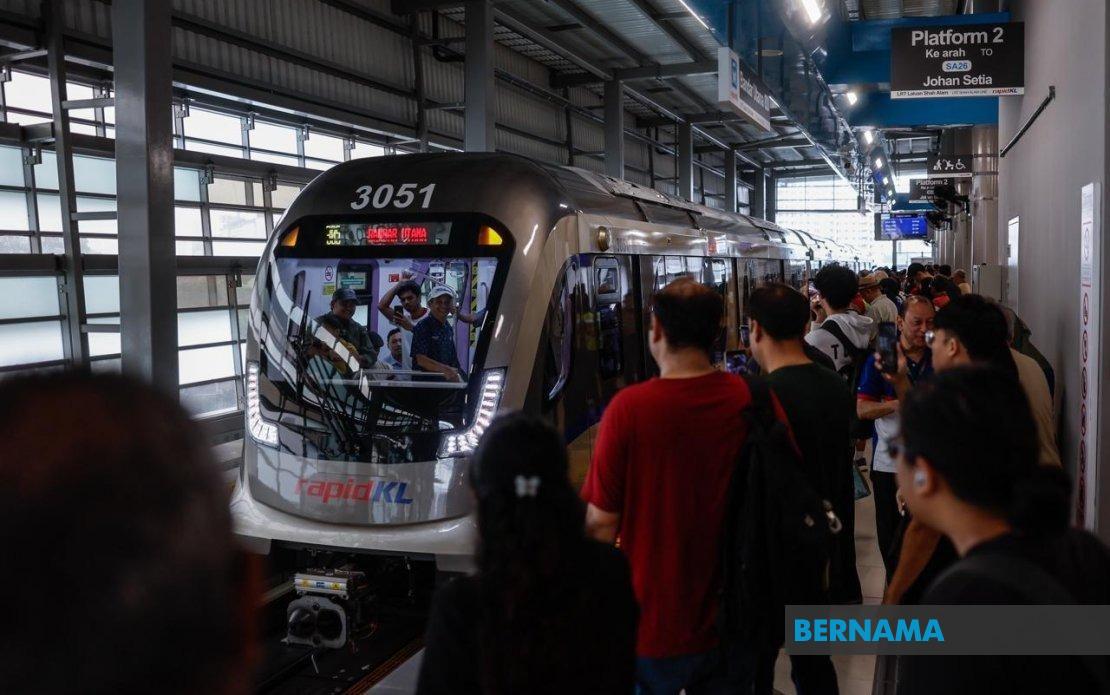
The Light Rail Transit 3 Shah Alam Line commenced operations today with Prasarana Malaysia Berhad projecting modest but steady growth in passenger numbers over its initial phase. The transport operator expects between 5,000 and 10,000 riders to board the new line on its first day, with usage patterns anticipated to expand gradually toward a target of 67,000 daily passengers within the opening year as commuters become familiarized with the service and integrate it into their routines.
Prasarana president and chief executive officer Amir Hamdan underscored that new rapid transit lines typically experience a measured uptake rather than immediate saturation of capacity. He noted that early feedback from passengers has been largely positive, with commuters expressing appreciation for the ability to avoid traffic-congested roads and reach their workplaces via a more comfortable travel option. Social media engagement on the opening day reflected genuine enthusiasm among trial users, though Amir cautioned that converting trial riders into regular commuters requires time and sustained operational excellence.
Operational performance during the inaugural hours appeared solid, with train frequency maintained at approximately eight-minute intervals throughout peak periods. All station facilities, including automatic ticket gates and ticketing machines, functioned without significant disruption. Prasarana has emphasized that the focus during this critical launch window centers on optimizing user experience and monitoring passenger flow dynamics at key stations rather than pursuing maximum capacity utilization from day one.
Interchange stations will receive particular scrutiny as Prasarana tracks connectivity patterns between the new LRT3 line and existing networks. Glenmarie 2 station serves as a junction with the Kelana Jaya Line, while Bandar Utama provides access to the Kajang Line. These nodes are expected to generate substantial transfer traffic and will help Prasarana understand broader network integration effects. Close observation of these interchange points will inform decisions about resource allocation and service adjustments throughout the opening year.
The operator has deliberately avoided introducing specialized facilities such as women-only coaches in the initial phase, preferring instead to gather concrete ridership data and passenger feedback before implementing such measures. This measured approach reflects industry best practice, allowing Prasarana to tailor service enhancements to demonstrated rather than anticipated demand patterns. Future assessments based on accumulated usage statistics will guide decisions regarding train frequency increases or deployment of standby vehicles during peak hours on high-demand segments.
Prime Minister Datuk Seri Anwar Ibrahim's announcement of complimentary travel on the LRT3 Shah Alam Line and connected Prasarana feeder buses for one month—from today through July 31—substantially sweetens the incentive for trial adoption. This promotional period effectively removes financial barriers that might otherwise deter new users from sampling the service. The free-ride initiative serves a dual strategic purpose: it generates substantial opening-week publicity and provides Prasarana with an extended window to assess utilization patterns without revenue pressure, enabling more accurate forecasting for the transition to paid operations.
The Shah Alam corridor expansion represents a significant addition to Kuala Lumpur's public transport infrastructure, particularly for commuters in the western Selangor region. The line addresses longstanding connectivity gaps and offers an alternative to increasingly congested road networks in the Petaling Jaya, Shah Alam, and Klang Valley corridor. As Malaysian urban centers grapple with traffic congestion and air quality concerns, the opening of new rapid transit capacity carries implications beyond immediate ridership figures—it signals continued investment in sustainable transport alternatives and government commitment to reducing vehicle dependency.
For Malaysian readers accustomed to rapid transit systems, the measured rollout approach may seem cautious, yet it reflects realistic expectations about service maturation. Major transit lines in the region have demonstrated that genuine ridership stabilization typically requires six months to a year, with initial enthusiasm often followed by a settling period before sustainable patterns emerge. Prasarana's projection of 67,000 daily passengers represents an ambitious but achievable target if the operator maintains service reliability and continues refining the passenger experience based on real-world feedback.
The opening also carries implications for property valuations and economic activity in Shah Alam, as improved transit connectivity typically stimulates commercial development and residential demand near stations. Investors and businesses along the corridor have been monitoring the project's progress, and today's launch marks a tangible milestone toward realizing the planned economic benefits of enhanced mobility infrastructure.
Prasarana's emphasis on continuous monitoring and adaptive management suggests a pragmatic operational philosophy. Rather than imposing predetermined capacity measures, the operator will adjust train frequency, deploy additional vehicles, or introduce specialized coaching based on actual demand signals. This responsive approach acknowledges that transit behavior in new markets cannot always be accurately predicted in advance and requires evidence-based decision making throughout the crucial first-year period.

