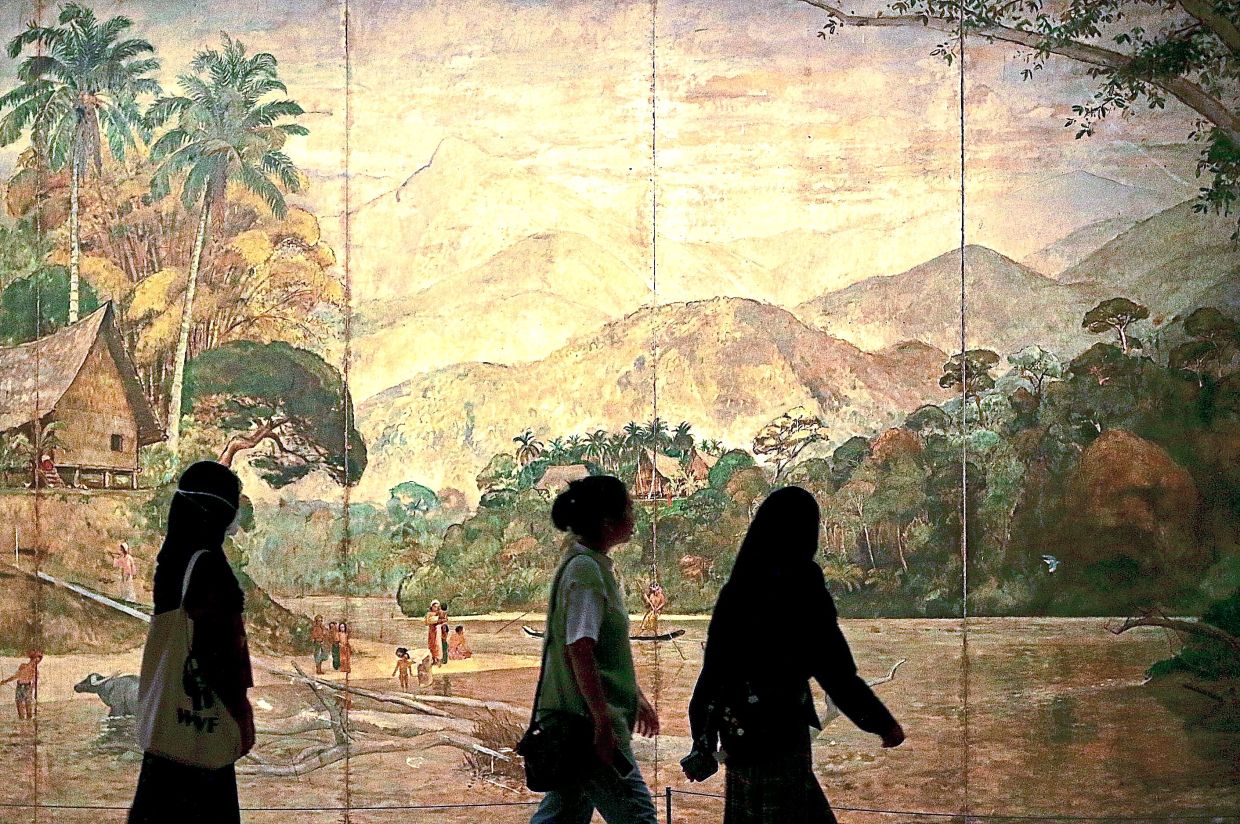
Malaysia's artistic heritage faces a creeping but relentless threat that operates silently in galleries and museums across the country. The nation's distinctive humid tropical climate, combined with intense light exposure characteristic of equatorial regions, creates environmental conditions that can gradually degrade paintings, textiles, and other artworks over time. This conservation challenge has prompted the National Art Gallery to host a major regional conference this December, bringing together leading experts from across Asia-Pacific to address how institutions can better protect their collections in climates fundamentally different from those in Western countries where most conservation science originated.
Tan Hui Koon, senior chief curator of the Collection and Conservation section at the National Art Gallery, emphasises that environmental factors warrant the same protective attention that might be given to human health. Just as people need sunscreen to protect against ultraviolet radiation, artworks require sophisticated barriers—typically ultraviolet-filtering glass or museum-standard glazing—to shield vulnerable materials from damaging light exposure. This seemingly simple analogy masks a complex reality: many traditional conservation approaches developed in temperate climates prove inadequate when applied directly to tropical conditions, where humidity levels, temperature fluctuations, and light intensity operate at different scales than in Europe or North America.
The particular vulnerability lies in organic materials that form the foundation of many artworks. Canvas, textiles, and wood—fundamental substrates for paintings and decorative objects—readily absorb moisture from the air. In Malaysia's climate, this creates a perpetual cycle of expansion and contraction as humidity levels fluctuate throughout the day and across seasons. Over months and years, this mechanical stress accumulates invisibly, compromising the structural integrity of the artwork's framework and degrading paint layers through repeated micro-movements that crack glazes, loosen pigments, and weaken adhesion between materials. A painting that might remain stable for centuries in a temperate climate can face accelerated deterioration in tropical conditions without proper environmental controls.
Conservation strategy in modern practice has evolved beyond the traditional model of repairing damage after it occurs. Tan explains that preventive conservation—controlling the environment, ensuring appropriate handling procedures, and maintaining proper storage conditions—represents a fundamentally different and more effective approach. The shift reflects a hard-won realisation that once material loss occurs, complete restoration to original condition becomes impossible. Even the most skilled conservators cannot restore what has been lost; they can only stabilise remaining materials and ensure the artwork remains presentable for public viewing. This philosophical reorientation places enormous emphasis on getting conditions right from the outset rather than managing decline reactively.
The Asia-Pacific Tropical Climate Conservation Art Research Network, which will hold its seventh conference at the National Art Gallery from December 7 to 9, directly addresses this gap between Western conservation science and Asian realities. Convening specialists from Malaysia, Thailand, Singapore, Australia, and the Philippines, the conference examines how artworks—particularly Western paintings that many Southeast Asian institutions have acquired—respond differently to tropical environments. The gathering reflects growing recognition that conservation cannot remain a discipline importing wholesale solutions from distant climates. Instead, regional institutions must develop sophisticated understanding of how their specific geographical and climatic contexts affect material degradation and preservation strategies.
This year's conference represents a deliberate shift in emphasis toward knowledge systems rooted in local experience and intergenerational learning. Rather than privileging Western conservation models as universal standards, participants will explore disaster response methods and preservation approaches specifically adapted to individual countries' geographical realities. For Malaysia, this means acknowledging that monsoon patterns, humidity cycles, and tropical rainfall create conservation challenges distinct from those faced by museums in temperate regions. The conference programme includes a special heritage site visit to Lenggong, organised in collaboration with the Islamic Arts Museum Malaysia, the Department of National Heritage, and People of Remarkable Talents, embedding conservation learning within actual historical and cultural contexts.
The scope of the conference extends well beyond traditional conservation concerns. Participants will address how climate change might intensify existing preservation challenges, examine disaster management protocols suitable for tropical contexts, and explore how artificial intelligence and advanced materials research technology can enhance conservation capabilities. A focus on ethics in conservation practice reflects awareness that decisions about how to treat artworks carry implications beyond technical effectiveness—they involve questions about cultural values, authenticity, and responsibility to future generations. The emphasis on resource-sharing among institutions recognises that conservation expertise and infrastructure remain unevenly distributed across Southeast Asia, and that regional cooperation can strengthen individual institutions' capacities.
Developing the next generation of conservators represents perhaps the conference's most significant long-term contribution. By facilitating knowledge transfer and experience exchange, the research network addresses a critical gap in Southeast Asian conservation capacity. Conservation work inherently bridges multiple disciplines—art history and aesthetics, chemistry and materials science, climate physics and engineering—requiring practitioners who can operate comfortably across these domains. The network provides invaluable opportunities for emerging conservators to learn not just technical skills but the adaptive problem-solving necessary to work effectively within tropical conditions. This intergenerational exchange ensures that expertise accumulated through years of experience in Asian contexts can guide the next cohort of conservation professionals.
Since the network's inaugural conference in 2008, conservation practice in Malaysia and across the region has evolved considerably. The December gathering offers opportunity to trace that development while assessing remaining challenges. For Malaysian institutions holding significant art collections—whether contemporary Malaysian works, historical regional pieces, or Western artworks acquired during colonial periods—the conference's outcomes carry direct practical implications. The strengthening of international conservation networks promises to elevate Malaysian expertise onto the global stage, positioning the country's institutions as leaders in tropical climate conservation rather than passive recipients of external expertise. As climate pressures intensify globally, Malaysia's experience and innovations in preserving art amid challenging environmental conditions may offer valuable lessons for institutions worldwide adapting to changing climate realities.

