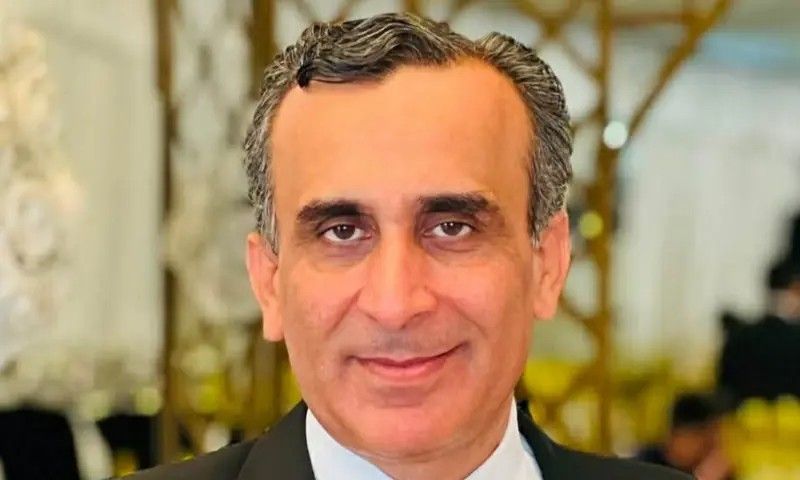
Punjab's provincial government has filled a key prosecutorial position by appointing Irfan Sadiq Tarar as Prosecutor General on Saturday, signalling a transition in the province's criminal justice leadership at a time when Pakistan's legal system faces scrutiny over case management and conviction rates.
The appointment comes through a formal government notification issued under Section 6 of the Punjab Criminal Prosecution Service Act 2006, granting Tarar a three-year term in the role. This institutional mechanism reflects established protocols for filling senior legal positions in Pakistan's largest province, where prosecution authority carries substantial weight in determining how criminal cases proceed through the courts.
Tarar assumes office as Farhad Ali Shah, his predecessor, transitions to judicial work. Shah's nomination as an additional judge of the Lahore High Court represents a common career trajectory in Pakistan's legal establishment, where accomplished prosecutors sometimes cross into the judiciary. This movement between prosecution and the bench can bring prosecutorial perspective to judicial decision-making, though it occasionally raises questions about institutional balance.
The incoming Prosecutor General brings extensive experience within Pakistan's legal fraternity. Tarar has held senior positions within bar associations that wield considerable influence over professional standards and advocacy practice. His tenure as vice chairman of the Punjab Bar Council, the body that regulates lawyers across the province, positioned him at the centre of professional governance discussions. Similarly, his role as vice president of the Lahore Bar Association connected him to the capital city's influential legal community.
Tarar's alignment with the Ahsan Bhoon-led Independent group within the bar association indicates his intellectual positioning within professional circles. Bar association factions typically coalesce around different philosophical approaches to legal practice, judicial independence, and professional ethics. This background suggests Tarar has engaged substantively with broader debates shaping Punjab's legal profession.
The Prosecutor General's office holds significant responsibility for criminal prosecution across Punjab, a province of over 130 million people. The role demands coordination with law enforcement agencies, supervision of subordinate prosecutors, and strategic decisions about which cases receive priority. Conviction rates and prosecution efficiency have become increasingly important metrics as Pakistan seeks to demonstrate rule of law improvement and judicial effectiveness.
For Malaysian readers and broader Southeast Asian observers, this appointment illustrates how common law jurisdictions in the region manage prosecutorial leadership transitions. Like Malaysia's own Attorney-General system, Pakistan's provincial prosecution structure reflects British institutional inheritance adapted to local governance frameworks. The three-year fixed term prevents perpetual incumbency while allowing reasonable tenure for policy implementation.
The appointment also reflects Punjab's particular significance within Pakistan's governance architecture. As the country's economic and political heartland, Punjab's prosecution service decisions ripple through national criminal justice outcomes. Major financial crimes, terrorism cases, and high-profile prosecutions often culminate in Punjab courts, making prosecutorial leadership consequential for national stability and investor confidence.
Tarar inherits a prosecution service navigating several contemporary pressures. Pakistan's courts increasingly grapple with case backlogs, witness protection concerns, and the balance between speedy trials and thorough investigation. White-collar crime prosecution remains contentious, with observers noting that cases against senior figures sometimes languish while minor offenders face expedited proceedings. As Prosecutor General, Tarar's policy priorities will signal whether the office emphasises particular categories of crime or pursues uniform enforcement standards.
The prosecutorial transition also occurs amid broader discussions about Pakistan's justice sector reforms. International development agencies, local civil society organisations, and international observers have highlighted gaps between formal law and implementation capacity. A new Prosecutor General offers opportunity for institutional innovation, whether through enhanced training protocols, technological adoption in case management, or revised charging guidelines.
Tarar's bar association credentials suggest familiarity with defence bar perspectives and professional sensitivities around prosecutorial overreach. This background distinguishes his appointment from candidates with purely government bureaucracy experience, potentially indicating the provincial administration values someone with deeper engagement in legal professional communities.
The three-year appointment window creates natural accountability: Tarar's performance will be evaluated within a defined timeframe, either leading to renewal or necessitating a successor search. This temporal structure contrasts with indefinite tenures that sometimes characterise prosecution leadership in other jurisdictions, though questions remain about whether three years provides sufficient runway for comprehensive institutional change in large bureaucracies.
As Punjab's Prosecutor General, Tarar will lead an institution touching millions of citizens annually through criminal cases ranging from petty theft to major financial crimes. His appointment reflects institutional continuity while opening possibilities for operational evolution within the prosecution service's established frameworks.

