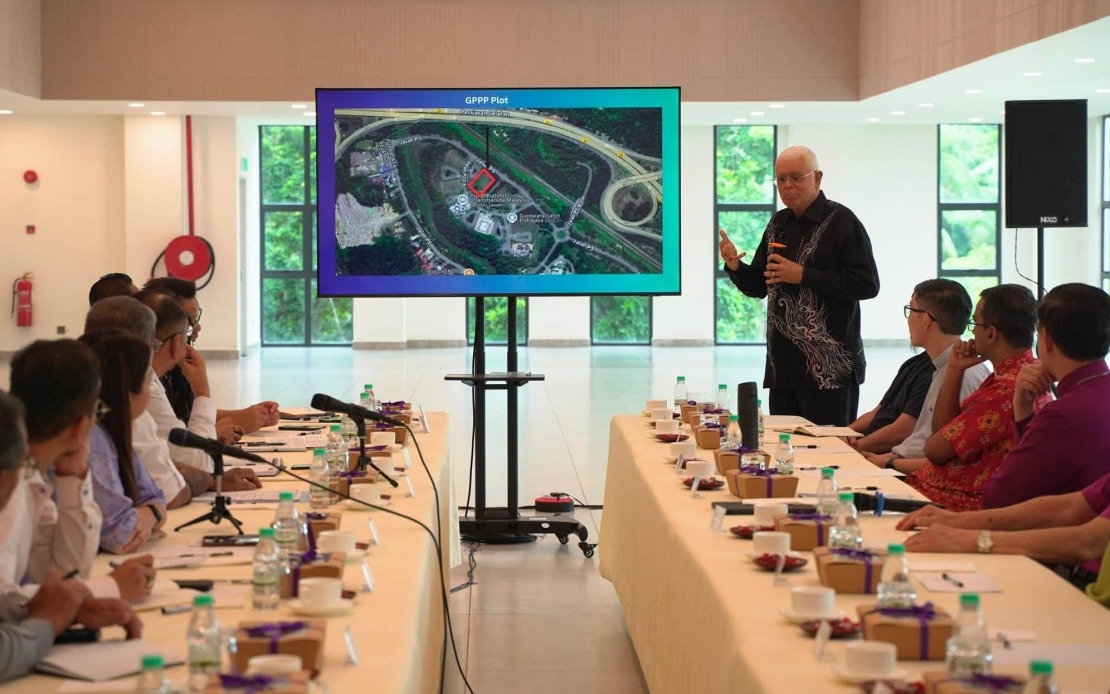
The federal government has committed substantial urban planning resources to establishing Precinct 20 in Putrajaya as a dedicated space for religious diversity, with National Unity Minister Datuk Aaron Ago Dagang confirming that site allocation for non-Muslim places of worship has been in place since 2013. This long-term vision demonstrates a deliberate policy approach to accommodate Malaysia's multifaith society within the nation's administrative capital, extending well beyond ad-hoc accommodation to reflect comprehensive inclusive governance.
The initiative represents more than logistical planning; it embodies a systematic philosophy of urban development that recognises the practical and spiritual needs of Malaysia's diverse population. By designating specific precincts within Putrajaya for worship facilities across multiple faiths, the government signals that religious diversity is not merely tolerated but actively accommodated within the infrastructure of national administration. This approach fundamentally contrasts with reactive arrangements and instead positions interfaith coexistence as a foundational urban planning principle rather than an afterthought.
According to Aaron, the Precinct 20 development aligns directly with Policy 17 of the Putrajaya Structure Plan 2050, which carries the explicit mandate of building an "Inclusive Compassionate Community." This policy framework elevates the provision of religious spaces from a peripheral administrative matter to a central component of Putrajaya's long-term strategic vision. The structural plan thus commits the federal territory to specific benchmarks and outcomes regarding community cohesion, establishing measurable criteria by which interfaith harmony can be assessed and developed.
The Minister also positioned the Precinct 20 initiative within the broader Harmoni MADANI framework, introduced by the National Unity Ministry in 2024. This strategic initiative crystallises the governing philosophy around four pillars: Understand, Respect, Accept, and Celebrate—a progression that moves beyond mere tolerance toward active engagement with religious and cultural difference. By explicitly naming these values and embedding them within national policy initiatives, the government creates accountability structures and raises public awareness about the operational principles guiding multicultural governance.
Current religious facilities already operational or under development in Precinct 20 demonstrate substantial tangible progress. The Prince of Peace Church, recently established and visited by both Aaron and Minister in the Prime Minister's Department (Federal Territories) Hannah Yeoh, provides a functioning Christian worship space. The Dhammaduta Malaysia Buddhist Centre has been serving the Buddhist community since 2023, indicating that these are not merely planned initiatives but active, operational community anchors.
The religious infrastructure portfolio continues to expand significantly, with multiple major projects in active development stages. Gurdwara Sahib Putrajaya serves the Sikh community, while Dewi Sri Lalithaambigai Alayam caters to Hindu devotees. The San Qing Taoist Temple addresses the needs of Taoist practitioners, and a designated site awaits construction of a Roman Catholic church. This diversity of facilities—encompassing Buddhist, Christian, Hindu, Sikh, Taoist, and Catholic traditions—reflects the breadth of religious communities within Malaysia's population and demonstrates governmental commitment to comprehensive rather than selective accommodation.
The vision for Precinct 20 extends beyond isolated worship facilities to conceptualise the entire precinct as an interfaith hub. Aaron articulated this broader strategic objective, suggesting that the concentration of diverse religious spaces creates opportunities for structured interfaith dialogue, shared community activities, and mutual engagement. Such clustering can foster organic relationships between faith communities, potentially reducing barriers to understanding and creating platforms for collaborative social initiatives that transcend religious boundaries.
This approach carries particular significance for Malaysia's regional standing within Southeast Asia, where religious tensions occasionally surface in neighbouring nations. By demonstrating institutional capacity to provide equitable religious accommodation within the administrative capital itself, Malaysia projects an image of confident multireligious governance. The Putrajaya model potentially offers a practical template for other Muslim-majority nations grappling with minority religious accommodation, positioning Malaysia as a pragmatic exemplar of inclusive urban planning.
The timing and scale of this initiative reflect broader demographic and social trends within Malaysia. As urbanisation accelerates and communities become increasingly diverse, pressure mounts for civic infrastructure to reflect this reality. Putrajaya, as a purpose-built federal capital designed from inception, provides particular opportunity to embed interfaith principles into foundational urban design rather than retrofitting them into existing structures. This deliberate planning advantage positions Putrajaya as a living demonstration of intentional multicultural city building.
For Malaysian residents and regional observers, the Precinct 20 development offers practical reassurance regarding governmental capacity to manage religious pluralism through administrative means. Rather than relegating interfaith accommodation to sporadic crisis management or political negotiation, the federal government has systematised the provision of religious spaces through structural planning mechanisms. This institutionalisation potentially reduces ad-hoc political contention around minority religious rights by establishing clear, pre-determined frameworks for facility provision.
The integration of Precinct 20's interfaith vision into Putrajaya Structure Plan 2050 represents a commitment extending decades into the future, signalling that religious pluralism is not a temporary accommodation but a permanent feature of Malaysian governance and society. This long-term framing establishes consistency across administrations and provides stability for religious communities planning their institutional development, knowing that governmental commitment to religious facility provision is embedded within binding strategic frameworks rather than subject to electoral or political fluctuation.
Meanwhile, the collaboration between National Unity Minister Aaron and Federal Territories Minister Hannah Yeoh underscores the multi-level governmental coordination required to implement such initiatives. Federal territories governance involves complex coordination between multiple ministries and administrative levels, and the visible joint engagement of senior ministers demonstrates prioritisation of interfaith accommodation within the governmental hierarchy. This ministerial-level attention signals to both the religious communities and the broader Malaysian public that interfaith harmony ranks among government priorities rather than occupying peripheral status.
Looking forward, Precinct 20's potential as an interfaith hub depends substantially on complementary programming and intentional community engagement beyond passive coexistence of facilities. The mere physical proximity of diverse worship spaces does not automatically generate understanding or dialogue; deliberate initiatives promoting cross-faith interaction, knowledge sharing, and collaborative community projects will determine whether Precinct 20 achieves its aspirational potential as a transformative model of religious pluralism in Southeast Asian urban development.

