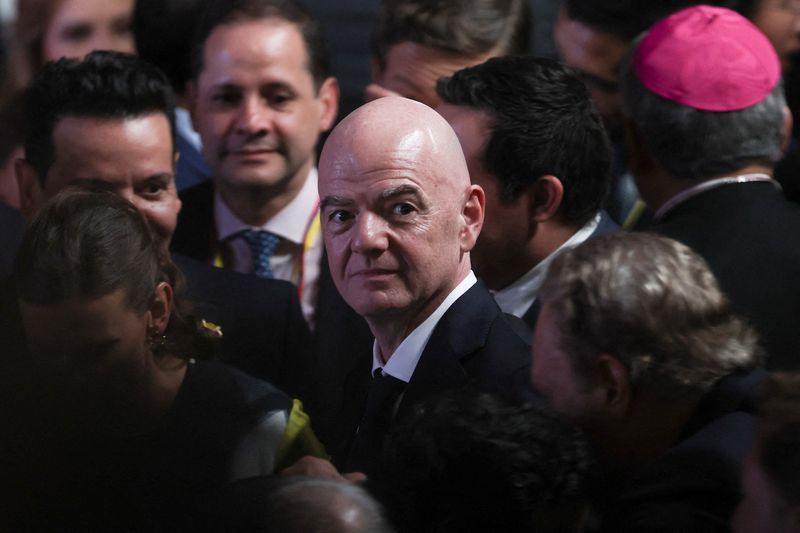
A significant fracture has emerged within Asian football governance as Qatar's football leadership publicly disputes the legitimacy of a coordinated attack on FIFA President Gianni Infantino, exposing the fragile consensus among continental confederations over the world governing body's future direction. The confrontation centres on an open letter released by the AFC, UEFA, and CONCACAF criticising Infantino's conduct and calling for his resignation, particularly over his failed attempt to introduce private investment into FIFA competitions including the World Cup. Qatar Football Association President Hamad bin Khalifa Al-Thani, a member of both the AFC Executive Committee and FIFA Council, has challenged whether the AFC possessed the authority to speak on behalf of all 47 of its member associations without securing their input beforehand.
The dispute reflects deeper anxieties about governance and representation within Asian football at a pivotal juncture when Infantino's position faces unprecedented pressure from multiple confederations simultaneously. Al-Thani's written communication to AFC President Sheikh Salman bin Ibrahim Al Khalifa raises fundamental questions about procedural legitimacy and democratic accountability within the confederation's operations. His statement that "a collective view must first be ascertained; it cannot be presumed, and it cannot be brought into existence by declaration" directly challenges the AFC's assumption of speaking for its entire membership without demonstrated consensus. For Malaysian readers and the wider Southeast Asian community, this discord matters because these continental bodies ultimately shape competition formats, tournament scheduling, and governance standards that affect all domestic football associations across the region.
Al-Thani emphasises in his letter that neither the Qatar Football Association nor he personally received any notification about the open letter before its public release. He underscores the absence of formal consultation processes, advance warning, draft circulation, or opportunity to comment on or contribute to the statement before it was disseminated under the AFC's name purporting to represent all member associations. This procedural grievance extends beyond Qatar's particular position on Infantino to touch on broader governance principles about how multinational sports bodies should operate. The AFC, when contacted for response, declined to provide comment or explanation regarding the consultation process it followed before endorsing the joint statement.
The timing of this intervention proves particularly significant because it exposes widening divisions within the AFC precisely when unity might be expected during FIFA's internal crisis. Multiple Arab national football associations, comprising six heads of federation from the region, had publicly backed Infantino just days earlier, appreciating his "sustained efforts to advance football globally, expand opportunities across all regions and strengthen the game's role in bringing people and communities together." Notably, Qatar and Morocco, the latter set to co-host the 2030 World Cup alongside Spain and Uruguay, both featured among these signatories. Four of the six Arab federation leaders who supported Infantino, including Al-Thani, Egypt's Hany Abo Rida, Morocco's Fouzi Lekjaa, and Mauritania's Ahmed Yahya, simultaneously serve as FIFA Council members, giving their positions additional institutional weight.
The fundamental issue triggering this broader crisis within global football governance involves Infantino's proposal to monetise World Cup commercial rights by selling twenty percent stake to private investors, intended to generate approximately 4.2 billion US dollars in revenue. Following widespread condemnation from UEFA, the AFC, and CONCACAF, Infantino reversed course on this initiative, yet the damage to his credibility persisted. His reelection campaign scheduled for the following year now faces formidable opposition from three of the six continental confederations representing the majority of FIFA's membership base. For Southeast Asian football organisations and administrators, this conflict between FIFA's leadership and multiple confederations raises concerns about the unpredictability of FIFA's strategic direction and its potential consequences for competition structures, broadcasting arrangements, and financial allocations affecting the entire region.
Qatar's challenge to the AFC's procedural authority strikes at fundamental questions of institutional legitimacy within continental sports governance. The assertion that member associations must be explicitly consulted and their consent secured before confederations claim to represent them collectively represents a challenge to how these organisations typically operate. In practice, many continental bodies function through executive committees and delegated authority structures that permit leadership to make statements on behalf of membership without universal consultation. However, on matters as consequential as demanding the resignation of FIFA's president, Al-Thani's position that such positions require demonstrable member consensus carries considerable rhetorical and procedural weight. This distinction between operational decisions and existential governance questions about FIFA's leadership touches on principles that Malaysian sports administrators and other Southeast Asian football bodies may consider relevant to their own internal governance standards.
The AFC's silence in response to Al-Thani's challenge suggests institutional uncertainty about how to address the substance of his procedural objections. Rather than defending its consultation process or clarifying what mechanisms it employed to ascertain member views, the confederation chose non-engagement. This reticence may reflect awareness that many member associations were indeed not meaningfully consulted, or it may indicate strategic calculation that responding could generate further complications. The absence of comment from the AFC also leaves the substantive question unresolved: whether the confederation legitimately represented the collective position of its membership, or whether it aligned itself with UEFA and CONCACAF based on other considerations without securing genuine consensus from Asian members.
Infantino's position, though weakened by the coordinated confederational opposition, receives meaningful support from key AFC member states including Qatar and Arab federation leaders. This division within Asian football mirrors broader geopolitical and strategic divisions that have characterised global football governance. Gulf states and North African nations have emerged as increasingly significant actors within FIFA's operations, particularly following Qatar's successful hosting of the 2022 World Cup and Morocco's role in the 2030 tournament. Their backing for Infantino, even as other confederations attack his leadership, demonstrates that his support base extends beyond the traditional power centres of European football, creating a more complex battlefield for his leadership contest than the coordinated confederational opposition might initially suggest.
For Malaysia and other Southeast Asian nations, this institutional conflict within Asian football governance carries practical implications beyond high-level politics. The AFC's internal divisions may affect how decisively the confederation can advocate for Southeast Asian interests within FIFA. When the AFC speaks without clear consensus, its influence diminishes, potentially disadvantaging smaller member associations that depend on the confederation to amplify their voice in global football affairs. Additionally, uncertainty about the AFC's direction and leadership priorities creates ambiguity for national football associations planning participation in continental competitions, player development initiatives, and tournament scheduling dependent on confederational coordination and strategic planning that requires stability and clear internal consensus.
The showdown between Qatar and the AFC ultimately reflects broader tensions within contemporary global sports governance about representation, consultation, and the proper exercise of confederational authority. Al-Thani's intervention raises procedurally sound questions about whether continental bodies should unilaterally declare positions on matters as significant as FIFA's leadership without demonstrating that such positions reflect genuine member consensus. His challenge, supported by other Arab federation leaders, creates space for other AFC members who may harbour similar concerns about their exclusion from decision-making processes to voice similar objections. This fragmentation within the AFC complicates the confederations' unified opposition to Infantino and introduces uncertainty about whether the coordinated attack from UEFA, AFC, and CONCACAF truly represents consolidated opinion or merely reflects executive-level alignment without deeper institutional consensus.
As Infantino navigates his reelection campaign facing opposition from multiple continental confederations, this intra-AFC dispute provides unexpected strategic advantage. The revelation that significant AFC members including FIFA Council representatives publicly backed him just as the confederation was attacking his leadership exposes the hollowness of any claim that the AFC's position reflects unanimous member support. Qatar's formal challenge to the AFC's authority to speak collectively for its membership without explicit consultation underscores the procedural irregularities and governance questions that may ultimately prove more consequential than the substantive policy disagreements about Infantino's failed investment proposals. For Southeast Asian football stakeholders and administrators, this institutional conflict suggests that the AFC's internal coherence cannot be assumed, and that national associations may need to develop independent strategies for engaging with FIFA's evolving governance questions rather than simply following confederational directives arrived at without their meaningful participation.

