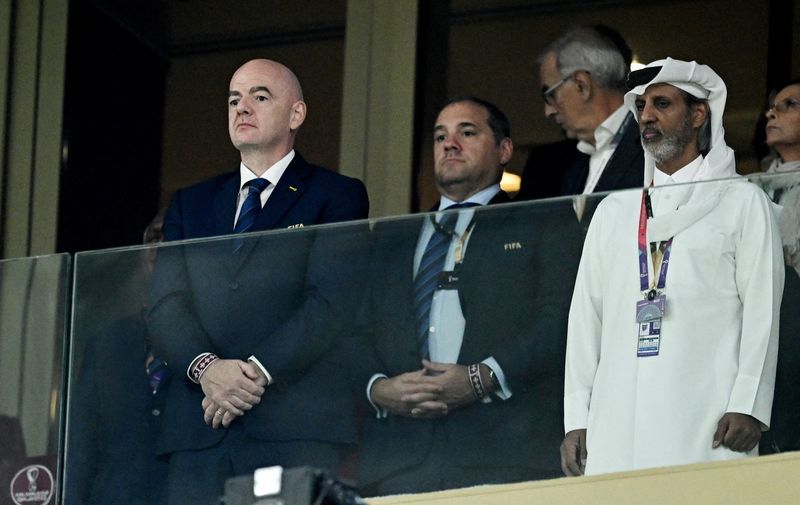
The Qatar Football Association has intensified its public dispute with Asian Football Confederation leadership, lodging fresh objections over the AFC's decision to endorse a joint statement attacking FIFA President Gianni Infantino without first seeking approval from its member nations. In an unusually candid exchange of letters that have been examined by media organisations, QFA President Hamad bin Khalifa Al-Thani has challenged the legitimacy of AFC President Sheikh Salman bin Ebrahim Al-Khalifa's authority to commit the confederation to such a significant policy position without proper consultation mechanisms.
The underlying tension centres on Infantino's proposed FIFA Forward Enterprise scheme, an initiative designed to attract private investment into the World Cup tournament. The plan triggered considerable backlash across football's global governance structures after it emerged that Infantino had developed the proposal largely in isolation, pitching it directly to FIFA's 211 member associations rather than engaging confederations during the formative stages. This circumvention of traditional consultative channels proved deeply controversial among football administrators who viewed it as an affront to established protocols and institutional hierarchy.
Infantino, who will stand for reelection in the coming year, has faced unusually open resistance to his leadership since the investment proposal collapsed. The joint letter from UEFA, CONCACAF, and the AFC represented a rare moment of united criticism from major continental confederations, taking aim not only at the FFE initiative itself but questioning Infantino's broader fitness to lead world football. For such high-level institutional disagreement to become public reflects the severity of tensions within FIFA's political ecosystem.
Al-Thani's latest correspondence maintains that the AFC's response to his initial complaint fundamentally avoids addressing the central issue. He contends that the AFC's own written reply inadvertently concedes that no meaningful consultation occurred with either the confederation's executive committee or individual member associations before the statement was issued. This procedural violation, he argues, remains unresolved regardless of how comprehensively the AFC addresses other substantive matters relating to the FFE proposal or FIFA's institutional conduct.
The dispute carries significant implications for Southeast Asian football governance, as the AFC encompasses 47 member nations ranging from Australia to Tajikistan. The absence of consultation protocols for such consequential statements raises broader questions about democratic decision-making within continental structures. For Malaysian football administrators and regional stakeholders, the precedent established here could influence how their own voices are represented in future AFC deliberations on matters affecting Asian football interests.
Sheikh Salman responded forcefully on Tuesday, categorically rejecting Al-Thani's suggestion that he had overstepped presidential authority. The Bahraini administrator asserted he possessed both the constitutional right and the institutional responsibility to act decisively in defending Asian football's interests. He further dismissed the Qatari objections as overly focused on technical procedure rather than the substantive principles at stake—a characterisation that reflects the fundamental disagreement about governance priorities between the two factions.
Notably, Qatar stood among a small cluster of AFC members who declared early backing for Infantino during this period of institutional turbulence. Al-Thani's position as both a FIFA Council member and AFC executive committee participant places him at the intersection of competing interests, a status that colours the ongoing disagreement. His renewed assertion that Sheikh Salman lacks unilateral authority to speak for member associations without explicit mandates derives from a narrow reading of the AFC's constitutional framework, one that emphasises executive committee oversight of presidential prerogatives.
Sheikh Salman attempted to establish precedent by referencing previous occasions when AFC leadership issued major public statements, citing the confederation's unanimous backing for Qatar as 2022 World Cup host. This comparison illuminates a crucial distinction Al-Thani was quick to articulate. He countered that those earlier statements reflected the AFC's collective institutional interest in ensuring a successfully staged World Cup on Asian soil—a position fundamentally different from making normative judgements about FIFA leadership conduct and internal politics.
The increasingly tense back-and-forth between senior figures represents a dramatic departure from the AFC's traditional operational style, where contentious matters typically remain confined within private deliberations. The public nature of this escalating correspondence signals that neither party views compromise as achievable through quiet diplomacy. For regional football stakeholders and governing bodies, the unprecedented openness of this leadership conflict carries cautionary implications about institutional stability and the persistence of underlying power struggles within Asian football's upper echelons.
Al-Thani concluded his latest message by expressing fundamental dissatisfaction with Sheikh Salman's response, suggesting that the AFC president had failed to adequately address what he characterised as legitimate and pressing questions about governance procedure and institutional authority. The refusal to accept the AFC's explanation as adequate indicates the dispute is unlikely to be resolved imminently through continued correspondence, potentially requiring intervention from broader governance structures or a cooling-off period before normal relations can resume.
The conflict underscores deeper fractures within FIFA's confederal system regarding how major institutional decisions should be made and whose voices carry authority in representing member interests. For Malaysian football and the broader Southeast Asian football community, the outcome of this leadership dispute carries tangible consequences for how the AFC will function as a representative body and whether procedural safeguards protecting smaller member nations' input will be strengthened or weakened going forward.

