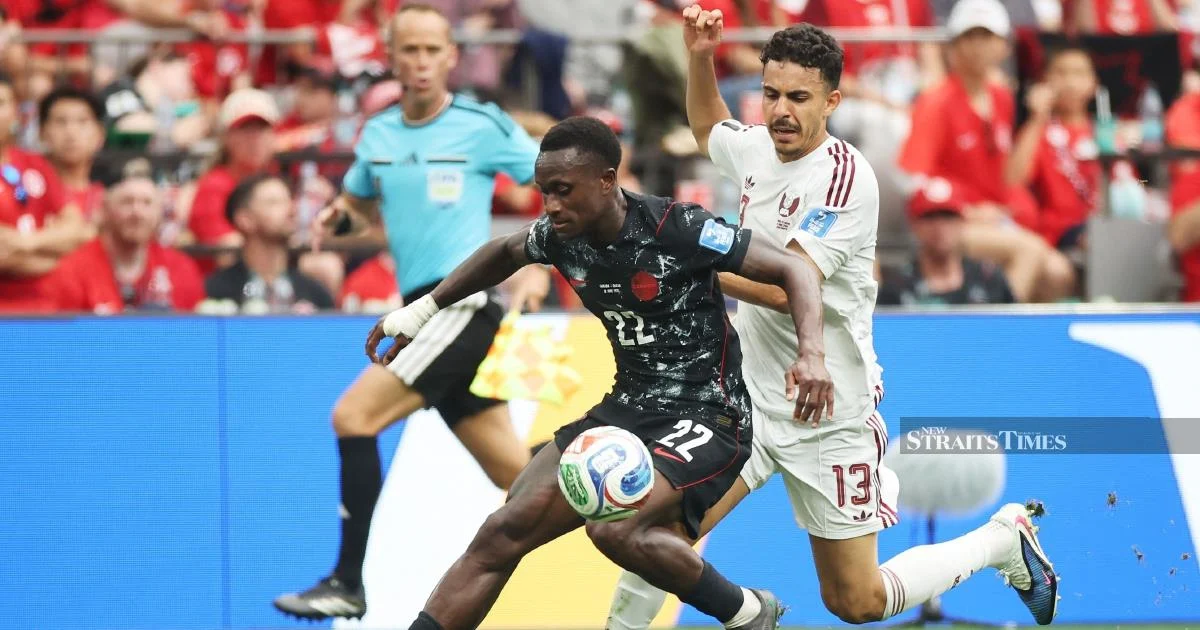
Qatar's catastrophic 6-0 defeat against Canada in the World Cup has become a cautionary tale about the perils of prioritising financial investment over sustainable sporting development. The outcome has drawn widespread criticism from football analysts who argue that the oil-rich nation's ambitious spending on infrastructure, players, and coaching staff has fundamentally failed to translate into competitive performance on the international stage. This result starkly underscores a fundamental truth in modern sport: unlimited resources, whilst undoubtedly valuable, cannot compensate for systemic deficiencies in academy development, tactical coherence, and long-term strategic planning.
The scale of Qatar's embarrassment is particularly striking given the nation's unprecedented financial commitments to football over the past decade. With vast investment flowing into player acquisitions, state-of-the-art training facilities, and world-class coaching personnel, the expectation had been that Qatar would at minimum pose a competitive challenge to established footballing nations. Instead, the team's capitulation against Canada exposed profound structural weaknesses that money cannot simply purchase away. The extent of the defeat suggests that despite importing talent and expertise, the fundamentals of tactical discipline, team cohesion, and developmental pathways remain severely underdeveloped.
Football experts point to the distinction between building clubs and building national teams as crucial to understanding Qatar's predicament. Whilst domestic investment can create competitive domestic leagues through player acquisitions and facility upgrades, establishing a successful international programme demands entirely different prerequisites. These include youth development systems that take decades to mature, a domestic playing culture that fosters resilience and tactical understanding, and organic growth through competitive fixtures against peers of comparable standard. Qatar's approach of accelerating results through financial injections bypassed these foundational elements, leaving the team fundamentally unprepared when facing quality opposition.
The philosophical difference between purchasing success and building it organically has profound implications for how football nations approach development. Qatar's strategy essentially attempted to compress a process that typically unfolds over 15 to 20 years into just a handful of seasons. This approach worked for some Middle Eastern clubs in the AFC Champions League, where financial resources could attract established foreign talent, but at international level, the dynamics operate completely differently. National teams cannot be constructed overnight through player acquisitions alone; they require established patterns of play, mutual understanding between players, and tactical systems refined through sustained competitive experience.
International football observers have highlighted how Qatar's domestic environment offered insufficient preparation for World Cup competition. The domestic league, despite investments in infrastructure and imported talent, lacked the competitive rigour required to develop world-class players. Young Qatari footballers competing primarily against weaker domestic opposition and imported professionals do not experience the high-intensity, technically demanding football that develops champions. This environmental factor, entirely separable from financial resources, proved decisive in Qatar's inability to perform credibly at the World Cup.
The implications of Qatar's failure extend beyond the nation itself, offering valuable lessons for other ambitious football nations considering rapid ascent through financial investment. Southeast Asian nations with growing football aspirations must recognise that successful international programmes require patience, systematic development pathways, and competitive fixture schedules that genuinely test emerging players. Thailand, Vietnam, and Indonesia, each investing substantially in football development, would be wise to observe Qatar's cautionary example and ensure that financial commitments extend beyond professional infrastructure into comprehensive youth systems and domestic league competitiveness.
Qatar's World Cup experience also demonstrates how reputation and perceived potential diverge sharply from actual capability when fundamentals are neglected. International football remains one of the few remaining arenas where the most expensive team does not automatically triumph. Form, morale, tactical coordination, and the intangible qualities of team cohesion ultimately determine outcomes on the pitch. Qatar discovered this reality in the starkest possible manner, experiencing a defeat so comprehensive that it vindicated all critics who had questioned whether financial muscle alone could engineer international football success at the highest level.
The tournament served as a humbling reminder that sporting excellence cannot be hurried or purchased wholesale. Every established football power—from Germany to France to Spain—built their success over decades through investment in youth development, competitive domestic leagues, and systematic cultivation of talent. Qatar attempted to compress this timeline dramatically and discovered that the laws of football development cannot be circumvented through spending alone. The nation now faces difficult questions about whether to persist with its current investment model or undertake a genuine recalibration towards sustainable, generational development strategies.
Looking forward, Qatar's failure presents an opportunity for the AFC and regional football bodies to examine how ambition, resources, and realistic timelines intersect in competitive international sport. The region's football future depends not on which nation can spend most lavishly but on which can most effectively structure comprehensive development systems that convert financial investment into genuine competitive capability across all age groups and levels.


%22%2F%3E%3C%2Fpattern%3E%3C%2Fdefs%3E%3Crect%20width%3D%22100%25%22%20height%3D%22100%25%22%20fill%3D%22url(%23phhvi2g)%22%2F%3E%3Crect%20width%3D%22100%25%22%20height%3D%22100%25%22%20fill%3D%22url(%23phhvi2p)%22%2F%3E%3Ctext%20x%3D%2250%25%22%20y%3D%2250%25%22%20text-anchor%3D%22middle%22%20dominant-baseline%3D%22central%22%20fill%3D%22rgba(255%2C255%2C255%2C0.95)%22%20font-family%3D%22Georgia%2C%20'Times%20New%20Roman'%2C%20serif%22%20font-weight%3D%22700%22%20font-size%3D%22136%22%20letter-spacing%3D%22-0.02em%22%3EPAS-Bersa%E2%80%A6%3C%2Ftext%3E%3C%2Fsvg%3E)