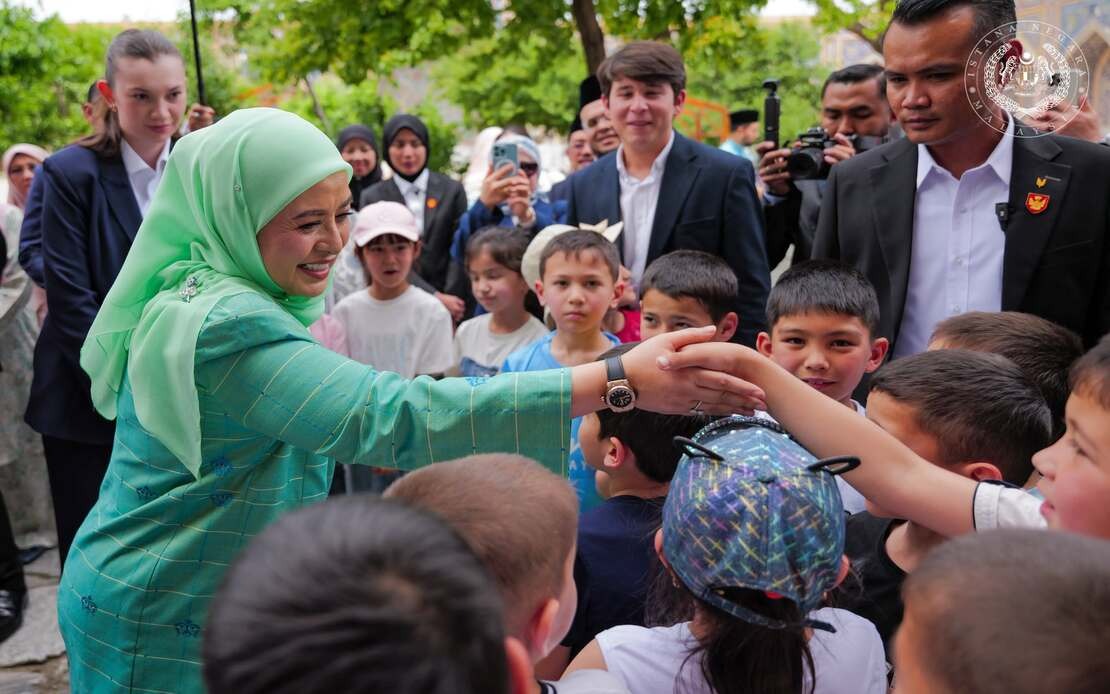
Malaysia's Queen, Raja Zarith Sofiah, has underscored the enduring importance of mutual respect in sustaining the nation's social cohesion and collective well-being. Speaking through a post shared on the official Facebook page of Sultan Ibrahim Sultan Iskandar, Her Majesty drew attention to how this principle has long formed part of Malaysia's cultural and social fabric, contributing meaningfully to the country's stability and prosperity across its diverse communities.
The Queen's remarks come at a time when societies across the region grapple with deepening polarization and fractured social bonds. Her emphasis on respect as a foundational value carries particular resonance for a multicultural nation like Malaysia, where harmony depends on citizens from different religious, ethnic, and cultural backgrounds viewing one another with dignity and consideration. This messaging from the nation's highest ceremonial office signals the continued importance placed on bridging divides through courtesy rather than confrontation.
In making her case, Her Majesty drew upon Islamic teaching to illustrate universal principles of social responsibility. The Queen referenced a hadith recorded by Al-Bukhari, in which the Prophet Muhammad conveyed guidance on harmonious living. The teaching emphasizes that believers in Allah and the Last Day bear an obligation to refrain from harming neighbours, to show honour to guests, and to maintain civil discourse by either speaking with kindness or choosing silence. This framing connects spiritual devotion with practical social ethics, suggesting that respectful conduct flows naturally from religious commitment.
The specific hadith cited carries multilayered significance for Malaysian audiences. Beyond its religious authority within Islam, the teaching addresses neighbourliness, hospitality, and responsible speech—qualities that resonate across Malaysia's diverse population regardless of faith. By anchoring her message in this classical Islamic source, the Queen provided Muslim Malaysians with a doctrinal foundation for the values she was promoting, while the universal content of the teaching itself speaks to all communities.
Her Majesty's emphasis on courtesy and respect in both domestic and international contexts reflects a sophisticated understanding of Malaysia's position in the world. As a nation that depends on cross-border trade, tourism, and regional cooperation, how Malaysians present themselves to foreign visitors and international partners matters deeply. The Queen's call for consistent behaviour at home and abroad suggests that respect is not situational but should characterize Malaysian interactions universally.
To illustrate this principle in practice, the Queen recalled an encounter from February at the main entrance of Istana Negara, where she graciously engaged with over 100 international tourists. This moment, documented and shared publicly, served as a tangible example of the courteous reception that Malaysia can extend to visitors. The interaction demonstrated respect being expressed not merely as abstract value but as lived conduct—the Queen making genuine effort to welcome and connect with people from around the world.
Such personal engagement by the Queen carries symbolic weight beyond the immediate encounter. It signals to both Malaysians and international visitors that hospitality and respect characterize the nation's character. In an era when Malaysia actively competes to attract tourism and investment, projecting genuine warmth and consideration provides a competitive advantage. The Queen's example sets a cultural standard that encourages similar conduct throughout Malaysian society.
The Queen's intervention on this topic also reflects broader institutional concern about social cohesion. Coming through an official royal channel, her message carries the weight of constitutional authority and moral leadership. In Malaysia's system, the monarchy serves partly as custodian of national values and unity. By speaking to mutual respect as foundational to harmony, the Queen was performing a crucial role in reinforcing shared commitments that transcend political disagreement or factional interest.
For Malaysian readers, the Queen's remarks offer a reminder that harmony requires active cultivation, not passive assumption. The emphasis on respect as something Malaysians have "always upheld" acknowledges historical success while implicitly warning against complacency. Social cohesion in diverse societies depends on continuous recommitment to core values. The Queen's message suggests that Malaysia's track record of relative stability should inspire renewed dedication to the principles that enabled it rather than confidence that harmony will persist without effort.
The timing of these remarks, distributed through the Sultan's official channels, also suggests coordination at the highest levels of state to reinforce messages of unity and social responsibility. Such reinforcement through multiple institutional voices amplifies the message and indicates that leadership across the monarchy and government remains focused on strengthening the social bonds that hold Malaysia together. This consistency of messaging provides reassurance that foundational principles remain non-negotiable priorities for national leadership.
The Queen's appeal carries particular relevance for younger Malaysians who have grown up amid rapid social change, digital connectivity, and evolving definitions of community. By grounding her message in classical Islamic teaching while illustrating it through contemporary examples, Her Majesty bridged traditional and modern understandings of respect. This approach acknowledges that enduring values require retranslation for new generations and new contexts to remain meaningful and actionable.

%22%2F%3E%3C%2Fpattern%3E%3C%2Fdefs%3E%3Crect%20width%3D%22100%25%22%20height%3D%22100%25%22%20fill%3D%22url(%23ph48y62g)%22%2F%3E%3Crect%20width%3D%22100%25%22%20height%3D%22100%25%22%20fill%3D%22url(%23ph48y62p)%22%2F%3E%3Ctext%20x%3D%2250%25%22%20y%3D%2250%25%22%20text-anchor%3D%22middle%22%20dominant-baseline%3D%22central%22%20fill%3D%22rgba(255%2C255%2C255%2C0.95)%22%20font-family%3D%22Georgia%2C%20'Times%20New%20Roman'%2C%20serif%22%20font-weight%3D%22700%22%20font-size%3D%22320%22%20letter-spacing%3D%22-0.02em%22%3EPKR%3C%2Ftext%3E%3C%2Fsvg%3E)
%22%2F%3E%3C%2Fpattern%3E%3C%2Fdefs%3E%3Crect%20width%3D%22100%25%22%20height%3D%22100%25%22%20fill%3D%22url(%23ph50dweg)%22%2F%3E%3Crect%20width%3D%22100%25%22%20height%3D%22100%25%22%20fill%3D%22url(%23ph50dwep)%22%2F%3E%3Ctext%20x%3D%2250%25%22%20y%3D%2250%25%22%20text-anchor%3D%22middle%22%20dominant-baseline%3D%22central%22%20fill%3D%22rgba(255%2C255%2C255%2C0.95)%22%20font-family%3D%22Georgia%2C%20'Times%20New%20Roman'%2C%20serif%22%20font-weight%3D%22700%22%20font-size%3D%22320%22%20letter-spacing%3D%22-0.02em%22%3EUS%3C%2Ftext%3E%3C%2Fsvg%3E)