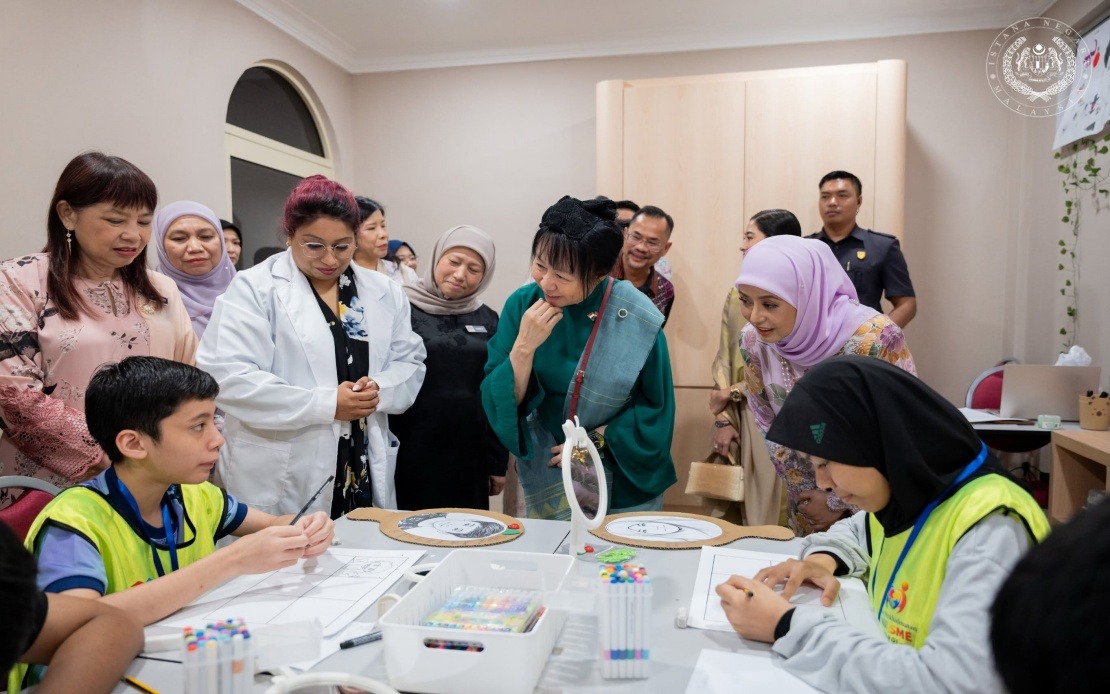
Her Majesty Raja Zarith Sofiah, Queen of Malaysia, welcomed Singapore First Lady Jane Ittogi Shanmugaratnam to the Bangi Autism Service Centre near Kuala Lumpur on July 14, underscoring the diplomatic importance placed on social welfare issues during the state visit of Singapore President Tharman Shanmugaratnam. The engagement reflects how bilateral relations between neighbouring nations increasingly extend beyond trade and geopolitics to encompass shared priorities in healthcare, disability support, and social development.
The visit was orchestrated as part of the broader state visit programme, with Jane Ittogi greeted on arrival by Her Majesty and Tunku Tun Aminah Sultan Ibrahim. The attendance of high-level government officials illustrated the significance accorded to the occasion. Prime Minister's wife Datuk Seri Dr Wan Azizah Wan Ismail, Women, Family and Community Development Minister Datuk Seri Nancy Shukri, Deputy Minister Lim Hui Ying, and senior civil servants including the ministry's secretary-general Datuk Dr Maziah Che Yusoff and Social Welfare Department director-general Datuk Che Murad Sayang Ramjan were present, demonstrating institutional commitment to showcasing Malaysia's autism services infrastructure to the visiting Singapore delegation.
The Bangi Autism Service Centre itself operates as a public-private partnership model that merits examination given Malaysia's broader efforts to modernise social services. Managed collaboratively by the National Autism Society of Malaysia (NASOM) and the Damansara Damai Community-Based Rehabilitation Centre (PDK), the facility exemplifies how government resources can be leveraged through partnerships with non-governmental organisations to deliver specialised care. This collaborative approach has become increasingly relevant across Southeast Asia as nations grapple with rising autism diagnoses and limited state resources, making knowledge exchange on such operational models valuable for regional policymaking.
During the tour, Her Majesty and the Singapore First Lady examined multiple operational areas of the centre, including the Activities of Daily Living (ADL) Room, the Occupational Therapy Room, and gymnasium facilities. These spaces are designed to provide practical training in self-care, independence, and functional living skills for individuals on the autism spectrum. The emphasis on holistic development and daily living competencies reflects contemporary best practices in autism intervention, moving beyond purely clinical approaches toward skill-building that enhances long-term independence and quality of life for service users.
Minister Nancy Shukri utilised the occasion to highlight the scale of autism across Malaysia, noting that 93,199 individuals with autism had been formally registered with the Social Welfare Department (JKM) as of June. This figure carries significant implications for policy planning and resource allocation. The minister acknowledged that the registered numbers are expected to rise, driven by increased public awareness, improved access to screening and diagnostic services, and growing willingness among families to seek formal diagnosis and support. This upward trajectory mirrors patterns observed throughout Southeast Asia, where improved diagnostic capabilities and reduced stigma are revealing larger populations requiring services.
The growing prevalence of autism diagnoses across Malaysia presents both an opportunity and a challenge for the social welfare system. Better early identification means more children can access intervention during critical developmental windows, potentially improving long-term outcomes. However, the increasing numbers also demand expansion of service capacity, training of additional specialists, and sustained government investment. The state visit and formal showcase of the Bangi facility signal government recognition of this challenge and commitment to strengthening the social welfare infrastructure supporting individuals with autism and their families.
Singapore's interest in Malaysia's autism services framework reflects the city-state's own policy priorities. Both nations face similar demographic pressures and healthcare demands as developed economies with ageing populations and rising rates of neurodevelopmental conditions. The exchange of best practices between Malaysian and Singaporean officials provides both sides with opportunities to learn from each other's experiences, whether in diagnostic protocols, therapeutic interventions, family support programmes, or integration strategies. Such bilateral knowledge sharing strengthens regional capacity and fosters a sense of collective responsibility for social welfare across Southeast Asia.
The visit concluded at approximately 11.30 am, though its significance extends beyond the duration of the tour itself. State visits typically serve diplomatic functions of strengthening bilateral relationships, but increasingly they also signal shared values and policy priorities between nations. By devoting part of a high-level state visit to inspecting disability services, both Malaysia and Singapore emphasise that social welfare and support for marginalised populations constitute core governance priorities, not peripheral concerns.
For Malaysia specifically, the visit offers an opportunity to reflect on its autism services landscape and identify areas requiring further development. While the Bangi centre represents a model of effective service delivery, coverage remains patchy across the country, with urban centres like Kuala Lumpur better served than rural areas. The involvement of international partners and the spotlight provided by a state visit can catalyse discussions about scaling successful interventions, improving equitable access to services, and strengthening collaboration between government agencies and civil society organisations. The implicit message is that excellence in social services requires sustained commitment, adequate resourcing, and genuine partnerships between multiple stakeholders working toward the shared goal of improving outcomes for individuals with autism.

