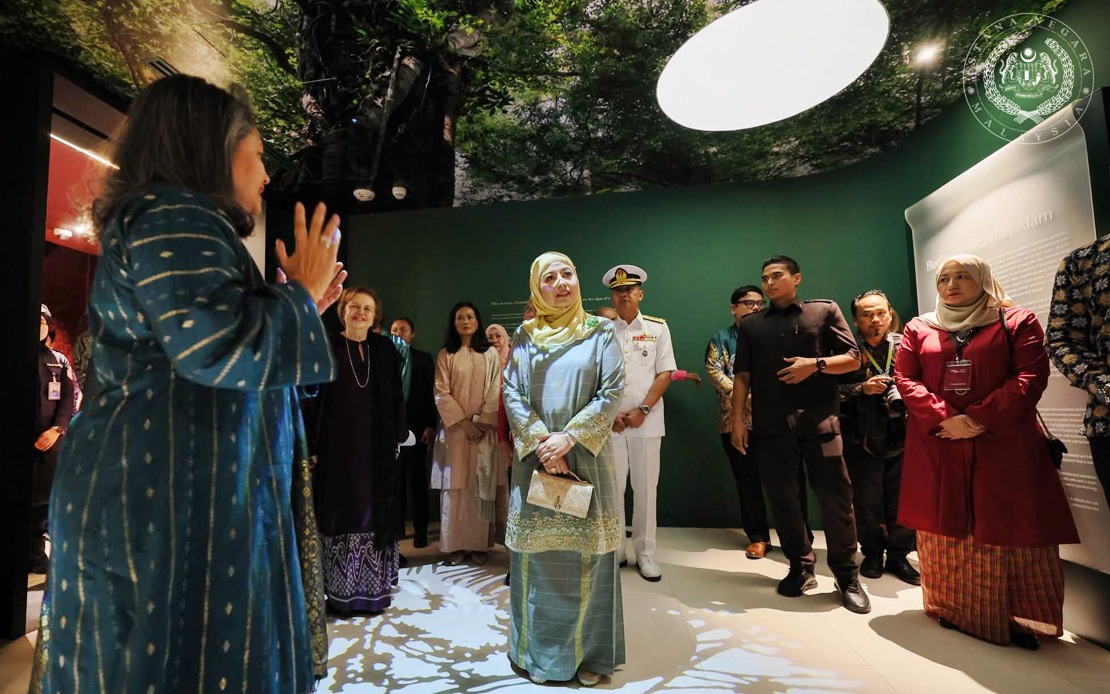
Her Majesty Raja Zarith Sofiah, Queen of Malaysia, formally opened the Merdeka Textile Museum on August 21 at the Menara Merdeka compound in Kuala Lumpur, marking a significant milestone in the nation's efforts to safeguard and celebrate its distinctive textile traditions. The ceremony underscored the monarchy's commitment to cultural preservation at a time when many traditional crafts and heritage practices face gradual erosion amid rapid modernisation and shifting societal priorities.
The museum was established by PNB Merdeka Ventures Sdn Bhd, a subsidiary wholly owned by Permodalan Nasional Berhad, one of Malaysia's largest sovereign wealth funds. The development reflects a strategic initiative to position textiles and traditional dress not merely as historical artefacts but as living expressions of national identity and contemporary cultural relevance. By situating the institution within the prominent Menara Merdeka complex, authorities have ensured high visibility and accessibility for local visitors and international tourists alike.
During her address, the Queen articulated a vision that resonates beyond ceremonial formality, emphasising the universal principle that every nation possesses a cultural inheritance worthy of protection and transmission across generations. This philosophy carries particular weight in Malaysia's multicultural context, where diverse textile traditions—from Malay songket to indigenous Sabah and Sarawak weaving—represent different communities' contributions to the national tapestry. Her Majesty stressed that these cultural expressions embody the fundamental values and identity markers that distinguish Malaysian society, implying that heritage preservation is inseparable from nation-building.
The Queen expressed hope that the museum would evolve into a premier destination for learning and cultural discovery, appealing particularly to Malaysian women as sources of inspiration and knowledge. This gendered perspective acknowledges women's historical and ongoing roles as custodians of textile knowledge, designers, and practitioners of traditional craftsmanship. Her remarks, shared through Sultan Ibrahim Sultan Iskandar's official Facebook account, also contained an appeal to younger generations to engage meaningfully with national heritage, addressing a recognised concern that insufficient youth participation threatens the continuity of traditional practices and their transmission to future cohorts.
At the museum's core lies an exceptional personal collection bequeathed by the family of the late Sharifah Azah Syed Mohammed Alsagoff, widely known as Azah Aziz. She was the spouse of the late Prof Diraja Ungku Abdul Aziz Abdul Hamid and mother of Tan Sri Dr Ungku Zeti Akhtar Aziz, the former governor of Bank Negara Malaysia who held Malaysia's top monetary policy position. The association with such a distinguished family lends historical credibility and prestige to the museum, while the personal nature of the collection allows visitors to connect textile history to individual narratives and lived experience rather than viewing textiles as abstract historical objects.
The donated collection encompasses 240 individual pieces of traditional clothing alongside 69 items of classical jewellery, including elaborately woven songket sarongs, intricate Limar Baju Kurung garments, and Tekat Emas pieces embellished with gold embroidery. Each category represents distinct technical expertise and cultural significance within Malaysia's textile traditions. The songket, characterised by supplementary weft patterning, demands exceptional skill and patience, often requiring months of labour for premium pieces. The inclusion of jewellery items alongside textiles reflects a holistic approach to understanding Malaysian dress culture, recognising that traditional outfits were conceived as complete ensembles rather than isolated garments.
The museum's physical infrastructure comprises eight galleries, enabling thematic and chronological organisation of collections while creating distinct spaces for different aspects of textile heritage. Beyond exhibition halls, the institution incorporates a comprehensive study centre containing specialised facilities rarely available to researchers in Southeast Asia. A conservation laboratory permits scientific analysis and preservation of delicate fabrics, while a dedicated fabric library allows scholars and designers to examine materials directly. The textile knowledge centre functions as an archival and research hub, supporting academic inquiry and professional development for conservators, designers, and cultural practitioners seeking to deepen expertise in Malaysian textile traditions.
The official opening ceremony attracted prominent governmental figures, including Hannah Yeoh, Minister in the Prime Minister's Department overseeing Federal Territories, and Tan Sri Shamsul Azri Abu Bakar, the Chief Secretary to the Government. The presence of Raja Tan Sri Arshad Raja Tun Uda, chairman of the PNB group, underscored the private sector's instrumental role in advancing this cultural initiative. Such high-level attendance signals government recognition that cultural heritage preservation constitutes a legitimate national priority deserving investment and institutional support alongside conventional infrastructure development.
The Merdeka Textile Museum arrives amid broader regional momentum in textile conservation and museum development across Southeast Asia. Neighbouring countries have similarly invested in dedicated textile institutions, recognising that textile heritage attracts culturally conscious visitors, supports tourism economies, and strengthens national cultural diplomacy. For Malaysia specifically, the museum offers opportunities to showcase the sophistication and aesthetic refinement of traditional practices, potentially elevating the international status of Malaysian textiles and creating market opportunities for contemporary artisans working within classical traditions.
The institution's emphasis on interactive cultural experiences and storytelling rather than static display reflects contemporary museum practice emphasising visitor engagement and emotional connection. Such approaches prove particularly effective for younger audiences and international visitors unfamiliar with Malaysian textile traditions, potentially generating sustained interest in heritage crafts. Educational programming, workshops, and live demonstrations can transform passive viewing into active learning, creating pathways for interested visitors to develop deeper engagement with textile arts.
For Malaysian women specifically, the museum potentially serves as a platform for recognising and celebrating female contributions to textile knowledge and artisanal practice—roles historically overlooked in conventional historical narratives. By honouring individuals like Azah Aziz whose collections and knowledge sustained these traditions, the institution validates women's cultural authority and expertise. This approach carries implications for contemporary textile practitioners and designers seeking to build careers within traditional frameworks while accessing modern markets and educational resources.
Looking forward, the Merdeka Textile Museum's success will depend upon sustained funding, curatorial excellence, and programming that maintains relevance for diverse audiences. Its location within Menara Merdeka provides excellent visitor accessibility, though the institution must develop strategies to reach schools, cultural organisations, and rural communities where textile traditions remain active. Partnerships with textile artisans, designers, and cultural specialists will prove essential for ensuring the museum functions as a living centre for heritage practice rather than merely a repository for historical objects.
The museum represents a deliberate investment in cultural memory at a moment when Malaysia continues negotiating its identity within global modernity. By institutionalising textile heritage preservation and creating spaces for learning and discovery, authorities acknowledge that cultural continuity requires intentional effort and institutional support. The Queen's patronage and emphasis on intergenerational transmission suggest that heritage preservation constitutes not merely nostalgic retrospection but a strategic endeavour to maintain distinctive Malaysian identity amid homogenising global forces.

