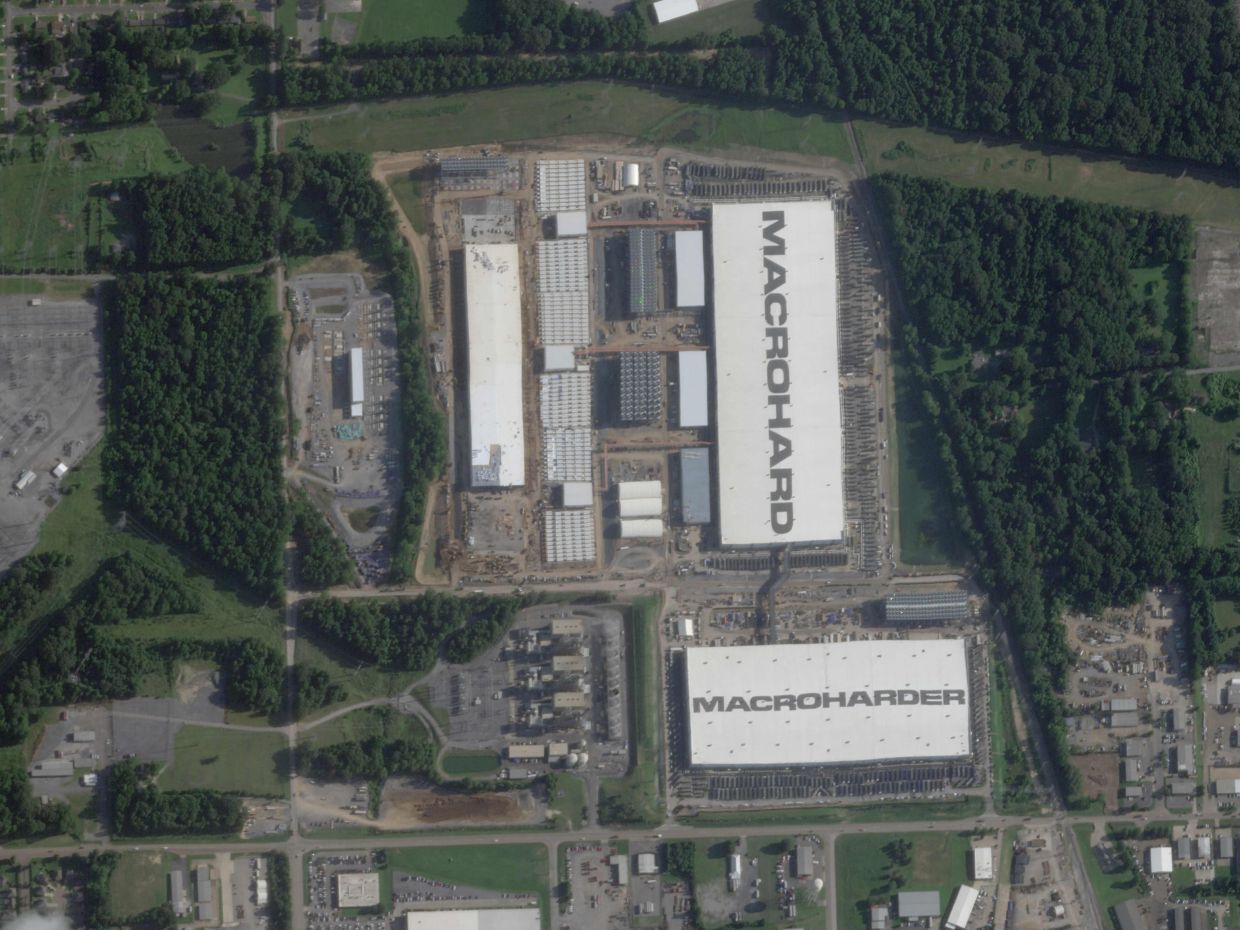
The global rush to build infrastructure for artificial intelligence is leaving a trail of environmental damage through America's most vulnerable communities. In Memphis, a sprawling supercomputer facility called Colossus I has become the flashpoint in a conflict between tech industry ambitions and the survival of South Memphis, a historic Black neighbourhood already burdened by decades of industrial pollution. The case reveals how rapidly deployed technology can bypass longstanding environmental protections when companies prioritise speed over compliance.
Jasmine Bernard, a teenager living near the neighbourhood of Boxtown, has spent two years confronting the reality of industrial expansion in her backyard. The 17-year-old witnessed gas turbines powering SpaceXAI's facility operate continuously, belching emissions into air that residents already know is dangerously contaminated. For her, the fight is not simply about protecting present health but honouring the historical struggle of her community. Boxtown itself carries the imprint of American slavery's aftermath—established by freed slaves following the Emancipation Proclamation of 1863, it has evolved into a predominantly Black working-class area. The neighbourhood's residents are acutely aware that cancer rates in the region run four times higher than the national average, a sobering reminder that environmental hazards are not equally distributed.
Bernard's framing of the issue cuts to the heart of environmental justice in the United States. "This community of Boxtown and South Memphis as a whole historically just has been the subject of environmental neglect," she told AFP, drawing connections between past injustices and present struggles. "It's deeply tied to the history... it's been a Black community for centuries." This observation reflects a pattern documented across the American South: low-income communities of colour frequently become repositories for polluting industries, refineries, and now, data centres serving the digital economy.
KeShaun Pearson, co-founder of Memphis Community Against Pollution, has emerged as a national voice articulating the stakes of unregulated data centre expansion. Travelling across the country to educate others about Colossus I and its environmental footprint, Pearson has characterised the facility as emblematic of how elected officials fail their constituents. He describes the project as demonstrating what transpires "when elected officials make promises about economic mobility" without genuinely consulting or protecting the people most affected. The turbines operating behind the "Private Property" fence have become symbols of a broken social contract, where promises of development obscure the reality of continued exploitation.
The physical dimensions of the facility underscore the scale of industrial intervention. Approximately ten turbines continuously run alongside vast warehouse structures housing Nvidia graphics processing units—the processors at the core of modern AI systems. These turbines generate the electrical power necessary to keep supercomputers operating around the clock. The installation was strikingly rapid: Colossus I was constructed in just four months, a timeline that left little room for community input or environmental review. This speed was justified by the purported necessity to meet demand from the global AI race, yet it came at the cost of procedural legitimacy.
Water depletion represents a second major threat to the community's wellbeing. Each day, Colossus I extracts 1.2 million gallons—approximately 4.5 million litres—of groundwater from the aquifer that supplies Memphis's drinking water system. This cooling mechanism keeps the supercomputer from overheating, but the environmental cost is borne by everyone dependent on that aquifer. Sarah Houston from the advocacy group Protect Our Aquifer has raised alarm about this unsustainable extraction. SpaceXAI had pledged to construct a water reclamation facility to recycle coolant rather than continuously draw fresh groundwater, but that project was suspended indefinitely. For a region facing long-term water security challenges, such promises matter little once construction deadlines have passed.
Acknowledging the facility's economic contribution, Memphis Mayor Paul Young announced plans to redirect US$3.35 million of the US$12 million in annual tax revenue generated by Colossus I toward assistance for affected communities. Yet critics contend this partial redistribution does not address the fundamental problem: communities cannot consent to or refuse a project that will alter their environment for decades. The tax revenue may fund some mitigation measures, but it cannot restore clean air or replenish depleted aquifers. Neighbouring Mississippi has adopted comparable accommodation strategies with SpaceXAI's second facility, Colossus II, in Southaven, where 69 turbines power infrastructure for the company's AI assistant Grok.
The noise pollution generated by these operations poses an underappreciated but significant health burden. Krystal Polk, whose family has owned property in the area for generations, describes the acoustic environment around Colossus II as oppressive and inescapable. "The noise is 24/7," she explained. "If you're out here too long, the vibrations – that wave sound makes you nauseous." This relentless noise operates as another form of environmental injustice, degrading quality of life in ways that are difficult to quantify but viscerally experienced by residents unable to find quiet within their own homes.
What distinguishes the SpaceXAI case as particularly troubling is the company's apparent circumvention of established environmental law. Advocacy groups and legal experts contend that SpaceXAI installed turbines without obtaining permits or conducting public consultation required under the Clean Air Act. Laura Thoms, representing the NAACP in a lawsuit against the company on behalf of Earthjustice, explained that permitting requirements exist precisely to protect community health prior to construction. "Before you even start constructing the plant, you have to have the permit in hand that ensures the health and safety of the surrounding communities," Thoms stated. Instead, SpaceXAI employed a strategy of regulatory capture by installing turbines while simultaneously pursuing permits, calculating that the company could proceed faster than regulators could respond. The firm labelled these installations "temporary," a characterisation that allowed it to argue they should not be subject to the same stringent regulations as permanent infrastructure.
In late July, facing legal pressure and public opposition, SpaceXAI announced it would dismantle the temporary turbines and replace them with a properly permitted power plant compliant with regulations. However, critics allege that the negotiation occurred behind closed doors with local officials rather than in transparent consultation with residents. More significantly, the company secured until July 2027 to complete replacement—a timeline that permits continued operation of the contested turbines for another year. The Justice Department further complicated the legal landscape by requesting that the NAACP's complaint be dismissed on national security grounds, suggesting that AI infrastructure development has acquired quasi-military status in government prioritisation.
The situation becomes more complex when considering the broader development pipeline. A third data centre facility has already been constructed near Colossus II, while a fourth remains under construction. Residents and advocacy organisations report having received no information regarding how these additional facilities will be powered or what environmental impact they might generate. This opacity reflects the power asymmetry inherent in rapid technological deployment: companies and government agencies move swiftly with minimal public accountability, while communities learn of changes that will affect them only after decisions have been made.
Historically, South Memphis residents have demonstrated capacity to organise successfully against unwanted industrial development. In 2021, Boxtown's residents mounted an effective campaign to halt a proposed pipeline project. That victory, though limited in scope, proved that community mobilisation could influence outcomes. Today's activists hope to replicate that success against expanding data centre infrastructure, but the challenge is substantially more difficult. AI facilities enjoy unprecedented political support based on national security rationales and promises of economic growth—narratives that overshadow local environmental and health concerns in government decision-making processes. The outcome of these struggles will determine whether technological progress in the Global North continues to be subsidised by environmental degradation and health risks imposed on America's most historically marginalised communities.

