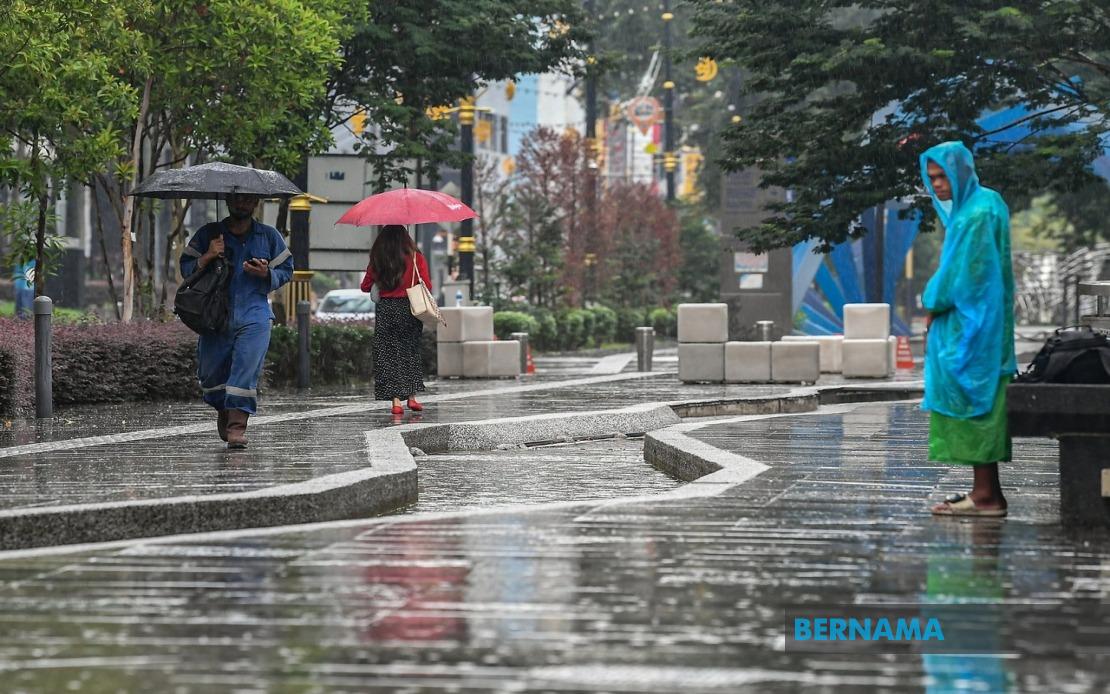
Johor is bracing for considerable rainfall across the majority of the state as nomination day for its legislative election approaches tomorrow morning. The Malaysian Meteorological Department has flagged precipitation in seven of the ten districts, presenting logistical complications for candidates, campaign workers and voters attempting to navigate polling stations and nomination centres during what is traditionally a decisive moment in any election cycle. The warning underscores the practical challenges facing election administrators and political parties as they manage the opening phase of the 16th Johor state election.
Azlai Ta'at, who directs MetMalaysia's Johor operations, confirmed that rain will characterise conditions in Johor Bahru, Muar, Batu Pahat, Kota Tinggi, Pontian, Tangkak and Kulai from early morning onwards. The three districts expected to remain relatively dry are Segamat, Kluang and Mersing, though they will not escape the wider weather system entirely. The forecast carries particular significance given the tight two-hour window allocated for the nomination process itself, from 9 am to 10 am at 56 nomination centres distributed across the state. Any serious weather disruption during this compressed timeframe could delay proceedings or make it difficult for supporters to gather in traditional show-of-strength demonstrations.
Temperature readings are expected to hover within a relatively narrow band typical of peninsular Malaysia's equatorial climate. Overnight lows will settle between 24 and 25 degrees Celsius, while daytime highs will climb to between 31 and 34 degrees Celsius, with Segamat projected as the hottest location. The combination of warmth and moisture is precisely the recipe for the afternoon thunderstorm activity that MetMalaysia has predicted, a pattern that will intensify once the official campaign period commences immediately after nominees are declared. Public authorities have already issued advisories urging candidates, their supporters and election workers to remain vigilant regarding rapidly shifting weather patterns, a pragmatic recognition that tropical conditions can deteriorate swiftly.
The afternoon outlook presents an even more chaotic meteorological scenario. Thunderstorms are forecast to strike Johor Bahru, Segamat, Kluang, Kota Tinggi, Pontian, Mersing and Kulai, while Batu Pahat and Tangkak face conventional rainfall, and Muar is expected to experience hot, sultry conditions instead. This patchwork of conditions reflects the highly localised nature of tropical precipitation systems and their unpredictability. The timing is unfortunate for political parties hoping to launch their campaign operations with rallies and street-level engagement activities. Heavy downpours and electrical storms typically discourage public attendance at outdoor political events, potentially dampening momentum precisely when competing parties are most eager to dominate the news cycle and generate grassroots enthusiasm.
The election itself involves a substantial electorate spread across the state's geographic expanse. The Election Commission has registered 2,727,926 voters in total, comprising 2,703,175 ordinary citizens, 12,041 military personnel and their spouses, and 12,710 police officers and their spouses. This voting roll represents a microcosm of Malaysian electoral participation, blending urban, suburban and rural demographics. Early voting is scheduled for July 7, with the main polling day set for July 11, providing several days for weather conditions to stabilise before the decisive phase of the election process. The nomination day rainfall, while logistically inconvenient, poses no direct threat to the election's ultimate administration.
The coalition and party composition competing for the 56 available seats reflects Malaysia's complex multiparty political landscape. Pakatan Harapan, the reformist opposition coalition, is contesting all 56 seats with a carefully negotiated distribution across its three component parties: PKR fielding 20 candidates, Amanah providing 19, and DAP contributing 17. This unified approach demonstrates the coalition's commitment to maximising its presence, though it also signals potential internal tensions given the uneven seat allocation. Barisan Nasional, the traditionally dominant establishment coalition, is similarly contesting the full slate with its traditional composition: UMNO presenting 36 candidates, MCA 16, and MIC four. This distribution broadly reflects the ethnic composition of Johor's population and the respective parties' historical vote-catching capacity.
Perikatan Nasional, the newer federal coalition that emerged from the political realignments of recent years, presents a more fragmented picture. PAS will contest 11 seats, Bersatu 16, the Malaysian Indian People's Party five, and Pejuang one, for a total of 33 seats. This allocation reveals the coalition's attempt to balance its Islamic-nationalist base with multiethnic representation, though the distribution of seats to its smaller components arguably reflects pragmatic attempts at coalition-building rather than genuine strategic advantage. The Malaysian United Democratic Alliance will field candidates in four seats, Parti Sosialis Malaysia in one, while Parti Bersama Malaysia is making its electoral debut with an ambitious 15-seat candidacy. The presence of newer and smaller parties signals a degree of electoral fragmentation and experimentation that characterises Malaysia's current political moment.
The nomination process itself, compressed into a mere two hours across 56 centres, represents a crucial bottleneck in the electoral calendar. This tight timeframe, combined with expected wet weather in most districts, will test the logistical capabilities of election officials and the resilience of campaign teams attempting to register candidates and orchestrate symbolic demonstrations. Returning officers will formally announce the list of eligible candidates following the conclusion of nominations, a moment when the full scope of electoral competition becomes publicly clear. The rain forecasts could dampen what is typically a high-energy day in any state election campaign, yet the weather is unlikely to deter serious political operatives from ensuring their nominations are properly filed and their candidates properly introduced to their constituencies.
The broader context of this election includes shifts in Johor's political alignments and the state's role within Malaysia's federal system. As one of the country's most populous and economically significant states, Johor frequently serves as a bellwether for broader national political trends. The results of this election will potentially reshape the state government's composition and influence both federal coalition dynamics and the personal fortunes of prominent politicians who maintain significant bases in the state. The weather disruptions forecast for nomination day are ultimately minor impediments within a much larger political contest, yet they serve as a reminder of the practical complications that attend electoral administration in Malaysia's tropical environment. Campaign managers and party strategists will need to adapt their plans to accommodate the predicted rainfall while maintaining momentum through the formal campaign period ahead.

