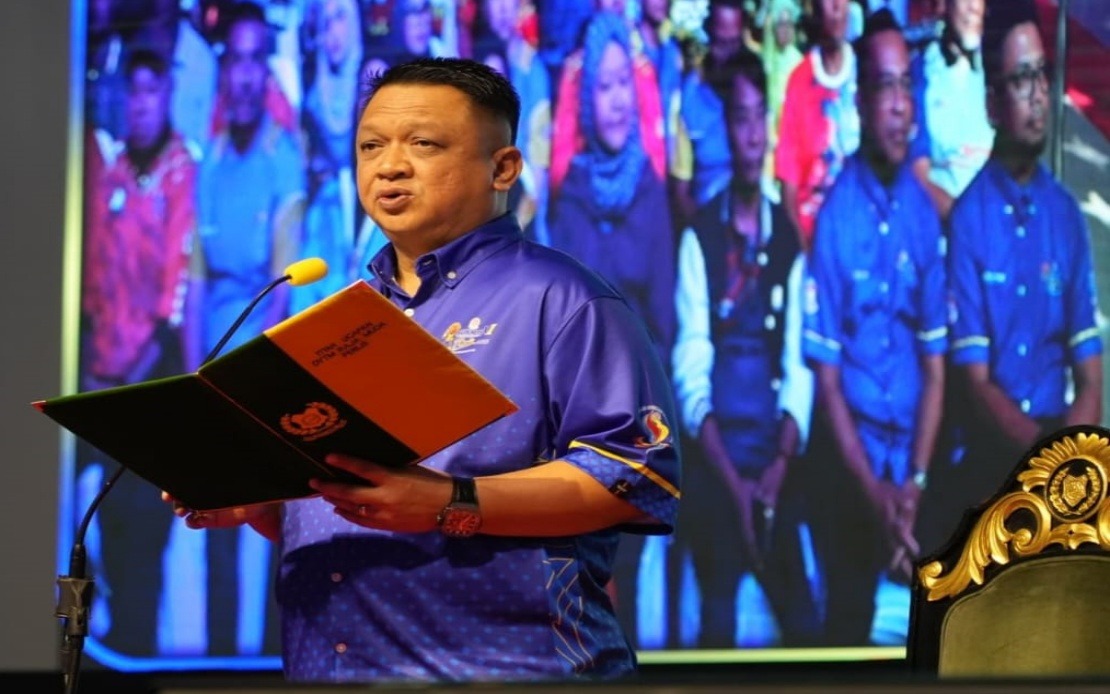
The Raja Muda of Perlis Tuanku Syed Faizuddin Putra Jamalullail has articulated an ambitious strategic framework intended to reshape how Majlis Amanah Rakyat (MARA) positions itself for the coming decade, speaking during the opening ceremony of the 11th Sukan MARA Se-Malaysia (SUKMAS) in Kangar. The three-pronged approach addresses the institutional modernisation required for Malaysia's premier agency supporting bumiputera entrepreneurship and professional development to remain relevant in an increasingly technology-driven economy and competitive global marketplace.
At the heart of the Raja Muda's vision lies a fundamental reorientation towards technological innovation, particularly in artificial intelligence and related digital tools. Rather than characterising MARA's role as merely adapting to technological disruption—a posture of reactive adjustment that numerous Malaysian institutions have adopted—His Royal Highness stressed that MARA must assume leadership in shaping how these technologies are deployed within its mandate. This framing represents a significant statement about institutional ambition, suggesting that MARA personnel should view themselves not as implementers of external technological trends but as pioneers capable of leveraging cutting-edge capabilities to enhance operational efficiency, stimulate creative problem-solving, and strengthen the agency's delivery mechanisms.
The emphasis on artificial intelligence carries particular weight for Malaysia's development aspirations. As Southeast Asia's third-largest economy and a nation aspiring to upper-middle-income status, Malaysia's capacity to integrate AI across public institutions directly impacts competitiveness and inclusive growth. MARA's adoption of these technologies could streamline loan approval processes, personalise business advisory services to individual entrepreneur profiles, and enhance market intelligence gathering for clients navigating international expansion. For Malaysian entrepreneurs—particularly those from bumiputera backgrounds who form MARA's primary constituency—access to AI-enhanced advisory and financing mechanisms could materially improve success rates in establishing scalable enterprises.
The second strategic thrust focuses on entrepreneurship calibrated for international ambition, representing a conscious departure from domestically-oriented business development models that have historically characterised institutional support in Malaysia. The Raja Muda's call for MARA to cultivate entrepreneurs capable of penetrating international markets reflects recognition that Malaysia's economic future depends on nurturing companies with genuine competitive advantages capable of contesting global supply chains and consumer markets. This objective requires far more than providing startup capital or basic business skills; it demands deep sectoral expertise, international market intelligence, export facilitation networks, and mentorship from entrepreneurs who have successfully navigated cross-border commerce. The construction of local enterprises that achieve global relevance remains underdeveloped in Malaysia relative to regional counterparts, particularly in Southeast Asia where Vietnamese, Thai, and Indonesian companies have achieved substantially greater international market penetration.
Practical realisation of this entrepreneurship vision requires MARA to substantially upgrade its advisory infrastructure and diversify its personnel expertise. The agency would need to recruit or train specialists in high-potential sectors including technology services, sustainable agriculture, advanced manufacturing, and digital creative industries—areas where Malaysian enterprises could achieve distinctive competitive positioning. Furthermore, MARA's international partnerships must expand beyond conventional trade relationships to encompass structured acceleration programmes, market entry assistance, and access to foreign venture capital networks that increasingly finance cross-border expansion by Southeast Asian enterprises.
The third component addresses leadership development with explicit emphasis on decisiveness, strategic foresight, and transformational agency. This thrust acknowledges that institutional success ultimately depends on personnel quality and organisational culture. By positioning future MARA leaders as catalysts and drivers of transformation rather than administrators managing incremental changes, the Raja Muda has signalled expectations for proactive, visionary stewardship. This cultural reorientation matters substantially in Malaysian institutional contexts where hierarchical structures and risk-averse decision-making patterns have historically constrained innovation. Developing leaders capable of making strategic decisions with incomplete information, tolerating calculated risk-taking, and championing organisational change represents a deliberate cultural intervention.
The SUKMAS tournament itself—now entering its 11th iteration—functions as an institutional mechanism supporting these broader strategic objectives, according to the Raja Muda's remarks. By assembling approximately 3,000 athletes and officials from MARA's 14 teams nationwide across 15 competitive disciplines including football, netball, volleyball, sepak takraw and tennis, the biennial event creates spaces where diverse personnel across functional boundaries and geographic locations develop shared identity and interpersonal relationships. These bonding mechanisms, while appearing peripheral to core institutional functions, possess genuine strategic value. Stronger internal cohesion facilitates information-sharing across departmental silos, enables cross-functional collaboration on complex entrepreneurship challenges, and cultivates organisational morale critical for executing ambitious transformation agendas.
The event's hosting in Perlis carries additional regional significance for stakeholder engagement. By bringing this major institutional tournament to a smaller state rather than concentrating such events in Kuala Lumpur or Selangor, MARA demonstrates commitment to equitable regional distribution of institutional resources and recognition. This positioning encourages closer interaction between MARA personnel and Perlis communities, building grassroots awareness of agency services and strengthening social legitimacy in constituencies where MARA's development impact may remain less visible than in major urban centres.
For Malaysian policymakers and institutional leaders observing MARA's strategic repositioning, the Raja Muda's framework offers instructive lessons about institutional renewal in the digital age. The integration of technological capability-building with entrepreneurship development and leadership transformation addresses a common gap in Malaysian institutional strategies—the tendency to pursue technological adoption and human capital development as separate initiatives rather than interconnected dimensions of institutional evolution. Furthermore, the explicit prioritisation of international market orientation reflects growing recognition that Malaysia's economic sustainability depends on building enterprises and capabilities capable of generating value in contested global markets rather than relying primarily on domestic consumption or preferential regulatory treatment.
The forthcoming implementation phase will test whether MARA can translate these strategic intentions into tangible institutional changes. Success requires sustained resource commitment, recruitment of specialised expertise particularly in emerging technologies and international business, modification of performance metrics to reward transformation-oriented outcomes, and cultivation of organisational cultures tolerant of experimentation and failure. These prerequisites represent substantial challenges for any Malaysian institution accustomed to conventional hierarchical structures and established operational rhythms.
Looking forward, MARA's capacity to execute this vision meaningfully positions the agency not merely as a contemporary support provider but as an institutional engine for Malaysia's continued economic competitiveness. The strategic emphases articulated by the Raja Muda—technological leadership, internationally-oriented entrepreneurship, and transformational management—collectively address genuine institutional imperatives. Whether MARA's operational systems, personnel capacity, and organisational culture can accommodate such ambitious recalibration will substantially influence Malaysia's success in developing competitive, globally-engaged enterprises capable of sustaining middle-income living standards and generating quality employment across diverse regions.

