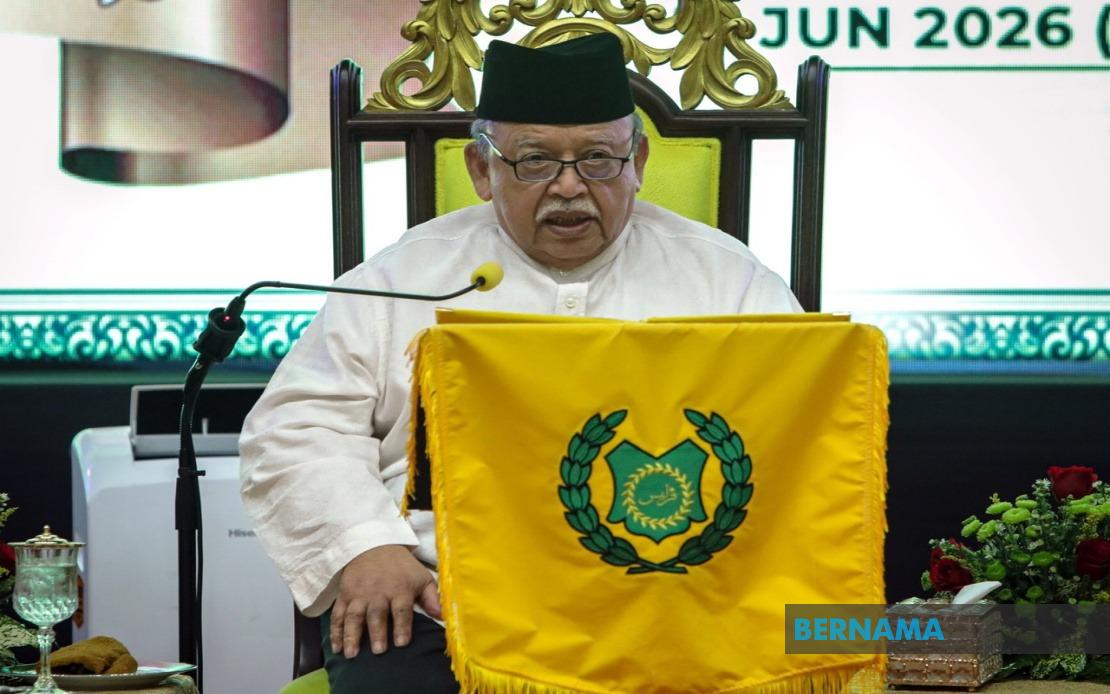
The Raja of Perlis, Tuanku Syed Sirajuddin Jamalullail, has delivered a significant call for ethical governance and personal responsibility, urging Malaysians to ground their professional and civic duties in sincerity whilst maintaining an unwavering stance against corrupt practices. Speaking during the official opening of the state-level Maal Hijrah 1448H/2026M celebration in Kangar on June 18, the Ruler articulated a vision of national development rooted in moral foundations rather than material metrics alone, striking at the heart of contemporary governance challenges across Southeast Asia.
Central to Tuanku Syed Sirajuddin's message is a reconceptualisation of progress itself. He contended that sustainable advancement requires populations characterised by intellectual rigour, moral integrity, civic discipline and social cohesion. The framework he presented challenges the conventional development paradigm that prioritises infrastructure and economic output, instead positioning knowledge acquisition, cultural strength and ethical maturity as equally vital pillars. For Malaysian policymakers grappling with questions of institutional trust and public sector performance, this royal intervention carries weight in delegitimising expedient approaches to governance that neglect human and moral dimensions.
The Ruler's emphasis on viewing work as an act of worship represents a sophisticated appeal to religious motivation as an antidote to malfeasance. By framing professional responsibility within an Islamic moral framework, Tuanku Syed Sirajuddin invoked values deeply embedded in Malaysian cultural consciousness whilst simultaneously signalling that corruption contradicts fundamental religious principles. This approach resonates particularly in Perlis and throughout northern Malaysia, where Islamic identity remains deeply interwoven with social and political life, and offers a tool for religious leaders and civil society advocates promoting institutional integrity.
Tuanku Syed Sirajuddin articulated a vision of authentic Islamic understanding grounded in Quranic principles and the Sunnah, coupled with the cultivation of sophisticated political culture. This dual emphasis acknowledges the complex interplay between religious conviction and secular governance mechanisms that characterises modern Malaysia. The mention of preserving mature political discourse suggests concern about polarisation and the deterioration of civil debate—challenges facing not only Perlis but the broader Malaysian political ecosystem. Regional observers will note this as a subtle but pointed commentary on the state of contemporary political engagement across the country.
The Ruler's call for citizens to transcend passivity and assume roles as agents of change directly addresses questions of civic participation and democratic engagement. By urging Malaysians to become initiators rather than observers, he implicitly critiques complacency and encourages greater involvement in shaping societal direction. For a nation navigating demographic shifts and technological transformation, such exhortations toward active citizenship carry particular relevance to younger populations whose engagement in public discourse remains variable and often mediated through digital platforms.
Facing down emerging challenges dominated the latter portion of Tuanku Syed Sirajuddin's remarks, as he identified technological advancement, artificial intelligence proliferation, social metamorphosis and global economic volatility as defining contemporary realities. His framing suggests recognition that Malaysian society cannot insulate itself from global forces and must instead develop indigenous capacity to navigate and shape these transformations. This proves especially pertinent for smaller states like Perlis, which lack the economic leverage of major regional players and must rely increasingly on human capital and institutional sophistication to maintain competitiveness.
The Ruler emphasised that ummah development must encompass religious, political, economic and social dimensions simultaneously, rejecting siloed approaches to national advancement. This integrated perspective acknowledges that durable progress cannot be achieved through narrowly sectoral interventions but demands holistic attention to institutional, spiritual and material wellbeing. Malaysian policymakers operating within the framework of the MADANI vision will find conceptual reinforcement in this royal articulation of development philosophy.
Tuanku Syed Sirajuddin specifically invoked the concept of MADANI progress, locating his remarks within the contemporary national development discourse. By emphasising that genuine MADANI advancement transcends physical infrastructure to encompass knowledge, character, culture and ethical systems, he signalled alignment with aspirational national goals whilst simultaneously offering critical appraisal of what constitutes authentic progress. This positioning proves strategically important for the monarchy, which maintains institutional investment in national development narratives whilst maintaining institutional distance from partisan politics.
The ceremonial recognition of Datuk Izham Mahmud through the Perlis Tokoh Maal Hijrah award underscored the Ruler's commitment to honouring those who exemplify the virtues he articulated. By specifically acknowledging an individual whose contributions represent the integration of faith, service and character, Tuanku Syed Sirajuddin provided tangible manifestation of the principles he advocated. Such recognition mechanisms, when wielded effectively, can incentivise ethical conduct and elevate public consciousness regarding exemplary citizenship.
The attendance of the Raja Muda of Perlis, Tuanku Syed Faizuddin Putra Jamalullail, and the Raja Puan Muda of Perlis, Tuanku Dr Hajah Lailatul Shahreen Akashah Khalil, underscored institutional unity and dynastic continuity in transmitting values across generations. This multigenerational participation in national discourse regarding integrity and progress carries symbolic importance for a monarchy conscious of its enduring relevance to contemporary Malaysian governance challenges. The visible engagement of younger royal figures signals institutional adaptation whilst maintaining traditional authority structures.
The Maal Hijrah observance provides an apposite occasion for such ethical exhortations, as the Islamic calendar's commencement traditionally prompts reflection on moral renewal and societal recommitment to foundational principles. By embedding his governance message within this religious calendar framework, Tuanku Syed Sirajuddin connected abstract principles of integrity to cyclical spiritual practice, rendering them not as exceptional demands but as permanent obligations renewed annually. This calendrical integration proves particularly effective for reinforcing ethical messaging within Muslim-majority populations across Malaysia and Southeast Asia.
For Malaysia's broader governance landscape, the Raja of Perlis's intervention represents significant royal deployment of moral authority toward institutional integrity and ethical citizenship. In a political environment frequently characterised by disputes regarding accountability mechanisms and standards of conduct, such unambiguous royal positioning can influence public expectation and create space for strengthening governance institutions. The emphasis on corruption rejection, when articulated by revered traditional authorities, carries persuasive force that government announcements alone might struggle to achieve, potentially contributing to gradual cultural shifts toward greater institutional accountability across Malaysian society.