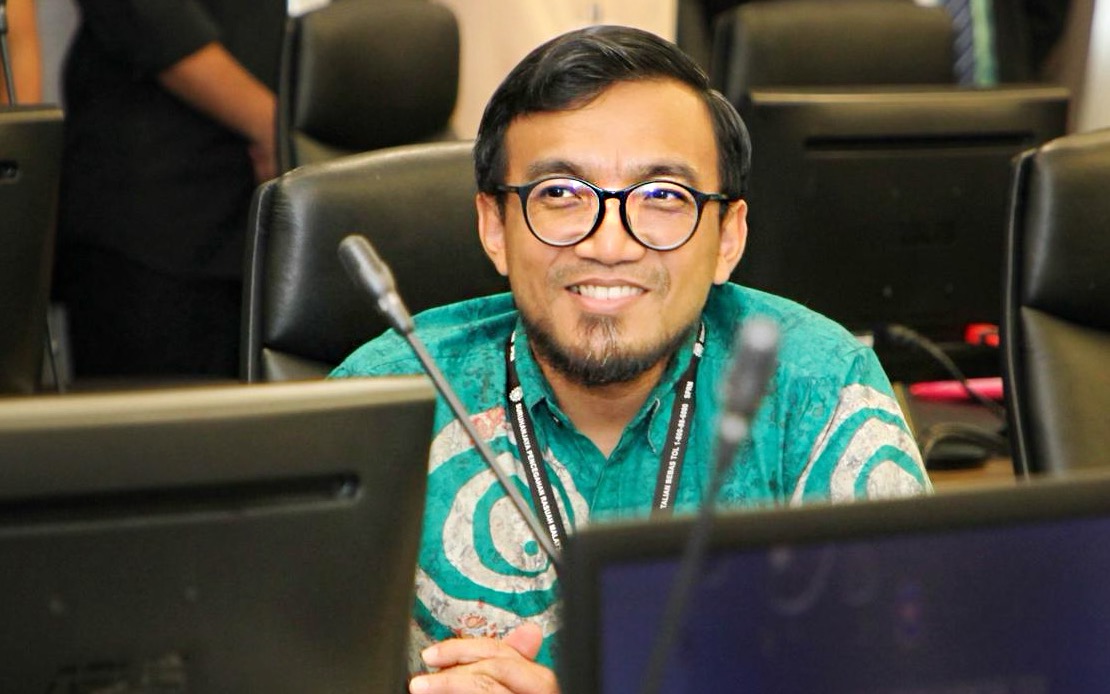
Implementing the Royal Commission of Inquiry recommendations for Lembaga Tabung Haji cannot succeed by merely ticking boxes on timelines and action plans. Instead, the pilgrimage fund must establish concrete, measurable performance indicators that demonstrate whether reforms are actually delivering tangible improvements to the organisation and protecting depositor interests, according to a lecturer at the International Islamic University Malaysia.
Dr Muhammad Irwan Ariffin from IIUM's Kulliyyah of Economics and Management Sciences contends that the current reform trajectory risks becoming hollow if authorities lack robust metrics to track effectiveness. He emphasized that regular, detailed progress reports on implementation efforts should become standard practice, with transparent communication designed to reduce uncertainty among the 9.3 million Tabung Haji members whose life savings depend on the fund's stability.
The timing of this commentary reflects ongoing concerns about public confidence in Malaysia's largest hajj savings institution. The RCI, which completed its investigation in 2023, revealed governance failures and investment losses that shook depositor trust. While authorities have begun addressing recommendations, many members remain anxious about the pace and sincerity of reforms. Dr Irwan's intervention suggests that confidence cannot be rebuilt through announcements alone—people need evidence.
His analysis reveals a crucial insight about how public perception operates in financial institutions. Economic behaviour, he notes, stems not only from objective financial realities but equally from expectations and collective sentiment. Poor communication or unexplained delays in implementing promised changes can trigger a self-fulfilling crisis where depositors lose faith and begin unnecessary withdrawals, destabilizing the institution further. This dynamic is particularly acute for Tabung Haji, given its significance to Malaysia's Muslim population and its role as a social safety net for millions saving for the pilgrimage.
Regarding governance architecture, Dr Irwan calls for periodic review and refinement of the existing framework to allow space for internal improvements rather than static compliance. Board appointments should strictly prioritize expertise and integrity over political considerations or patronage networks, a core RCI finding that remains contentious in Malaysian institutional reform. He also emphasizes the necessity of clear separation between management bodies and oversight committees, ensuring accountability structures cannot be compromised by overlapping interests.
The expert further stresses that all committees must operate demonstrably free from conflicts of interest and political interference, while adhering to stringent accounting standards. This touches on a persistent vulnerability in Malaysian institutional governance—the tendency for oversight bodies to lack genuine independence. For Tabung Haji, where members' religious trust parallels their financial trust, the standards must exceed normal corporate practice.
Framing these reforms through Islamic economic principles provides additional legitimacy and direction for Tabung Haji's transformation. Dr Irwan positions the RCI recommendations as embodying the foundational values of amanah (trust), adl (justice), and hifz al-mal (protection of wealth), core tenets that resonate with depositors' religious expectations. Improved governance equally represents sadd al-dhari'ah—the Islamic legal principle of preventing harm before it materializes. When interpreted this way, governance reform becomes not bureaucratic obligation but religious imperative, potentially shifting how stakeholders and the board view implementation urgency.
Practically, better governance enables Tabung Haji to accurately calculate actual profits earned and determine safe, sustainable distributions of reserves and hibah (gifts) to members. Currently, opacity surrounding financial calculations fuels suspicion and anxiety. Under reformed systems with transparent accounting, members could understand precisely how their funds are invested, what returns are generated, and why distributions are set at particular levels. This clarity would address one of the most damaging legacies of the pre-RCI era—the sense that members could not trust official figures.
Investment evaluation must also evolve beyond simplistic halal-versus-haram categorization, Dr Irwan argues. While religious compliance remains essential, holistic assessment requires scrutinizing how governance decisions are made and whether they genuinely protect depositors. An investment contract might be technically compliant with Islamic finance principles yet involve governance structures that expose members to unreasonable risk or lack proper oversight. This sophisticated approach would align Tabung Haji with international best practices while honouring religious obligations.
Younger depositors present both challenge and opportunity for Tabung Haji's future. Dr Irwan recommends substantially enhanced transparency in financial reporting, coupled with initiatives strengthening financial literacy among younger Malaysians. This cohort typically demonstrates greater skepticism toward institutions, higher concern about money management practices, and greater sensitivity to governance issues. Enabling younger hajj registration while providing accessible, comprehensive financial information could rebuild a generational base of confidence. Modern depositors expect organisations to prove trustworthiness through transparent disclosure, not merely assert it.
On investment strategy, Dr Irwan advocates balanced portfolio diversification that combines stable, liquid assets with growth investments offering higher return potential. This middle path addresses opposing pressures facing Tabung Haji—maintaining liquidity for pilgrims while generating returns sufficient to support members over decades. The pre-RCI approach favoured aggressive expansion that ultimately damaged the fund. A recalibrated strategy must prioritize security while acknowledging that entirely conservative positioning would erode purchasing power and undermine long-term member benefits.
The broader lesson from these expert recommendations applies beyond Tabung Haji to Malaysian public institutions generally. Credibility depends not on compliance with prescribed timelines but on demonstrable, measured improvement in actual performance. Stakeholders deserve transparency about progress, honest acknowledgment of difficulties, and evidence-based assurance that reforms are working. For Tabung Haji specifically, where religious and financial trust intersect, the stakes of this transition remain extraordinarily high for the millions of Malaysians who view their savings there as both investment and sacred obligation.

