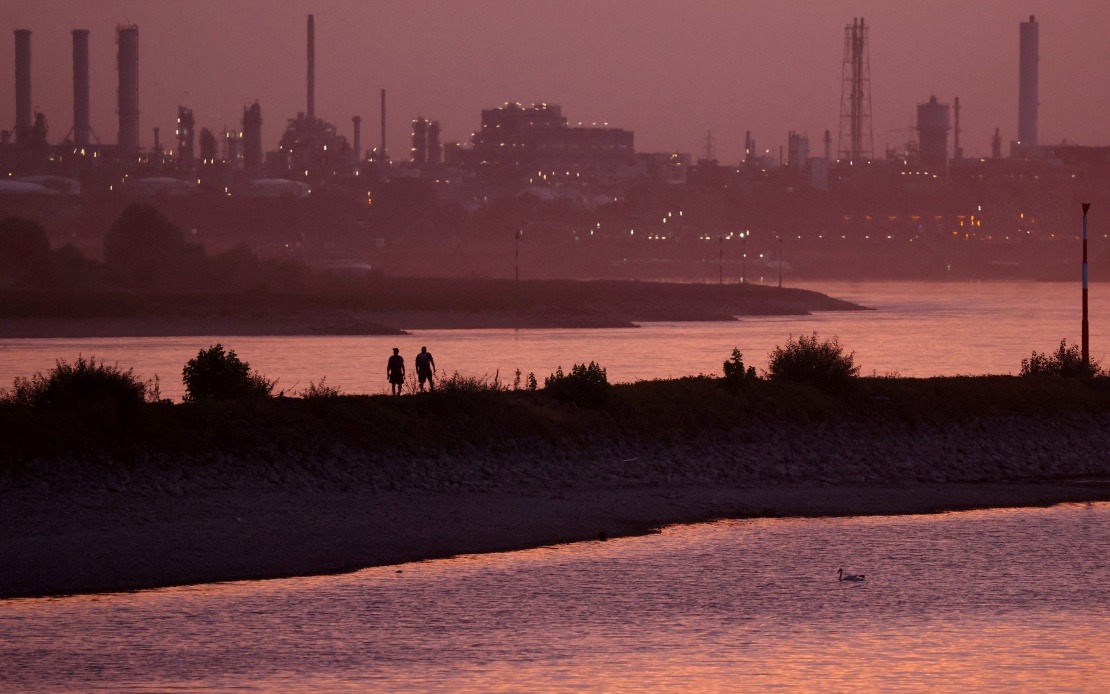
German explosives specialists were mobilized on Thursday to safely defuse a large aerial bomb from World War II discovered near Cologne as exceptionally low water levels on the Rhine river uncovered the decades-old ordnance, according to reports from the German Press Agency. The discovery underscores how environmental pressures and climatic extremes can suddenly resurrect hazardous remnants from the continent's tragic wartime past, creating immediate safety challenges for civilian populations living downstream of major European waterways.
The 500-kilogramme United States aerial bomb surfaced on Wednesday evening adjacent to Cologne's Rheinpark, a prominent recreational area in the city. Authorities immediately declared a restricted zone spanning a 400-metre radius around the discovery site, necessitating the evacuation of approximately 360 individuals whose residences or workplaces fell within the danger perimeter. The affected population included occupants of a retirement facility and personnel employed at the nearby RTL television studios, an important German broadcasting hub. Evacuation procedures commenced as a precautionary measure while defence specialists assessed the ordnance and developed a controlled defusing strategy, though the precise timing of the operation remained unconfirmed throughout Thursday.
The exposure of this wartime artifact occurred during a severe environmental crisis gripping the Rhine valley. The river's water gauge at Cologne plummeted to just 67 centimetres on Thursday, equalling a record low mark established only days prior, with meteorologists forecasting a further decline to 66 centimetres. This represents an unprecedented hydrological emergency stemming from an extended period of anomalous heat and severe drought conditions affecting Central Europe. Such extreme low-flow conditions have become increasingly frequent occurrences in recent years, reflecting broader climatic patterns that pose mounting challenges to river-dependent communities and infrastructure across the continent.
This particular bomb discovery represents merely one consequence of the Rhine's catastrophic water deficit. The diminished water levels have triggered substantial disruptions throughout Germany's most vital commercial shipping corridor, forcing vessel operators to substantially reduce cargo loads to avoid running aground on exposed riverbed sections. Barge operators have reluctantly curtailed operations or implemented costly modifications to maintain basic transportation functions, directly undermining the economic efficiency of inland waterway commerce that traditionally moves bulk commodities cheaply and sustainably. Beyond the immediate commercial impacts, the desiccated riverbed has transformed into an archaeological and hazardological museum, gradually exposing buried armaments, infrastructure, and debris accumulated during and after the 1939-1945 conflict.
The defusing operation itself carries significant risk and complexity given the bomb's age, potential instability, and proximity to populated areas. The German military's ordnance disposal teams, which regularly encounter similar legacies of bombardment campaigns that saturated the Rhineland during the final years of World War II, possess specialized equipment and expertise developed through decades of managing comparable situations. However, each discovery presents unique technical challenges depending on the device's condition, fuse mechanisms, and potential chemical deterioration within the surrounding environment. The decision to evacuate 360 residents reflects the appropriate conservative approach taken by authorities when historical explosives of this magnitude surface in proximity to civilian concentrations.
Extrapolating from current hydrological projections, water levels along the Rhine appeared unlikely to experience meaningful recovery within the forthcoming days, according to official assessments issued by German water management authorities. Meteorological forecasts indicated minimal precipitation and continued warming, conditions that would perpetuate the river's critical low-flow status through the foreseeable future. This prognosis carries troubling implications for multiple sectors dependent upon adequate river discharge, including hydroelectric power generation, cooling water supplies for thermal power stations, agricultural irrigation, and the continued viability of inland navigation systems that represent crucial economic infrastructure for Central European commerce and industrial production.
The Rhine bomb discovery resonates beyond Germany's borders, particularly for Southeast Asian readers observing how developed nations contend with historical environmental and safety legacies. Malaysia and neighbouring countries face analogous challenges from wartime debris and ordnance scattered across territories that witnessed extensive conflict during the Pacific War and subsequent regional upheavals. The German experience demonstrates that effective hazard management requires sophisticated technical expertise, substantial financial resources, and comprehensive public safety protocols—investments that developing nations must consider when addressing their own unresolved wartime contamination problems.
Climate change represents an amplifying factor underlying these recurring exposures of historical hazards. As extreme weather patterns intensify and precipitation becomes increasingly erratic across Europe, rivers and water bodies previously concealing military debris will likely yield additional discoveries with greater frequency. The Rhine incident exemplifies how environmental transformation can impose sudden public safety burdens upon communities, requiring rapid mobilization of specialized resources and generating economic costs through disrupted commerce and emergency response measures. This pattern may intensify in coming decades as planetary warming reshapes hydrological systems globally.
The broader implications of this incident extend to infrastructure vulnerability and disaster preparedness planning. Communities situated along major European rivers must enhance their capacity to respond rapidly to simultaneous crises—environmental stress compounded by historical hazard exposure. The convergence of drought-induced shipping disruptions with ordnance detection creates cascading challenges demanding coordinated governmental response involving military engineers, civilian authorities, emergency management personnel, and private sector logistics specialists. Malaysia's river-dependent regions, whilst not burdened by comparable wartime ordnance legacies, should nonetheless recognize the importance of integrating historical risk assessment into long-term environmental planning and infrastructure resilience strategies.

