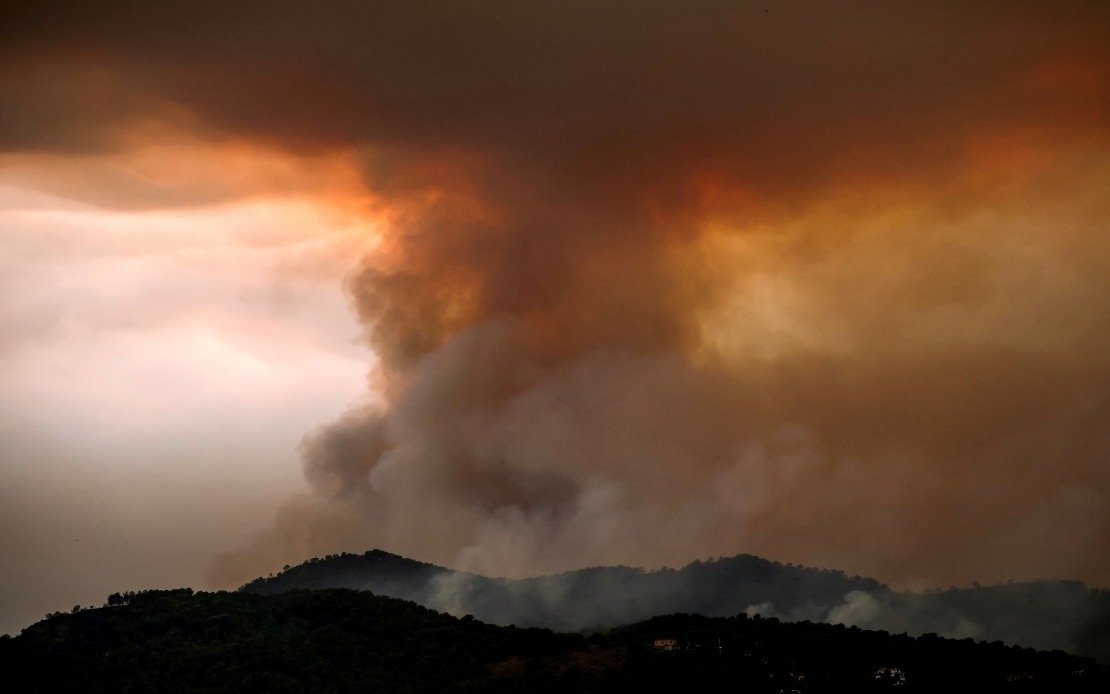
The International Federation of Red Cross and Red Crescent Societies issued an urgent alert on Tuesday, cautioning that a fresh heatwave threatening Spain and France could dramatically amplify the already catastrophic wildfire situation engulfing both nations. Emergency response teams are currently battling fast-moving blazes that have forced thousands from their homes, and the humanitarian toll continues to mount as the humanitarian landscape remains deeply unstable across the affected regions.
The federation characterised the situation as "highly volatile," with fires continuing their advance across the landscape while evacuations proceed and emergency shelters and support services strain under the weight of demand. The scale of displacement has created an unprecedented challenge for aid organisations attempting to provide shelter, sustenance, and medical care to displaced populations whose numbers continue to swell as fires advance into previously unaffected areas.
A critical pattern has emerged in the European context. The wildfires are not isolated incidents but rather consequences of months of relentless heat and drought conditions that have persisted since late spring. This sustained climatic stress has progressively desiccated vegetation and soil across the region, creating tinderbox conditions where flames propagate with remarkable speed and intensity, overwhelming firefighting capacity and emergency response infrastructure.
Maria Alcazar Castilla, Deputy Regional Director for Europe at the IFRC, articulated a troubling reality about contemporary European climate dynamics. She observed that Europe is witnessing an increasingly destructive cycle in which successive heatwaves, prolonged drought periods, and catastrophic wildfires reinforce one another in a cascading pattern. Communities across the continent bear the devastating consequences of this interconnected environmental crisis, experiencing displacement, property loss, and the psychological trauma of forced evacuation.
Alcazar Castilla emphasised that while the Red Cross continues mobilising resources to address immediate emergencies, this reactive approach cannot substitute for systemic change. She stressed that policymakers must commit to sustained, substantial investment in community preparedness and climate adaptation infrastructure. These long-term commitments are essential to enable communities to build resilience against future climatic shocks and to reduce vulnerability when extreme weather events inevitably occur.
The Spanish Red Cross has marshalled significant resources to address the crisis unfolding across multiple regions. The organisation has activated 690 staff members and volunteers supported by 125 vehicles and 27 ambulances to provide assistance to communities affected by fires threatening Madrid, Avila, Toledo and Castellon. The scale of displacement has necessitated opening 78 emergency shelters, which have collectively provided refuge to more than 4,400 people whose homes have been rendered unsafe or destroyed by advancing flames.
The situation in France reveals similar strain on humanitarian systems, though the French response reflects the country's distinct administrative structure. The French Red Cross has deployed more than 300 volunteers operating from over 60 local branch locations across affected regions. These personnel support ongoing evacuation operations, provide emergency accommodation for those who have lost access to their homes, and distribute essential relief items including food, water, hygiene supplies, and medical provisions to displaced populations.
French Red Cross operations extend beyond immediate crisis response into longer-term recovery planning. The organisation is actively preparing comprehensive assistance programmes for individuals whose residences have been damaged or completely destroyed by the wildfires. This forward-looking approach acknowledges that the humanitarian challenge will persist long after fire suppression efforts conclude, requiring sustained support for reconstruction and reintegration of displaced communities.
For Malaysian and Southeast Asian observers, this European crisis carries significant lessons about climate vulnerability and adaptation. While Malaysia's tropical geography creates different wildfire dynamics compared to Mediterranean and temperate regions, the underlying principle remains constant: prolonged heat stress and altered precipitation patterns create conditions for environmental disasters. The Malaysian experience with haze and transboundary smoke pollution demonstrates how environmental emergencies transcend borders, affecting regional stability and public health.
The scale of institutional mobilisation evident in the European response offers both encouragement and cautionary lessons. The capacity to rapidly deploy hundreds of trained personnel, coordinate across numerous local organisations, and establish extensive shelter networks demonstrates the importance of maintaining robust civil society infrastructure and pre-positioned emergency capacity. However, the fact that such massive responses are necessary indicates the inadequacy of prevention and adaptation measures that could reduce disaster impacts beforehand.
Climate specialists increasingly emphasise that the concatenation of heatwaves, droughts, and wildfires reflects fundamental shifts in global weather patterns rather than isolated anomalies. The progressive nature of these trends suggests that European societies will likely face repeated cycles of this crisis in coming years unless mitigation strategies are substantially expanded. This grim outlook applies equally to other regions, including Southeast Asia, where climate change impacts threaten to intensify existing vulnerabilities related to agriculture, water resources, and public health.
The IFRC's warning about an impending additional heatwave represents more than a tactical alert about immediate danger. It signals a broader systemic failure: humanity's collective inability to arrest climate change has created circumstances where emergency response, however skilled and well-resourced, functions merely as damage control within an accelerating crisis. Investment in preparedness and adaptation remains essential, yet these measures cannot substitute for fundamental shifts in how global society produces energy, manages land use, and constrains greenhouse gas emissions.

