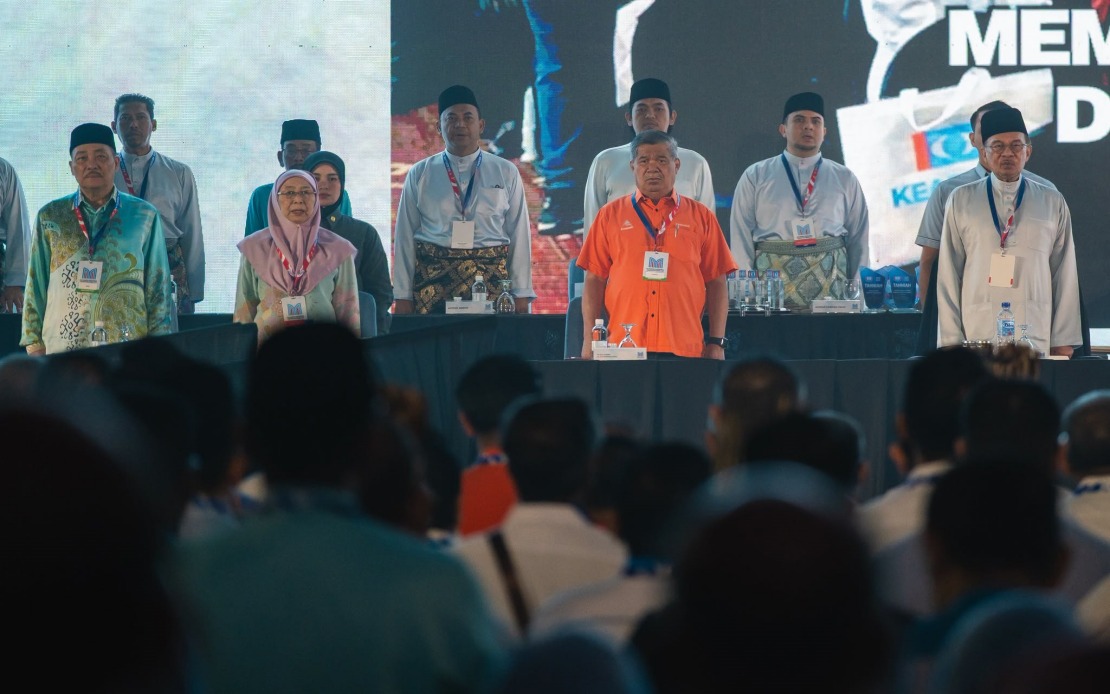
Datuk Seri Mohamad Sabu has underscored that Malaysia's reform movement must remain an active priority even after political parties assume governmental control, signalling that the ruling coalition's work toward institutional transformation cannot be treated as a completed task. The Parti Amanah Negara president made his remarks during the 2026 PKR National Congress at the Melaka International Trade Centre in Ayer Keroh, where he joined Parti Keadilan Rakyat president Datuk Seri Anwar Ibrahim in discussing the continuity of reform-oriented governance.
For Mohamad Sabu, who serves as Agriculture and Food Security Minister, reform represents far more than campaign rhetoric or political positioning. He stressed that the electorate's confidence in the coalition demands tangible demonstration through concrete policy implementation and measurable outcomes, with anti-corruption efforts remaining non-negotiable regardless of whether suspected offenders hold high office or represent powerful interests. This framing suggests that the government views reform not as a phase to be completed once elections are won, but rather as an ongoing institutional commitment that must withstand political pressure and factional resistance.
The minister's emphasis on continued anti-corruption work carries particular weight in Malaysia's contemporary political context, where successive administrations have grappled with legacy issues of embezzlement, misappropriation, and institutional capture. By positioning fight against corruption as independent of individual political rivalries or personal grudges, Mohamad Sabu appears to be addressing public scepticism about whether coalition governments will selectively prosecute opponents while protecting allies. His language—framing this as work rather than vendetta—attempts to distinguish principled institutional reform from partisan score-settling.
Mohamad Sabu's intervention at the PKR congress also reflects broader coalition messaging about governance philosophy. The attendance of multiple party leaders at the same event discussing reform continuity suggests an attempt to present unified commitment to institutional improvement across different coalition components. For Malaysia's political ecosystem, where coalition stability depends partly on agreement over core policy directions, such public alignment carries significance beyond individual statements.
The regional dimension of governance reform also featured in Mohamad Sabu's remarks. He highlighted government commitment to implementing the Malaysia Agreement 1963, which establishes constitutional relationships and resource-sharing arrangements between Peninsular Malaysia, Sabah, and Sarawak. This constitutes a substantive governance issue affecting the federation's institutional architecture and federal-state relationships. The minister's emphasis suggests the coalition views MA63 implementation as integral to its reform agenda rather than a separate constitutional matter, positioning institutional fairness toward East Malaysian states as part of broader anti-corruption and good-governance frameworks.
Economic performance and its translation into improved living standards featured prominently in Mohamad Sabu's remarks, reflecting government awareness that public satisfaction depends on tangible improvements in household finances rather than abstract economic indicators. The minister explicitly cautioned that gross domestic product growth figures matter less than whether ordinary Malaysians experience enhanced purchasing power, reduced debt servicing burdens, and genuine relief from cost-of-living pressures. This framing responds to consistent polling data showing public concern about affordability, particularly among working and middle-income households struggling with rising food, fuel, and housing costs.
The government's approach to cost-of-living challenges appears to involve both structural economic management and targeted interventions, though Mohamad Sabu's statement emphasizes the importance of visible results over policy technicality. For Southeast Asian observers, Malaysia's approach to balancing macro-economic growth against household welfare concerns mirrors broader regional challenges facing governments attempting to deliver inclusive prosperity rather than growth concentrated among elites or specific sectors.
Educational institutional reform also received attention in the minister's remarks, particularly regarding the anticipated repeal of the Universities and University Colleges Act 1971. Mohamad Sabu characterized this legislative change as expanding academic freedom and democratic space within higher education, suggesting the coalition views campus autonomy and student participation as components of broader reform. The AUKU repeal has generated significant debate within student movements, civil society, and academic circles, with advocates arguing it would facilitate campus activism while critics worry about security implications. The government's public support for this measure signals alignment with stakeholder groups advocating greater institutional autonomy in Malaysian universities.
The political context surrounding these statements involves succession planning and generational transition within the coalition. Anwar Ibrahim's continued emphasis on reform at the PKR congress, combined with Mohamad Sabu's reinforcement of these themes, suggests an attempt to establish reform as transcending individual leaders or electoral cycles. This becomes particularly relevant if coalition leadership transitions occur in coming years, as anchoring reform commitments to institutional rather than personal reputation theoretically provides continuity.
For Malaysian business and investor communities, Mohamad Sabu's statements about sustained anti-corruption and governance improvement theoretically strengthen institutional credibility and predictability. However, implementation inconsistencies between coalition rhetoric and actual prosecutorial patterns would undermine such confidence. The minister's insistence that no individual receives special protection based on position or influence attempts preemptively to address investor concerns about selective enforcement and patronage networks affecting business operations.
The broader Southeast Asian context influences how Malaysian governance reform resonates within the region. Neighbouring countries including Singapore, Indonesia, and Thailand have pursued anti-corruption initiatives with varying degrees of success and political contestation. Malaysia's government positioning reform as continuous and politically impartial reflects global standards for institutional legitimacy increasingly expected by international investors, development institutions, and regional partnerships. Public commitment to these principles, particularly when articulated across multiple coalition parties, establishes benchmarks against which actual performance will be measured.
Moving forward, the coalition government faces the substantive challenge of translating reform rhetoric into institutional mechanisms capable of surviving political transitions and resisting pressure from entrenched interests. Mohamad Sabu's emphasis that reform represents an incomplete journey requiring sustained commitment rather than an achievement to celebrate reflects realistic understanding of institutional change dynamics. Whether subsequent coalition performance aligns with these publicly articulated commitments will significantly influence voter confidence in future elections and Malaysia's regional standing regarding governance standards.

