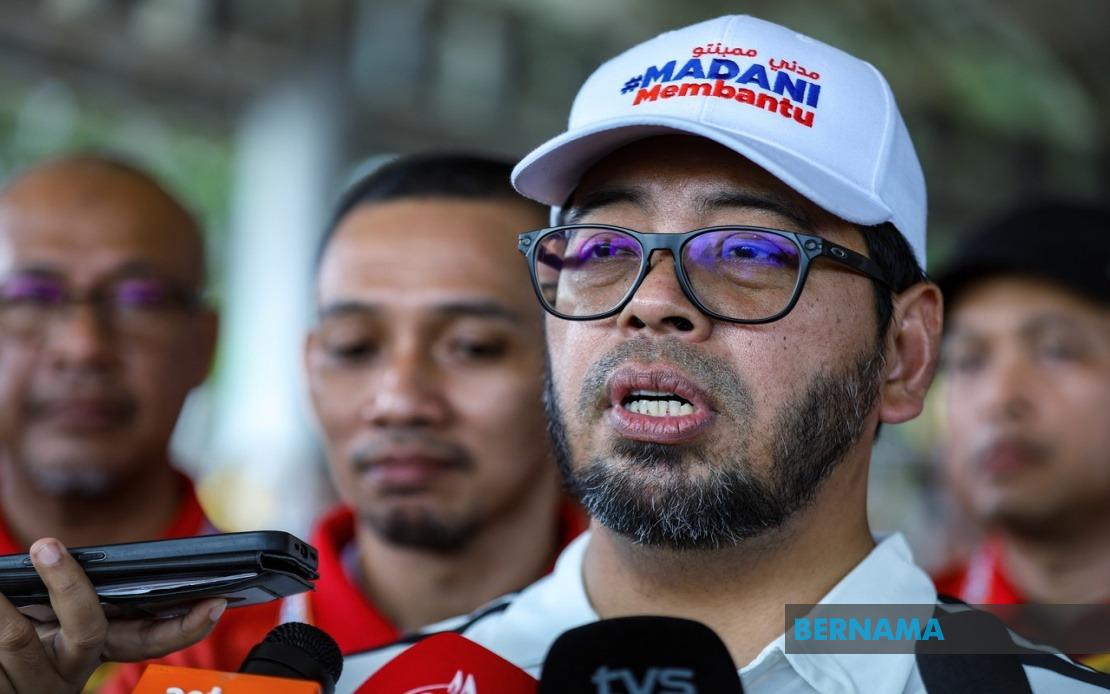
Malaysia's Religious Affairs Minister Senator Dr Zulkifli Hasan has reinforced calls for Muslims to demonstrate exemplary behaviour and ethical conduct within mosques and surau, underscoring that these institutions serve as sacred spaces deserving of respect and protection. Speaking at Universiti Tun Hussein Onn Malaysia in Batu Pahat on August 16, the minister addressed growing concerns about inappropriate incidents occurring within religious premises, stressing that the sanctity of these worship spaces must be preserved through the conscious efforts of the community.
The minister's remarks came in response to a troubling case from Melaka involving a former mosque caretaker and a married woman accused of attempting to engage in illicit sexual relations within a mosque mortuary. Such incidents have prompted religious authorities to emphasise the spiritual and legal dimensions of maintaining proper conduct in places of worship, particularly given their status as venues where believers gather for prayer and spiritual reflection.
Zulkifli Hasan grounded his appeal in Islamic doctrine, reminding worshippers that all actions are observed by Allah and that individuals will ultimately face divine accountability for their conduct. This theological foundation serves as both a moral imperative and a practical reminder for adherents to consider the consequences of their behaviour before engaging in activities that violate religious principles or Islamic law. The minister's framing of accountability emphasises the internal spiritual responsibility that Muslims bear, extending beyond legal consequences to encompass spiritual reckoning.
The call for compliance with law represents an important dimension of the minister's statement, linking religious obligation with civic responsibility. By explicitly urging observance of legal frameworks alongside religious principles, the minister reinforces that misconduct in mosques carries implications beyond religious law, extending to civil and criminal accountability. This dual emphasis recognises that Malaysia's diverse society requires both religious adherence and respect for national legal structures to maintain social harmony.
In addressing the broader challenge of moral decline, the Religious Affairs Ministry has adopted a multi-faceted approach that extends beyond public statements. Educational programmes targeting various age groups—from youth to senior citizens—are being implemented across mosques and surau nationwide, with curricula focused on Islamic jurisprudence compliance and character development. These initiatives reflect recognition that preventing misconduct requires sustained engagement rather than reactive measures following individual incidents.
The ministry's social media campaigns represent an acknowledgment of contemporary communication patterns, particularly among younger generations who may not engage regularly with traditional mosque-based education. By leveraging digital platforms, religious authorities seek to disseminate guidance on Islamic principles and ethical conduct to audiences beyond the physical confines of worship spaces. This approach demonstrates adaptation to modern realities while maintaining focus on core Islamic values.
Family strengthening initiatives mentioned by the minister indicate awareness that moral conduct extends beyond individual responsibility to encompass household relationships and dynamics. Many scholars and practitioners argue that strengthening family structures through religious education and shared values creates foundations for ethical behaviour across all spheres of life. The connection between family welfare and broader social morality underpins these programmes, suggesting that religious authorities view family cohesion as essential to addressing misconduct in public spaces.
The Melaka incident that prompted these remarks highlights vulnerabilities within institutional structures at some religious establishments. The involvement of a caretaker—a trusted employee responsible for maintaining mosque premises—suggests that institutional oversight and staff conduct standards require examination. Religious authorities across Malaysia will likely review recruitment practices, staff training, and supervision protocols to prevent future breaches of trust by employees entrusted with mosque access and security.
For Malaysian Muslim communities, these directives carry practical implications regarding participation in religious institutions. The emphasis on proper conduct establishes expectations for behaviour within mosques and surau while acknowledging that these spaces remain safe environments for worship when community members collectively commit to maintaining standards. This framing avoids stigmatising entire institutions while addressing specific conduct issues that undermine community trust.
The incident also reflects broader patterns of maintaining institutional integrity within Malaysia's religious infrastructure. As mosques and surau serve not only as prayer venues but also as community centres hosting educational programmes, social activities, and counselling services, their reputation and safety standards directly affect community participation and social cohesion. Ensuring that these spaces remain secure and morally upstanding is therefore essential to their broader social functions.
Regional perspectives on this matter acknowledge that Southeast Asian Muslim societies share similar challenges in maintaining religious institutional standards while adapting to contemporary social pressures. Malaysia's approach—combining spiritual appeals with practical education and institutional oversight—may offer insights for neighbouring countries grappling with comparable issues. The integration of Islamic principles with modern governance structures represents a model that other regional authorities may observe and adapt.
Moving forward, the effectiveness of these directives depends significantly on community ownership and institutional commitment. While ministerial guidance provides essential moral and legal direction, practical implementation requires cooperation from mosque committees, religious teachers, local authorities, and worshippers themselves. The collaborative approach implied in the minister's statement suggests that addressing misconduct necessitates shared responsibility across multiple stakeholders rather than reliance on enforcement alone.

