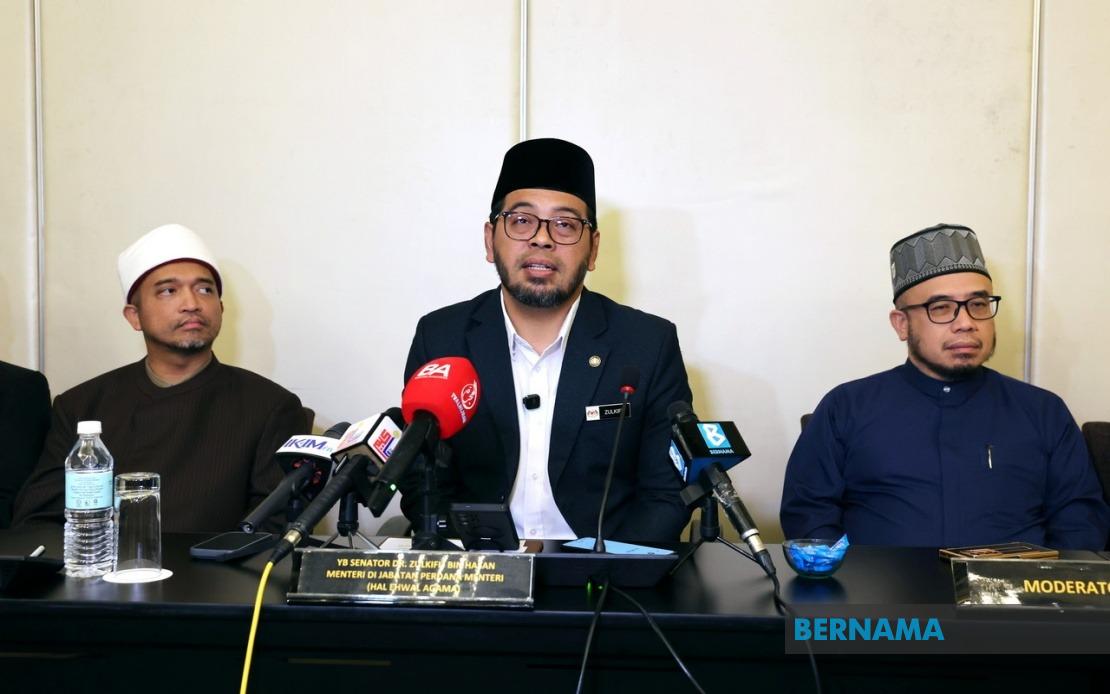
Malaysia's Minister in the Prime Minister's Department (Religious Affairs), Dr Zulkifli Hasan, has declared that the Islamic legal designation 'kafir harbi' holds no place in the Malaysian social framework, emphasising that all citizens operate under the unifying authority of the Federal Constitution. The pronouncement came following a dedicated roundtable discussion convened in Putrajaya to examine the controversial terminology and its applicability within the nation's pluralistic society.
The minister elaborated that the conclusions drawn from the forum reflected a broader understanding that such classifications contradict the fundamental principle uniting Malaysians across religious and cultural lines. He stressed that every citizen, regardless of faith, stands equally bound by constitutional law and shares the common burden of nation-building responsibilities. This framing recontextualises the debate away from purely theological considerations toward legal and civic foundations that take precedence in a multiethnic, multi-faith state.
The concept of 'kafir harbi'—historically referring to non-Muslims in a state of warfare with Muslims—carries significant ideological weight in Islamic jurisprudence. Its invocation in modern Malaysia carries implications for how citizens of different faiths relate to one another and perceive their place within the national compact. By explicitly rejecting the term's appropriateness, Dr Zulkifli positioned the government as defending the secular constitutional order that guarantees religious freedom while preventing any single religious framework from superseding national law.
Dr Zulkifli articulated a vision of shared national identity that transcends religious boundaries, appealing to Malaysians to view themselves as fellow inhabitants of a common homeland bound by mutual responsibilities. This messaging appears designed to counter narratives that might position citizens along sectarian lines or suggest that religious affiliation should determine one's legal or social standing within the nation. The emphasis on unity and collective responsibility reinforces the secular constitutional settlement established at independence.
To operationalise these conclusions, the Department of Islamic Development Malaysia (JAKIM) will spearhead collaborative initiatives with other government bodies and agencies to disseminate clarification and raise public awareness surrounding the issue. This multi-agency approach signals recognition that addressing sensitive religious and constitutional matters requires coordinated messaging across institutional boundaries. By involving non-religious departments, the government seeks to frame the matter as fundamentally about citizenship and social cohesion rather than theological debate.
The collaborative framework the minister described reflects an understanding that strengthening national integration demands comprehensive engagement beyond religious authorities alone. Government ministries responsible for education, home affairs, and community development will likely feature in these awareness campaigns, broadening the institutional footprint of the message. This suggests the administration views the 'kafir harbi' issue not as an isolated religious matter but as touching upon core questions of national identity and constitutional supremacy.
Dr Zulkifli's call for all Malaysians to consciously cultivate unity and foster intercommunal understanding carries practical implications for how government and civil society institutions address religious diversity. By advocating respect for one another's cultures and religions, the minister positioned tolerance not merely as a personal virtue but as a civic duty essential to Malaysia's stability and prosperity. This framing may influence how educational curricula, interfaith dialogue forums, and community engagement programmes approach Malaysia's religious pluralism.
The roundtable discussion itself represents an important institutional moment for addressing contentious religious terminology through structured dialogue. Rather than leaving such debates to informal public discourse or unregulated social media platforms, the government has asserted its role in providing authoritative clarification grounded in constitutional principle. This approach attempts to prevent the term's continued circulation from becoming normalised or accepted as legitimate within public debate.
For Malaysian citizens of all faiths, the minister's pronouncement offers reassurance that the constitutional compact recognising their equal membership in the nation remains the supreme framework governing civil relations. Non-Muslims in particular may view the explicit rejection of 'kafir harbi' as official confirmation that their citizenship status and legal standing derive from constitutional law rather than religious classification. The statement thus carries symbolic weight beyond its immediate content.
The timing and context of this intervention reflect broader regional and global conversations about the balance between religious expression and national unity in Muslim-majority democracies. Malaysia's experience navigating these tensions while maintaining stability offers lessons and contrasts with other Southeast Asian nations wrestling with similar questions about religious identity and state authority. The government's explicit stand signals its commitment to prioritising constitutional secularism as the framework for managing religious diversity.

