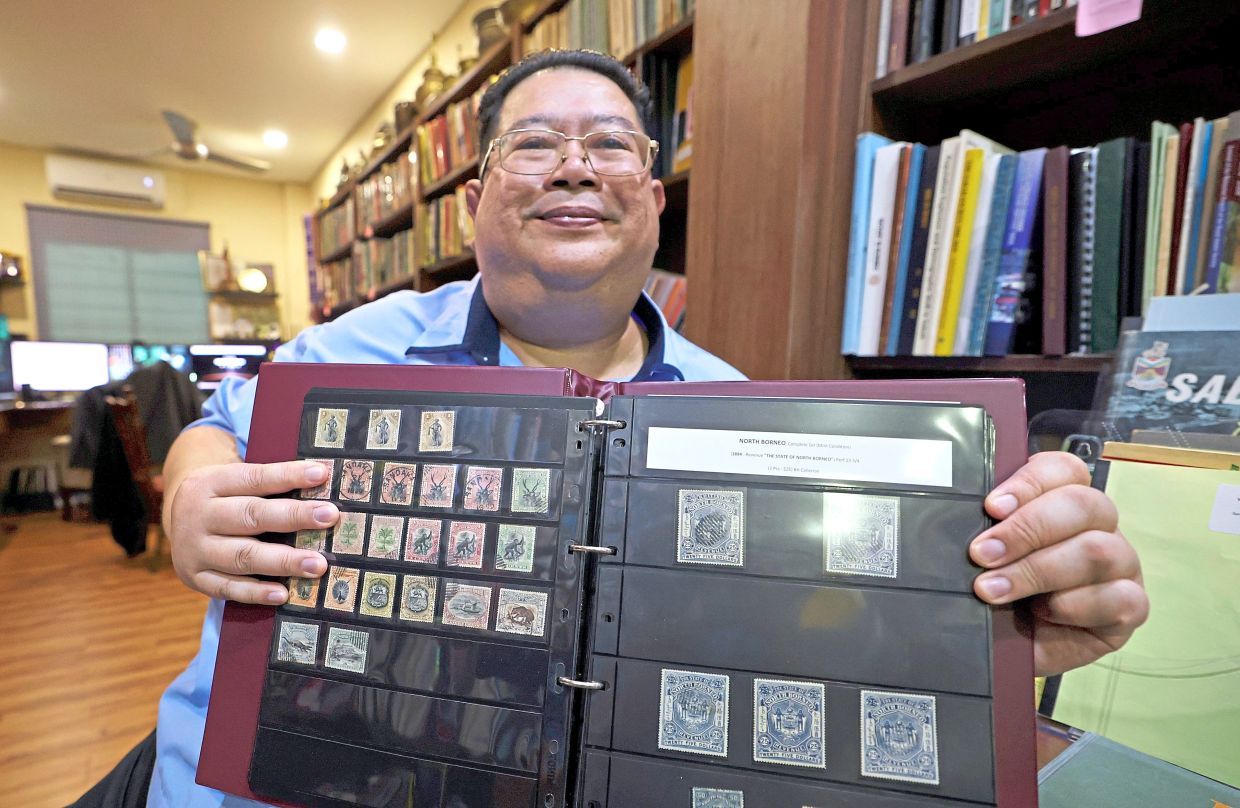
The centennial stamps of North Borneo, issued between 1883 and 1963, represent far more than colourful pieces of paper—they constitute a material archive of Sabah's colonial experience and gradual transition toward statehood. Yet as these delicate artefacts disappear from public circulation and private collections dwindle, preservation experts warn that a crucial dimension of regional history risks vanishing unless concerted conservation efforts intensify in the coming years.
Dr Shari Jeffri, 56, a leading philatelist and founder of the Borneo History Association, characterises the North Borneo stamp catalogue as a "living archive" requiring systematic documentation and intergenerational stewardship. His decades-long engagement with the subject has made him acutely aware of a troubling demographic shift: younger Malaysians rarely develop the patience or curiosity for stamp collecting that animated their grandparents' generation. The hobby's practitioners now number in the hundreds rather than thousands across Borneo, a contraction that threatens knowledge transfer and custodial practices honed over generations.
A recent survey of antique dealers across Kota Kinabalu revealed that North Borneo stamps have become progressively harder to source. Prices fluctuate considerably depending on issue date, physical condition, and scarcity metrics—variables that specialist collectors understand intuitively but which confound casual buyers. Among documented discoveries were an album housing a rare six-cent stamp portraying Queen Elizabeth II alongside a Dusun woman, and a ten-cent denomination showcasing logging operations, both circulated during the 1954–1961 period when Sabah moved toward eventual independence.
Jeffri's own relationship with philately originated through familial inheritance rather than deliberate choice. His grandfather, employed at the Recreation Club Jesselton during the 1920s, absorbed the hobby from observing British colonial administrators and their leisure pursuits. That patriarch harboured hopes that successive descendants would embrace the intellectual satisfactions of stamp research and accumulation. Although Jeffri encountered stamps at age seven, he only developed systematic collecting practices during secondary school, subsequently dedicating himself to preserving his family's assemblage and investigating the historical narratives encoded within each stamp's design.
Among Jeffri's most cherished holdings are two specimens from the inaugural 1883 North Borneo emission—two-cent denominations featuring a brown sailing vessel and bearing complete postal cancellations. For serious collectors, possessing examples from this foundational issue represents an unwritten requirement; these stamps transcend mere postage verification, functioning instead as temporal documents from a specific historical moment. Jeffri's nearly four decades of expertise have cemented his conviction that stamps embody era-specific information unavailable through conventional archival sources.
The British North Borneo Chartered Company commenced stamp production in 1883, maintaining this monopoly across approximately five decades. Throughout this extended period, design vocabularies transformed deliberately. Early compositions emphasised imperial and territorial symbolism—lions, sailing vessels, and tigers coexisting with the Latin imperative Pergo et Perago ("I undertake and I achieve")—intended to broadcast the territory's significance to European audiences. Beginning in 1894, visual narratives shifted decisively toward indigenous ecology: tropical vegetation, native fauna, and ethnographic representations increasingly dominated denominations ranging from two cents to one dollar by the 1935 redesign cycle.
The aesthetic evolution reflected not merely changing artistic preferences but deeper transformations in how colonial administrators wished external audiences to conceptualise Sabah. Earlier stamps promoted territorial conquest and civilisational ambition; later issues repositioned the region as a natural wonder and economic resource worthy of metropolitan investment. This semiotic progression provides historians and cultural analysts with tangible evidence of shifting imperial attitudes toward peripheral territories—attitudes that documents and official correspondence sometimes conceal through euphemism or rhetorical obfuscation.
Authentication and preservation present formidable technical challenges. Stamps bearing complete postal cancellations command premium valuations because their markings furnish precise chronological data: specific mailing dates, originating post offices, and geographical transmission routes become recoverable through careful examination. The paper stock and adhesive formulations employed during different production periods serve as reliable authenticity indicators; variations in these substrates can identify counterfeits or later reprints. Environmental degradation poses perhaps the greatest contemporary threat—acid exposure causes irreversible discolouration and structural compromise, necessitating storage within acid-free archival materials and climate-controlled conditions.
Jeffri's technical proficiency reflects systematic mentorship under Singaporean specialists Voon Kyam Foh and Tan Chun Lim, supplemented by exhaustive consultation of reference materials including the Commonwealth & British Empire Stamps catalogue. This formal training distinguishes serious scholars from casual hobbyists, establishing frameworks for comparative analysis and authenticated valuation. Within Southeast Asia, such expertise networks remain sparse; the region lacks dedicated conservation laboratories and curatorial institutions specialising in philatelic material, creating dependency on metropolitan expertise and foreign market mechanisms.
The decline of postal correspondence precipitated by digital communication has rendered stamps functionally obsolete, yet paradoxically enhanced their historical significance. No longer serving utilitarian purposes, North Borneo stamps transition entirely into documentary and aesthetic registers—their value derives exclusively from antiquity, rarity, and the stories their designs communicate. This fundamental repositioning means that preservation becomes an explicitly cultural and historical imperative rather than a secondary consequence of bureaucratic operations.
Within Malaysia's broader archival landscape, North Borneo stamps occupy an understudied position. While state governments maintain official historical repositories, philatelic collections remain distributed across private hands, antique dealers' inventories, and informal networks of collectors. Systematising this scattered material through institutional acquisition and digitisation would render Sabah's postal history simultaneously more accessible to researchers and more secure against loss through commercial transactions or deterioration. Regional universities and cultural organisations might collaborate to establish dedicated collections, training programmes, and conservation facilities.
The significance of Jeffri's stewardship extends beyond individual specimens toward broader questions about how communities memorialise their own histories and transmit cultural understanding across generational boundaries. Stamps function as miniature art objects, administrative documents, and nationalist symbols simultaneously—each dimension illuminating distinct aspects of Sabah's transformation from chartered company territory through colonial administration toward contemporary statehood. Allowing this material archive to fragment through neglect would represent an impoverishment of Malaysia's capacity to interrogate its own past and the multiple meanings that stamps carried for those who sent letters bearing these now-vanishing designs.

