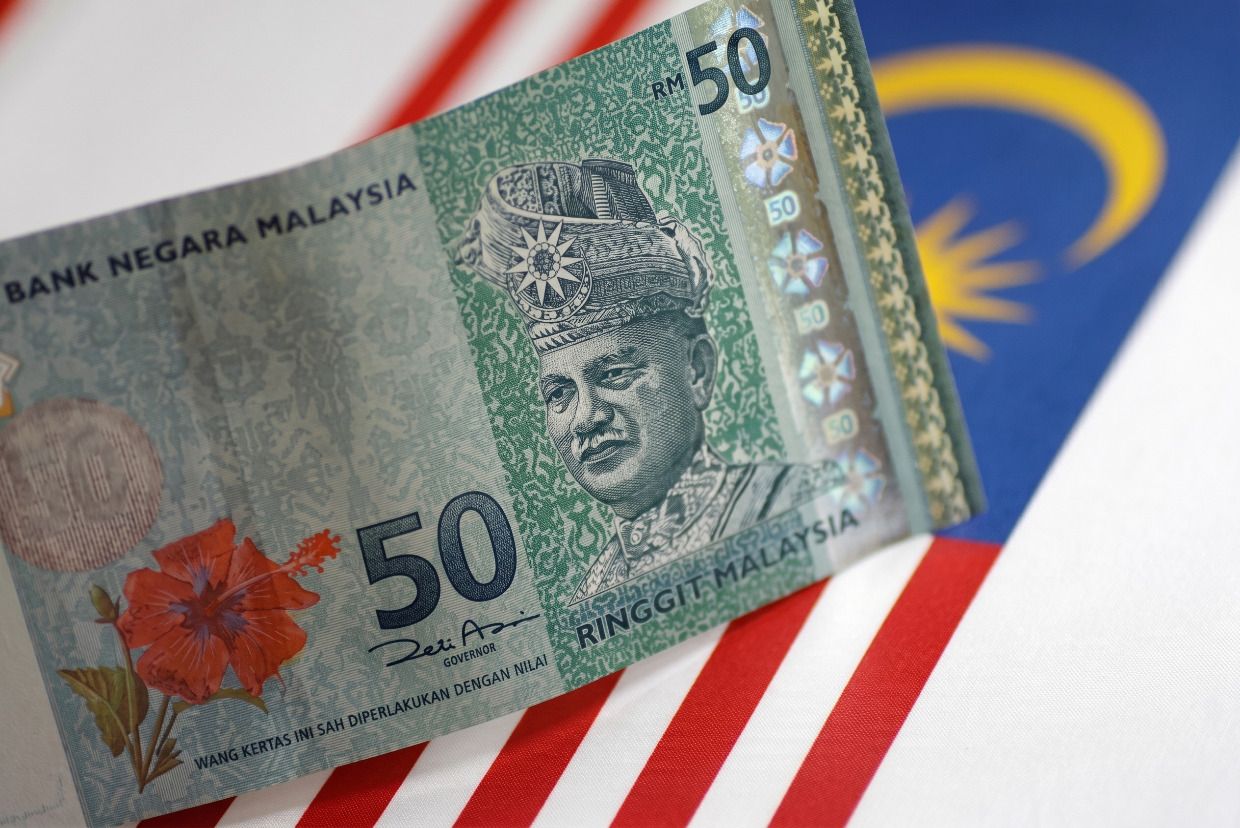
After enduring a disappointing June as the region's weakest currency, the Malaysian ringgit appears positioned for a meaningful recovery in the second half of the year, buoyed by a combination of policy support and fundamentally sound economic conditions. Analysts tracking the currency expect the ringgit to appreciate substantially from current levels, with projections suggesting it could trade between 3.80 and 3.95 per dollar before the year concludes. This anticipated turnaround reflects growing confidence that recent government initiatives, coupled with Malaysia's strong trade dynamics and consistent foreign appetite for local assets, will provide sufficient momentum to reverse the currency's earlier downturn.
Bank Negara Malaysia's commitment to intensify measures encouraging the repatriation and conversion of corporate foreign earnings represents a critical policy pivot. Announced on June 24, these initiatives aim to redirect overseas funds held by Malaysian companies back into the domestic economy, a structural approach to bolstering forex inflows that goes beyond passive market forces. Royal Bank of Canada's forecast of 3.95 per dollar by year-end reflects confidence that this policy framework, combined with Malaysia's underlying economic strength, will prove effective in supporting the ringgit. The central bank's determination to tackle the structural dimensions of capital flows suggests a sophisticated understanding that sustainable currency appreciation requires addressing the behaviour of corporate treasurers and fund managers, not merely hoping for temporary market sentiment shifts.
Australia & New Zealand Banking Group's projection of 3.80 per dollar represents an even more optimistic scenario, implying the ringgit would reach its highest valuation since 2015. This threshold carries symbolic significance for Malaysian policymakers and businesses accustomed to stronger currency values, potentially easing concerns about export competitiveness erosion and the real terms of Malaysia's external debt burden. The divergence between analyst forecasts, while modest, reflects genuine uncertainty about the pace of recovery and the ultimate effectiveness of BNM's interventions. Nevertheless, the consensus view that meaningful appreciation is forthcoming has already begun influencing positioning in forex markets and asset allocation decisions among international investors.
The currency's recent performance lends credence to these optimistic projections. Since BNM's June 24 announcement, the ringgit has outperformed all other major Asian currencies, a striking reversal from its previous weakness and a clear signal that market participants believe the central bank's policy shift is substantive. The ringgit's closing at 4.0722 per dollar on Friday represented recovery momentum, though still short of pre-weakness levels. This performance reversal occurred alongside accelerating trade data that painted an increasingly favourable picture of Malaysia's external position. Exports surged 45 percent year-on-year in May, demonstrating resilience and dynamism in sectors ranging from semiconductors to electrical products, while the nation's merchandise trade surplus reached a record monthly figure of 40 billion ringgit in that same month.
Malaysia's participation in the artificial intelligence-driven global supply chain has proven particularly valuable for currency dynamics. The surge in demand for data centres and related infrastructure has generated substantial foreign currency inflows, while strong international appetite for Malaysian electrical and electronic products reflects the country's strategic position within global tech supply networks. These export gains directly support the ringgit by increasing foreign exchange earnings and demonstrating to international investors that Malaysia remains an economically dynamic nation capable of capturing global growth opportunities. The concentration of export strength in high-value sectors rather than commodity-dependent products suggests these earnings have staying power beyond temporary cyclical upswings.
Foreign investment in Malaysian bonds has emerged as a powerful complement to export-driven inflows. Global fund managers deployed approximately 2.1 billion US dollars into local bond markets through June 29, positioning the market for its largest monthly inflow since May 2025. This capital movement reflects both the attractive yield differential offered by Malaysian fixed-income instruments and investor confidence in the country's economic trajectory and policy framework. As foreign accumulation of ringgit-denominated debt accelerates, the currency receives a dual boost: immediate inflows from foreign exchange conversion and sustained demand pressures as overseas investors maintain and increase their exposure to Malaysian financial assets.
Bank Negara Malaysia's present policy initiative builds upon successful precedents established earlier in the decade. During 2024, when the ringgit had fallen to its weakest level against the dollar since 1998, similar central bank efforts to encourage forex conversion helped reverse the decline. The currency subsequently rebounded to become Asia's strongest performer that year, demonstrating that well-designed policy interventions can effectively complement underlying economic fundamentals. The fact that previous initiatives produced measurable results provides legitimate grounds for optimism about the current round of measures. Institutional memory within the central bank regarding effective policy levers suggests the June 2024 initiative represents a refinement rather than a novelty, incorporating lessons from prior experience.
Corporate behaviour patterns offer additional confidence that BNM's conversion encouragement schemes will prove effective. Data reveals that foreign currency deposits held by Malaysian businesses increased substantially during March through May, suggesting companies accumulated overseas earnings during this period and retain discretion over conversion timing. Kausani Basak, foreign exchange analyst at Australia & New Zealand Banking Group, emphasises that BNM's targeted measures can facilitate the conversion of these accumulating deposits into ringgit, capturing a pool of potential currency demand that currently remains idle in corporate treasuries. Combined with resilient foreign direct investment inflows that would independently support ringgit valuation, this policy-supported conversion dynamic creates multiple channels through which currency appreciation can be sustained.
Yet the ringgit's recovery trajectory faces material headwinds that market participants cannot entirely dismiss. The Federal Reserve's apparent commitment to maintaining higher interest rates for an extended period creates ongoing pressure on emerging-market currencies by elevating the opportunity cost of holding ringgit-denominated assets. American monetary policy tightness incentivises international investors to maintain allocations in dollar instruments despite Malaysia's attractions, potentially capping ringgit gains. Additionally, Malaysia's political environment introduces uncertainty elements that international investors must evaluate. Upcoming state elections will test voter support for Prime Minister Anwar Ibrahim and the ruling coalition before national elections materialise, with results potentially influencing policy continuity and economic decision-making.
The convergence between BNM's policy framework, Malaysia's genuinely impressive trade performance, and sustained international interest in Malaysian financial assets creates a materially different environment compared to the currency weakness experienced earlier in 2024. Analysts tracking Malaysia's economic position increasingly characterise the ringgit's recent weakness as cyclically driven rather than reflective of structural deterioration. The combination of policy tools now deployed by Bank Negara Malaysia alongside strong export fundamentals and healthy corporate liquidity positions suggests the currency has substantially completed its downward adjustment. For Malaysian businesses with ringgit-denominated liabilities or revenues, for international investors allocating capital to the region, and for policymakers assessing the economy's external stability, the ringgit's anticipated recovery over coming months carries material implications for competitiveness, purchasing power, and confidence in Malaysia's economic management.

