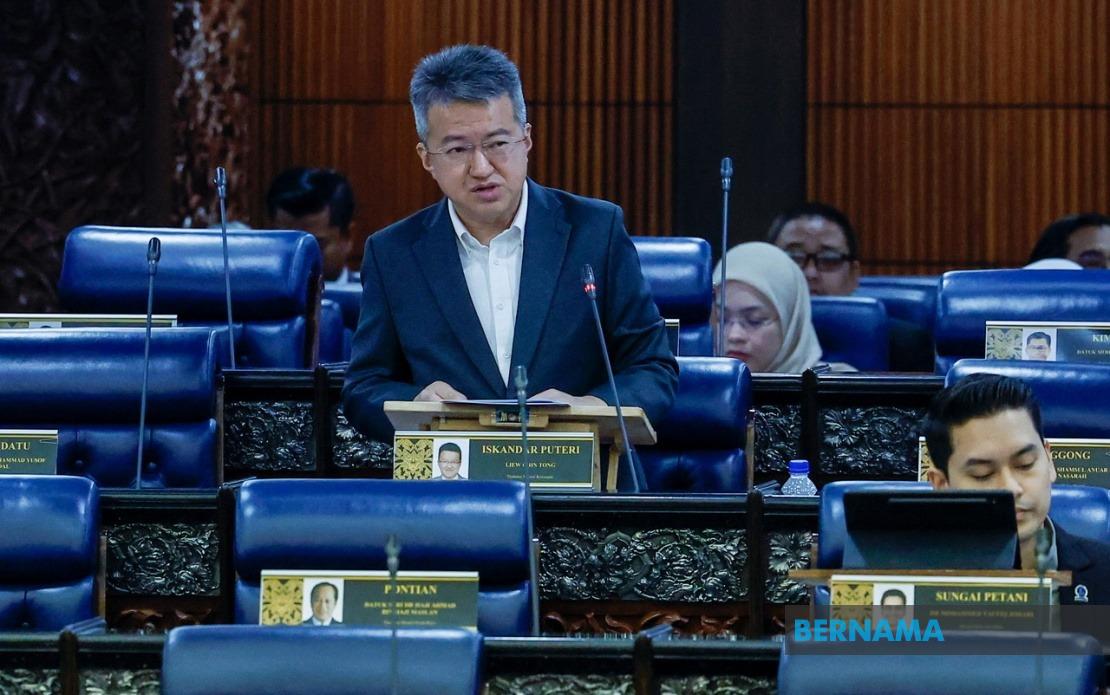
The federal government has moved to reassure Sabah that a substantial RM1.5 billion boost to the state's interim special grant—announced by Prime Minister Datuk Seri Anwar Ibrahim in May—will not cannibalize development budgets or reduce operational funding commitments. Deputy Finance Minister Liew Chin Tong made the clarification during parliamentary proceedings on July 14, responding to concerns raised in the Dewan Rakyat about how the additional allocation would be administered and its constitutional standing.
The distinction between special grants and development allocations has become increasingly important in federal-state fiscal relations, particularly for Sabah under the terms of the Malaysian Constitution. Liew emphasized that the federal government remains committed to separately funding development initiatives through its various ministries and departments, ensuring that Sabah receives its proportional share of infrastructure investment alongside Peninsular Malaysia. This dual-track funding approach, he suggested, reflects the government's policy of promoting balanced regional development across the country.
Sabah's development allocation has already shown an uptick in this year's budget cycle, climbing from RM6.7 billion to RM6.9 billion. These funds support an ambitious portfolio of infrastructure projects that span multiple sectors critical to the state's long-term economic competitiveness. The Pan Borneo Highway remains the flagship initiative, representing a transformative transport corridor for East Malaysia, while parallel investments in rural road networks, electricity provisioning, and water supply systems target the disparity between urban and remote communities that has historically plagued development outcomes.
Beyond transport and utilities, the development allocation funds substantial upgrades to social infrastructure. Hospital construction and renovation projects, alongside improvements to clinics and primary healthcare facilities, address healthcare accessibility challenges across Sabah's dispersed population centers. Simultaneously, the government is tackling the backlog of dilapidated school buildings and police station infrastructure, recognizing that institutional facilities directly influence service delivery quality and public confidence. These layered investments reflect an integrated approach to state development rather than sector-by-sector piecemeal funding.
A particularly significant development concerns Sabah's electricity sector following the devolution of regulatory authority to the state government in 2024. Although the Sabah state government now holds direct regulatory powers, the federal government has not withdrawn its financial support. Instead, the electricity subsidy allocation for 2026 is expected to reach RM880 million, demonstrating continuity in federal fiscal support even as governance responsibility has shifted. This arrangement has important implications for Sabah's ability to maintain affordable electricity prices for households and businesses, an increasingly critical factor as energy costs rise across the region.
Rural water supply has received particular attention in budget discussions. The allocation for this essential service has expanded meaningfully, increasing from RM103.5 million in 2025 to RM143 million in the current budget year. For a state with significant rural populations in areas where piped water infrastructure remains incomplete, this represents a tangible commitment to addressing basic utility gaps. Water security and accessibility have emerged as central development priorities across Southeast Asia, and Sabah's expansion of rural supply networks aligns with broader regional recognition of water's fundamental importance to human development.
Cost-of-living support has also featured prominently in federal assistance to Sabah. The government estimates that assistance disbursed through the Sumbangan Tunai Rahmah (STR) and Sumbangan Asas Rahmah (SARA) schemes will total approximately RM1.2 billion in Sabah, directly supporting household purchasing power amid persistent inflation. These targeted cash transfer programs represent a complementary approach to traditional development spending, addressing immediate household financial pressures while infrastructure improvements work toward longer-term productivity gains.
The constitutional framework governing Sabah's special grants adds complexity to the intergovernmental fiscal arrangement. Article 112C and Article 112D of the Federal Constitution establish the legal foundation for these special payments, and their interpretation has become contested terrain. The federal government has filed an appeal against aspects of a Kota Kinabalu High Court ruling on the matter, signaling ongoing legal disputes about grant determination methodologies and obligations. These procedural and legal questions carry significance not only for Sabah but for broader principles of federalism and revenue-sharing mechanisms in the Malaysian constitutional system.
Despite the litigation, Liew emphasized that the federal government respects the constitutional principle undergirding Sabah's special grants, even as it pursues legal remedies regarding specific implementation details. Payment of the new special grant must follow processes established under Article 112D, mirroring procedures implemented in 2022, 2023, and 2025. This consistency in administrative process, he suggested, ensures transparency and stability in the federal-state fiscal relationship. The government has simultaneously committed to negotiating a new mechanism with the Sabah state government for determining future grant amounts, with the aim of establishing a more durable and mutually acceptable framework aligned with constitutional requirements.
The government's multipronged approach—protecting development allocations, expanding special grants, maintaining sector-specific subsidies, and advancing constitutional negotiations—reflects the delicate balance required in federal relations with Sabah. The state's historical status as a founding member of Malaysia with constitutionally distinct arrangements has generated particular sensitivities around fiscal equity and autonomy. For Malaysian observers and policymakers, the Sabah funding settlement demonstrates how resource allocation decisions intersect with constitutional law, intergovernmental relations, and broader development strategy.
Regionally, Sabah's development trajectory holds implications for East Malaysia's economic integration and growth prospects. Infrastructure improvements funded through these allocations directly influence the state's attractiveness for investment and its capacity to leverage natural resources sustainably. Rural development investments also address the uneven distribution of economic opportunity that characterizes the broader Malaysian landscape, making Sabah's allocations part of a national conversation about inclusive growth. As Southeast Asia grapples with ensuring equitable regional development, Sabah's experience offers instructive lessons about how federal fiscal arrangements can either reinforce or mitigate existing disparities.

