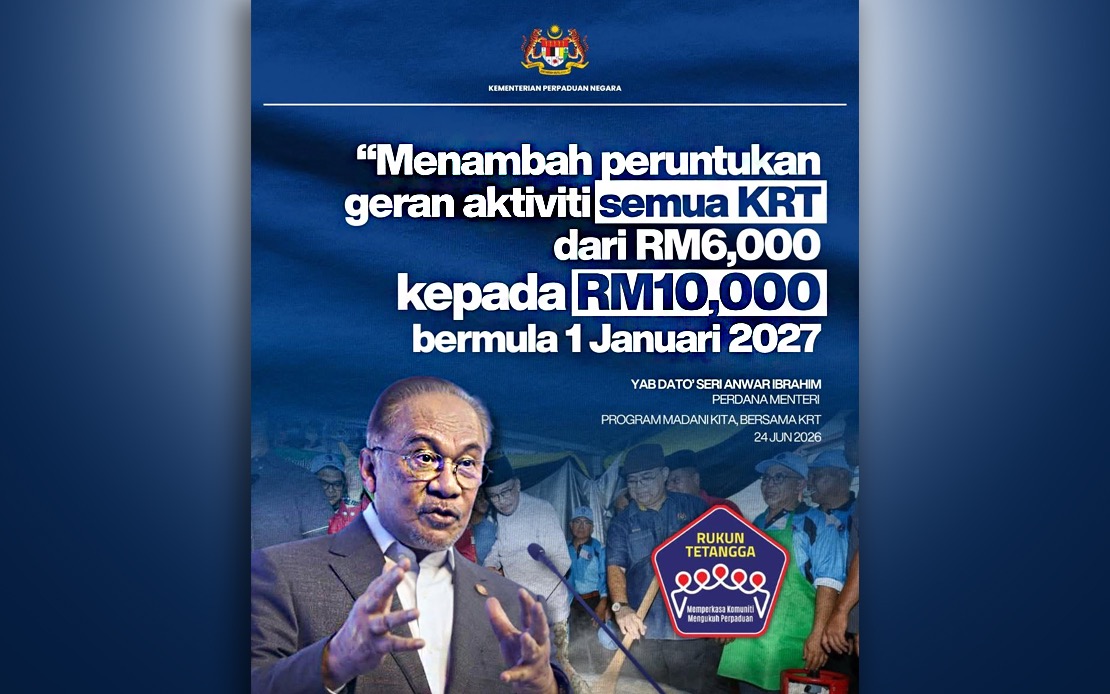
The Malaysian government has significantly bolstered support for community-led neighbourhood initiatives by raising the annual operational grant for all 8,615 registered KRT (Kawasan Rukun Tetangga) areas nationwide. The new allocation of RM10,000 per unit represents a substantial 67 percent increase from the previous RM6,000 annual funding, with disbursement commencing from January 1, 2027. The announcement underscores the administration's confidence in neighbourhood watch groups as foundational institutions for building social cohesion in an increasingly complex urban and rural landscape.
National Unity Minister Datuk Aaron Ago Dagang framed the funding increase as recognition of the KRT's five-decade track record in fostering community bonds. Speaking in an official statement, he characterised the raise as emblematic of the MADANI Government's philosophy of empowering grassroots organisations, which he described as the essential scaffolding upon which united and progressive societies are constructed. The minister's emphasis on grassroots empowerment reflects a deliberate policy pivot towards decentralising development efforts and trusting local leaders to identify and address neighbourhood-specific challenges.
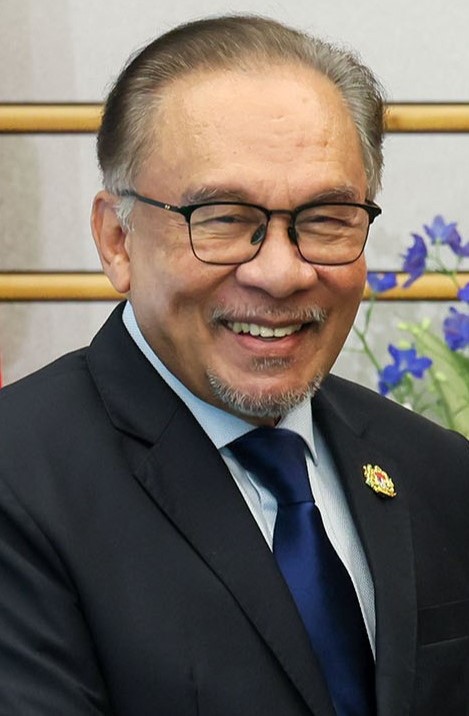
Prime Minister Datuk Seri Anwar Ibrahim formally unveiled the funding enhancement during a MADANI KITA programme engagement with KRT representatives in Dataran Segamat, Johor. This venue selection—a state outside the Klang Valley—signals the government's intent to demonstrate commitment to community development across all regions, not merely urban centres. The timing of the announcement, with implementation delayed to early 2027, provides neighbourhood groups with months to plan enhanced programming and prepare their administrative frameworks for the increased allocations.
The scale of KRT's grassroots reach is formidable. The network encompasses approximately 250,000 registered members who collectively serve more than 12 million Malaysians through their volunteer activities. Over the past year alone, these neighbourhood groups coordinated in excess of 100,000 community events, a testament to their organisational capacity and public trust. This extensive infrastructure positions KRT as arguably Malaysia's most widely distributed civil society platform, penetrating neighbourhoods where formal government services may be slower to respond or less culturally attuned to local contexts.
The enhanced funding is explicitly designed to amplify the quality and reach of neighbourhood-level programming across multiple domains. Aaron identified unity activities as a primary beneficiary, reflecting ongoing national efforts to strengthen inter-ethnic and inter-religious understanding in diverse communities. Beyond social cohesion, the grant expansion is intended to catalyse programmes in community development, social welfare provision, educational support, neighbourhood security initiatives, volunteerism coordination, and grass-roots economic empowerment schemes. This diversified portfolio acknowledges that neighbourhood wellbeing is multidimensional and cannot be addressed through single-issue programming.
The minister emphasised that neighbourliness itself functions as the bedrock of national unity, and that trust relationships forged across lines of race, religion, and cultural background constitute Malaysia's actual competitive advantage as a pluralistic nation. This framing carries particular resonance in contemporary Malaysian society, where social polarisation has occasionally manifested in online discourse and communal tensions. By investing in the institutional capacity of neighbourhood groups, the government signals that it views person-to-person connections and face-to-face interaction as antidotes to abstract division.
The funding increase enables KRT to pursue initiatives with greater ambition and sustainability than previously possible. RM4,000 in additional annual revenue per neighbourhood group, while modest by national standards, represents meaningful expansion at the hyper-local level where such funds directly translate to community programming. A typical KRT might previously have struggled to sponsor more than one or two major annual events; the enhanced grant allows for quarterly activities or sustained support for ongoing services such as elder care coordination, youth mentoring, or small business incubation.
Government oversight of fund utilisation will be essential to the initiative's success. Aaron explicitly stated that the Ministry of National Unity remains committed to ensuring optimal deployment of the additional resources, framing this as a stewardship responsibility rather than mere bureaucratic compliance. For KRT administrators, this implies that transparency, accountability, and documented impact assessment will likely become increasingly routine requirements. However, such oversight, if implemented with a light regulatory hand, need not burden volunteer-led groups; rather, it can provide them with evaluation frameworks that demonstrate community benefit to government funders and donors.
The broader policy context reveals government prioritisation of the Malaysia MADANI vision, a governance philosophy centred on prosperity, inclusivity, and wellbeing. Neighbourhood-level organising represents a practical instantiation of this vision, translating high-level governmental aspirations into tangible community outcomes. By channelling resources through established KRT structures rather than creating parallel bureaucratic entities, the government leverages existing social capital and community knowledge networks.
For Southeast Asian observers, Malaysia's enhanced investment in neighbourhood organising offers comparative insights. Many countries in the region grapple with the challenge of building social cohesion amid rapid urbanisation, economic change, and generational shifts. Malaysia's approach—strengthening voluntary community groups rather than relying primarily on state-delivered social services—reflects a particular model of social governance that balances developmental ambitions with civic participation. The KRT funding increase demonstrates sustained commitment to this model even as resource constraints might otherwise encourage consolidation or retrenchment.
The delayed implementation timeline until January 2027 provides neighbourhood groups with a transition period to develop enhanced programming proposals and build administrative capacity to manage larger budgets. Groups that use this interval to consult members, identify unmet local needs, and design responsive initiatives will maximise the impact of the funding increase. Training programmes in grant management, programme evaluation, and community consultation could further strengthen KRT effectiveness, though such support was not explicitly mentioned in the government's announcement.