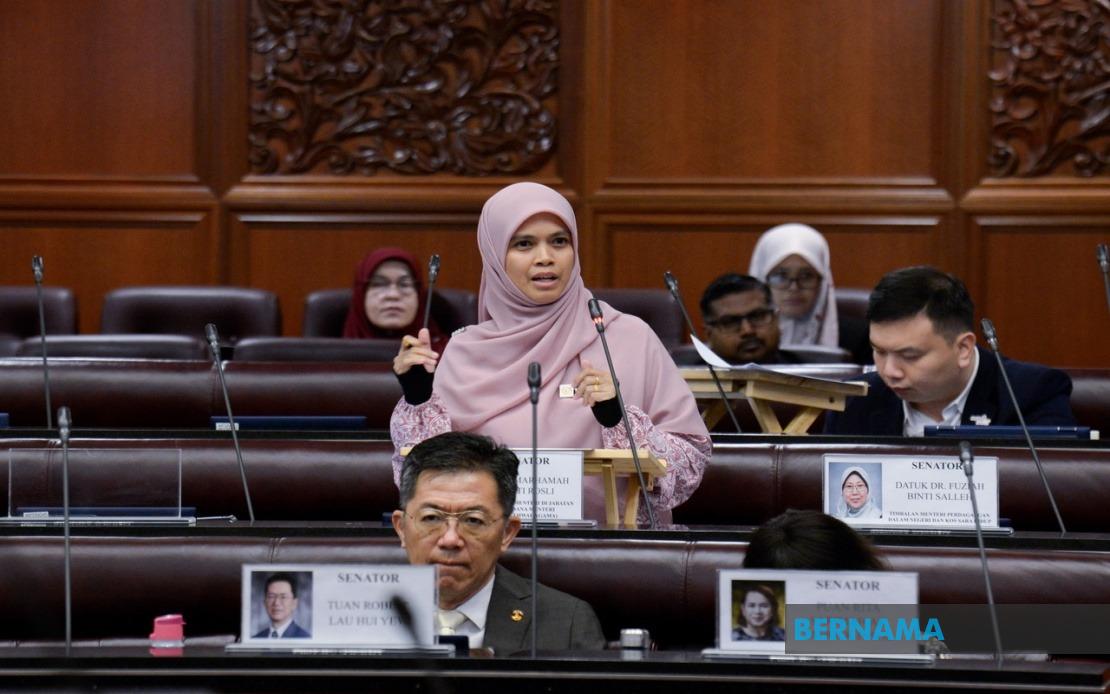
Malaysia's religious development agenda has gained significant momentum, with the government approving RM160.82 million in funding for 92 mosque construction projects across the nation since 2023. According to Deputy Minister in the Prime Minister's Department (Religious Affairs) Senator Marhamah Rosli, speaking in the Dewan Negara today, the initiative demonstrates substantial progress in addressing the infrastructure needs of the Muslim community as the country pursues its Malaysia MADANI vision.
The pace of implementation has been particularly noteworthy. Among the 92 approved projects, 54 have already been completed and handed over to their respective communities, whilst a further 16 are currently active on construction sites nationwide. The remaining 22 projects remain in earlier stages, with some awaiting procurement finalisation and others in the pre-implementation phase. This distribution reflects careful project management and staged deployment of resources, ensuring quality outcomes rather than rushed timelines.
The approval process for these mosque projects follows a rigorous framework that prioritises genuine community need. State religious authorities play a central role in submitting recommendations, which are assessed against multiple criteria including population demographics, the concentration and growth trends of Muslim residents in specific localities, the existing capacity and coverage provided by neighbouring mosques, and the practical suitability of proposed sites. Equally important are land status verification and confirmation of financial commitment from state governments, preventing projects from proceeding without secure funding pipelines.
A landmark agreement reached at the 139th Meeting of Menteri Besar and Chief Ministers on 28 June 2022 fundamentally reshaped mosque funding in Malaysia. The consensus established that mosque development costs would be shouldered jointly by federal and state governments, creating a partnership model that distributes financial burden more equitably. This mechanism has proven instrumental in accelerating project approvals and ensuring sustainability, as states have greater ownership and accountability when contributing their own resources alongside federal allocations.
For Malaysian readers monitoring infrastructure development, the significance of this programme extends beyond mere construction statistics. The strategic siting of mosques in areas experiencing rapid urbanisation or population growth addresses a genuine infrastructure deficit that many communities have experienced. As Malaysia's urban centres expand and migration patterns shift, the availability of adequate religious facilities becomes essential for social cohesion and the spiritual welfare of an increasingly mobile Muslim population.
Beyond their primary religious function, mosques increasingly serve as anchors for community welfare initiatives that extend to society's most vulnerable segments. Senator Marhamah outlined an expanding portfolio of assistance programmes delivered through mosque networks, executed collaboratively with the Department of Islamic Development Malaysia, state-level Islamic religious departments, municipal councils, and civil society organisations. These programmes address immediate material needs that many Malaysians face daily.
The welfare ecosystem operating through mosque infrastructure encompasses food security initiatives such as community kitchen programmes and coordinated food basket distribution directed toward asnaf categories—those traditionally prioritised under Islamic welfare principles. Emergency financial support reaches families facing sudden hardship, whilst educational assistance targets children from low-income households. Mental health and social counselling services address psychological dimensions of poverty and marginalisation that often escape public policy attention, recognising that material aid alone proves insufficient without corresponding psychosocial support.
Particularly significant is the integration of vulnerable populations into this network. Programmes specifically targeting the homeless and urban poor demonstrate recognition that mosque-centred welfare can reach populations often invisible in formal government statistics. Funeral management assistance alleviates considerable burden on bereaved families facing unexpected costs, whilst temporary shelter facilities provide emergency refuge during crises. These functions illustrate how religious institutions embedded in community contexts can mobilise resources and extend government capacity into domains where bureaucratic mechanisms prove inadequate.
The MADANI government's approach reflects a strategic understanding that infrastructure and social provision must advance in tandem. By investing substantially in mosque construction whilst simultaneously expanding welfare programmes distributed through these facilities, the administration addresses both the spiritual infrastructure deficit and the social safety net gaps affecting lower-income communities. This dual strategy creates multiplier effects where new facilities enable expanded service delivery in their localities.
Regional observers monitoring Malaysia's governance evolution will note that this programme demonstrates the practical integration of religious institutions into social welfare delivery systems in ways that transcend secular-religious dichotomies. Rather than viewing mosques merely as spaces for worship, the government conceptualises them as community anchors capable of addressing multidimensional poverty. This perspective aligns with successful international models where faith institutions function as critical components of holistic welfare frameworks.
For Southeast Asian neighbours managing similar challenges of rapid urbanisation, faith community infrastructure, and poverty alleviation, Malaysia's experience offers relevant lessons. The success of this initiative depends partly on ensuring quality implementation, maintaining adequate staffing and training for welfare programmes, and establishing transparent monitoring mechanisms that track both construction completion and actual welfare service delivery.
Looking forward, the remaining 38 incomplete projects represent opportunities to refine implementation processes based on lessons learned from the 54 completed initiatives. Community feedback regarding facility usage, congregation satisfaction, and welfare programme effectiveness should inform adjustments to subsequent phases. The commitment to RM160.82 million in current allocations also suggests that the government recognises mosque infrastructure as an ongoing development priority rather than a completed initiative.

