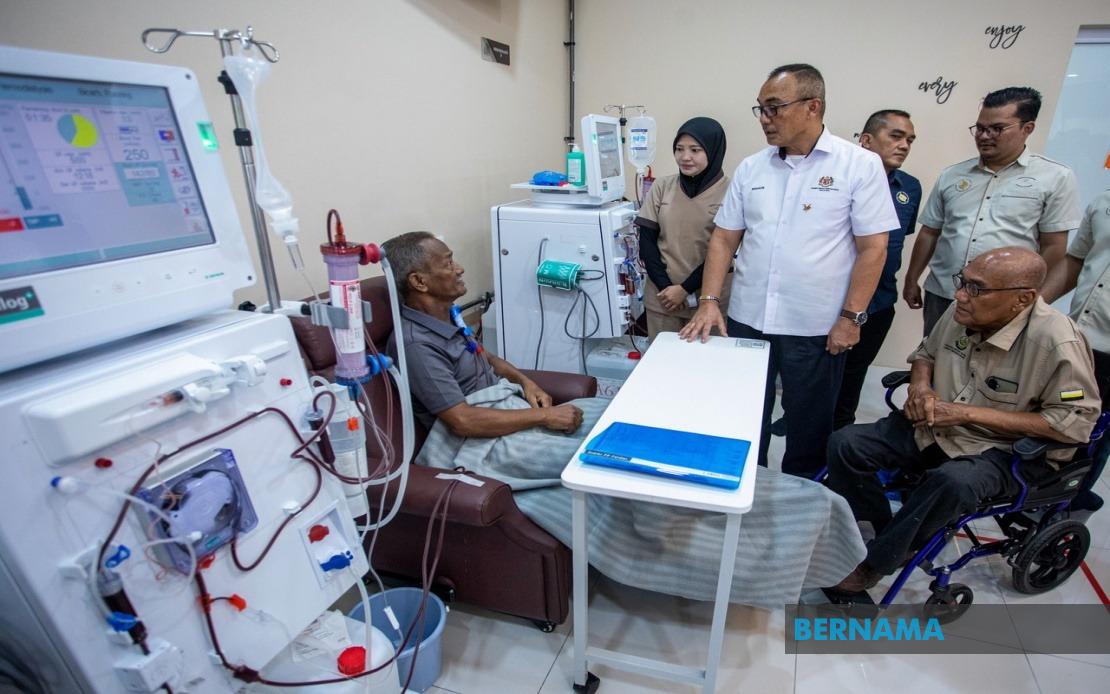
The Malaysian Armed Forces Veterans Affairs Department is rolling out an ambitious healthcare expansion programme with the allocation of RM18 million to construct nine dialysis centres nationwide. The initiative underscores the government's commitment to strengthening welfare provisions for military veterans whilst simultaneously extending critical renal care services to broader communities. Major General Datuk Semaon Marjuki, director-general of the Malaysian Armed Forces Veterans Affairs Department (MAF JHEV), unveiled the initiative during the official opening of the MAF Veterans Foundation Dialysis Centre branch in Batu Kurau, Perak, positioning the expansion as a strategic response to growing demand for dialysis treatment facilities across the country.
The geographic distribution of these nine centres reflects careful planning to ensure equitable coverage. Selangor will host four of the dialysis facilities, making it the primary hub for this service expansion, whilst Perak receives two centres to serve its veteran and civilian populations. The remaining three centres are allocated to Negeri Sembilan, Johor, and Pahang respectively, creating a network that spans from the northern regions through the central and southern peninsula. This distribution strategy acknowledges both population density and the concentration of retired military personnel in different states, ensuring that distance and accessibility do not become barriers to treatment for veterans requiring regular dialysis.
The financial commitment of RM18 million represents substantial government investment in healthcare infrastructure specifically designed to serve the veteran community. These funds will support the construction and establishment of facilities that meet the stringent standards set by Malaysia's Ministry of Health, ensuring consistency in care quality and safety protocols across all nine locations. The allocation also encompasses the procurement of modern medical equipment necessary for dialysis treatment and the recruitment of experienced nursing staff capable of delivering professional patient care. This comprehensive approach demonstrates that the funding extends beyond mere building construction to encompass the full operational requirements needed for functional, high-quality healthcare delivery.
Operational responsibility for these dialysis centres rests with DVET Holding Sdn Bhd, a wholly-owned subsidiary of the MAF Veterans Foundation. This arrangement ensures that management remains within the veteran affairs ecosystem, potentially fostering institutional knowledge and cultural sensitivity towards the specific needs and circumstances of military veterans. The subsidiary model also creates accountability mechanisms within the veteran support structure whilst allowing for specialised focus on dialysis service delivery and patient outcomes. By maintaining operational control within veteran-focused organisations, the system theoretically ensures that administrative and clinical decisions prioritise veteran welfare alongside community health objectives.
The undertaking addresses a substantial existing patient base currently accessing dialysis treatment through various channels. Approximately 2,055 military veterans nationwide are currently undergoing regular dialysis treatment, whether at facilities operated by the Malaysian Armed Forces Veterans Affairs Department, through the Social Security Organisation, or at other approved medical facilities. The fragmentation of this patient population across multiple service providers suggests that consolidation and expansion of dedicated veteran dialysis centres could streamline care coordination, improve data management, and enhance continuity of treatment. These nine new centres represent a significant step toward creating a more integrated and accessible service network specifically tailored to the veteran population's needs.
Beyond serving the military veteran community, the dialysis centres will remain accessible to the general public, creating a dual-purpose healthcare resource that maximises community benefit from public investment. This approach aligns with broader healthcare policy objectives in Southeast Asia, where military medical facilities increasingly serve civilian populations in underserved regions. By opening these specialised centres to the general public, the government effectively extends advanced renal care capacity in communities that might otherwise lack such services, particularly in smaller towns and secondary urban centres where private dialysis facilities may be limited or commercially unviable.
The infrastructure specifications emphasise modern medical standards and patient-centred design. Each facility will be equipped with equipment meeting Ministry of Health standards, ensuring that treatment protocols align with national healthcare guidelines and regulatory requirements. The inclusion of experienced nursing staff signals recognition that dialysis treatment success depends not merely on equipment quality but on skilled clinical personnel capable of managing complex patient scenarios and providing compassionate care. The emphasis on creating comfortable, patient-friendly treatment environments acknowledges that dialysis patients require frequent facility visits and extended treatment sessions, making physical environment quality directly relevant to patient satisfaction, treatment adherence, and health outcomes.
This expansion programme should be contextualised within Malaysia's broader healthcare capacity challenges and demographic realities. Chronic kidney disease prevalence continues rising regionally, driven by increasing rates of diabetes and hypertension. The growing veteran population, many of whom have served decades in military service, experiences elevated chronic disease burdens partly attributable to occupational exposure and physical demands of military careers. By proactively expanding dialysis infrastructure targeting this demographic, the government demonstrates anticipatory health planning rather than reactive crisis management. The investment recognises that preventive and early intervention investments in veteran populations can reduce downstream demands on emergency services and acute care facilities.
The strategic importance of this initiative extends to regional health security considerations. Adequate renal care infrastructure strengthens Malaysia's overall healthcare resilience and positions the nation as a regional healthcare hub potentially attracting medical tourism and facilitating knowledge exchange with neighbouring Southeast Asian countries facing similar healthcare challenges. Veteran populations often serve as community leaders and opinion shapers within their localities, meaning that positive experiences with expanded government health services may enhance broader public confidence in Malaysian healthcare systems. Furthermore, the programme demonstrates government commitment to veteran welfare, which carries significant implications for military morale, recruitment, and institutional legitimacy.
Implementation timelines and specific operational protocols for these nine centres remain subject to ongoing administrative processes. The expansion programme reflects forward-thinking healthcare policy that addresses multiple policy objectives simultaneously—supporting vulnerable veteran populations, expanding public healthcare capacity, meeting rising demand for specialised treatment services, and distributing resources across diverse geographic regions. Success metrics should encompass not only construction completion and facility opening but also patient access rates, treatment outcomes, staff retention, and community satisfaction measures that will determine whether the RM18 million investment delivers measurable health improvements for both military veterans and civilian populations across nine strategically located Malaysian communities.

