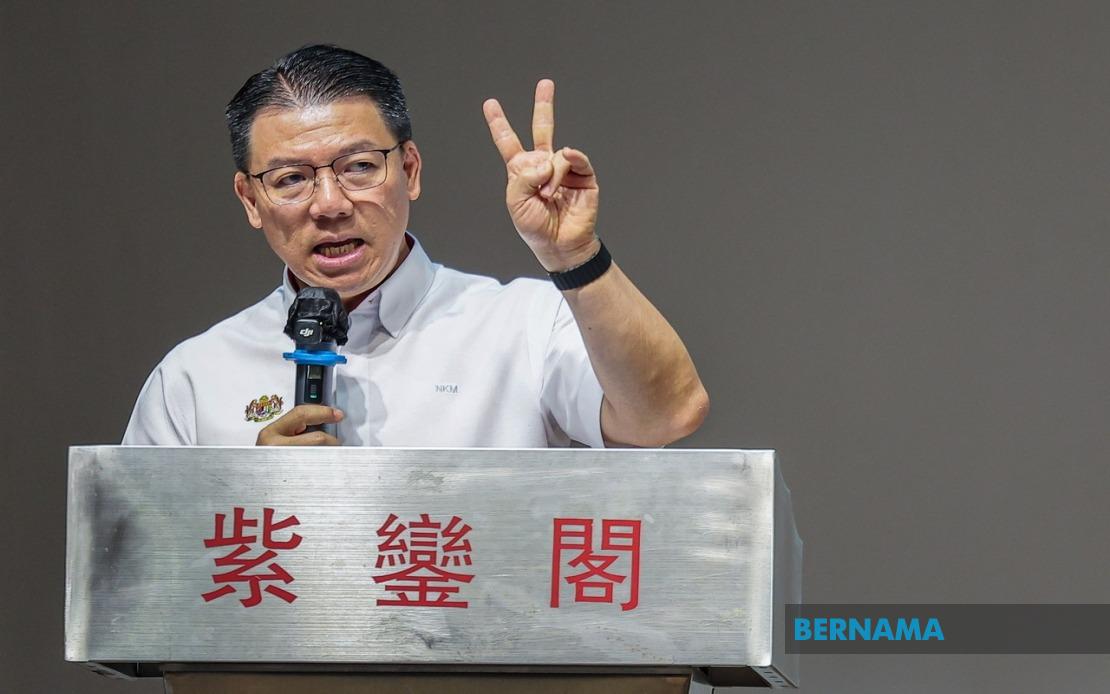
Malaysia's commitment to supporting non-Muslim religious infrastructure took tangible form through a RM200 million allocation committed by the Ministry of Housing and Local Government over four years beginning in 2023. Housing Minister Nga Kor Ming announced the scale of this investment during a ceremony in Kluang, Johor, where the government handed over maintenance grants to local places of worship. The programme, formally known as the Non-Muslim Houses of Worship (RIBI) Maintenance Initiative, extends across the country to benefit churches, gurdwaras, Hindu temples, Buddhist temples and related community associations.
The demand for maintenance support among Malaysia's diverse religious communities has proven substantial. Through the digital e-RIBI System established to process applications, the ministry has received 1,478 requests valued at more than RM279 million in aggregate. This gap between allocated funding and requested maintenance—approximately RM79 million—underscores the genuine infrastructure needs facing these institutions after years of wear and deferred upkeep. The high volume of applications indicates that religious communities have embraced the initiative and demonstrates long-standing maintenance backlogs across the nation's non-Muslim worship centres.
Johor state serves as a focal point for the programme's implementation. The state has received RM18.75 million in total allocations from May 2023 through May 2026, benefiting 154 places of worship across various faiths. In the current financial year alone, the state secured RM3.14 million to support 27 institutions, funds earmarked for renovation, structural maintenance, new construction and emergency repairs. This phased approach allows the ministry to systematically address deteriorating facilities while managing capital expenditure across Malaysia's thirteen states and three federal territories.
The initiative carries broader political significance beyond infrastructure. Minister Nga framed the maintenance programme within the government's wider MADANI framework, which emphasises inclusive growth and social cohesion. His remarks highlighted a deliberate contrast between bridge-building and wall-building, between fostering unity and encouraging division—language that implicitly references Malaysia's history of interethnic tensions and contemporary political polarisation. By ensuring that Malay, Chinese, Indian, Iban and Kadazan-Dusun communities all benefit from state resources, the government positions itself as transcending narrow communal interests in favour of national development.
Economic stability forms part of the government's rationale for this investment. Minister Nga connected the maintenance initiative to broader macroeconomic objectives, arguing that political stability built on genuine inclusion creates the conditions for currency strength, foreign investor confidence and employment creation. This framing suggests that religious harmony functions not merely as a moral imperative but as a prerequisite for Malaysia's competitive positioning in regional and global markets. The argument carries particular weight in Southeast Asia, where several neighbours have experienced sectarian conflict that damaged economic performance.
Transparency mechanisms underpin the programme's credibility. KPKT committed to professional, efficient and transparent monitoring of all approved projects to ensure that allocations reach genuinely deserving organisations. This emphasis on oversight reflects awareness that government programmes addressing religious institutions require rigorous governance to maintain public confidence across communities and prevent perception of favouritism or misappropriation. The digital e-RIBI System itself facilitates transparency by creating a documented audit trail of applications and approvals.
The diversity of institutions supported by RIBI maintenance reflects Malaysia's religious pluralism. Churches serve primarily Christian communities; gurdwaras serve Sikhs; Hindu temples serve the Hindu population; Buddhist temples serve various Buddhist traditions; and numerous other associations serve minority faiths and mixed-faith community purposes. This comprehensive approach recognises that Malaysia's constitution protects freedom of religion and that equitable state support for infrastructure crosses sectarian boundaries. However, the distinction between Muslim and non-Muslim places of worship in the programme's nomenclature also highlights that Malaysia's federal structure provides separate channels for Islamic religious infrastructure, typically funded through state religious departments.
The maintenance challenge facing these institutions reflects both age and neglect. Many churches, temples and gurdwaras across Malaysia were constructed decades ago, some during the colonial or early independence periods, and have accumulated deferred maintenance. Voluntary contributions from congregations, while significant, often prove insufficient for major structural repairs, roof replacements or accessibility improvements. Government support therefore fills a critical gap that allows these facilities to remain safe, functional and welcoming to worshippers and visitors.
Implementation across Malaysia's diverse geography presents logistical complexity. Rural areas typically have fewer resources and smaller congregations than urban centres, yet often face greater difficulty accessing skilled contractors and materials. The RIBI initiative must balance equitable distribution with practical delivery, ensuring that remote places of worship receive attention without being disadvantaged by infrastructure costs. This consideration proves especially relevant in East Malaysia, where scattered settlements and distance create unique maintenance challenges.
The programme's four-year framework provides predictability but also highlights resource constraints. With applications totalling RM279 million against RM200 million in allocated funding, further tranches of government support will likely be required in subsequent budget cycles. The ministry's ability to demonstrate programme success—through completed renovations, improved facilities and community satisfaction—will influence future funding decisions and shape policy toward other minority-serving institutions.
Regional context amplifies the significance of Malaysia's approach. Compared to some neighbouring countries where religious minorities face systematic disadvantage or discrimination, Malaysia's willingness to publicly fund non-Muslim religious infrastructure demonstrates relative institutional maturity. This positioning enhances Malaysia's international reputation as a moderate Muslim-majority democracy respectful of religious pluralism, credentials valuable for diplomacy, trade relationships and attraction of international talent.
The KPKT 4.0 Sentuhan Kasih Programme 2026, the broader initiative within which RIBI maintenance sits, exemplifies the government's strategy of combining infrastructure investment with explicit messaging about inclusivity and care. This approach aims to translate abstract commitments to unity into concrete improvements in citizens' lived experience, demonstrating that political rhetoric translates into resource allocation benefiting all communities. For Malaysian voters, particularly from minority faiths, such programmes provide tangible evidence that their interests receive government attention.

