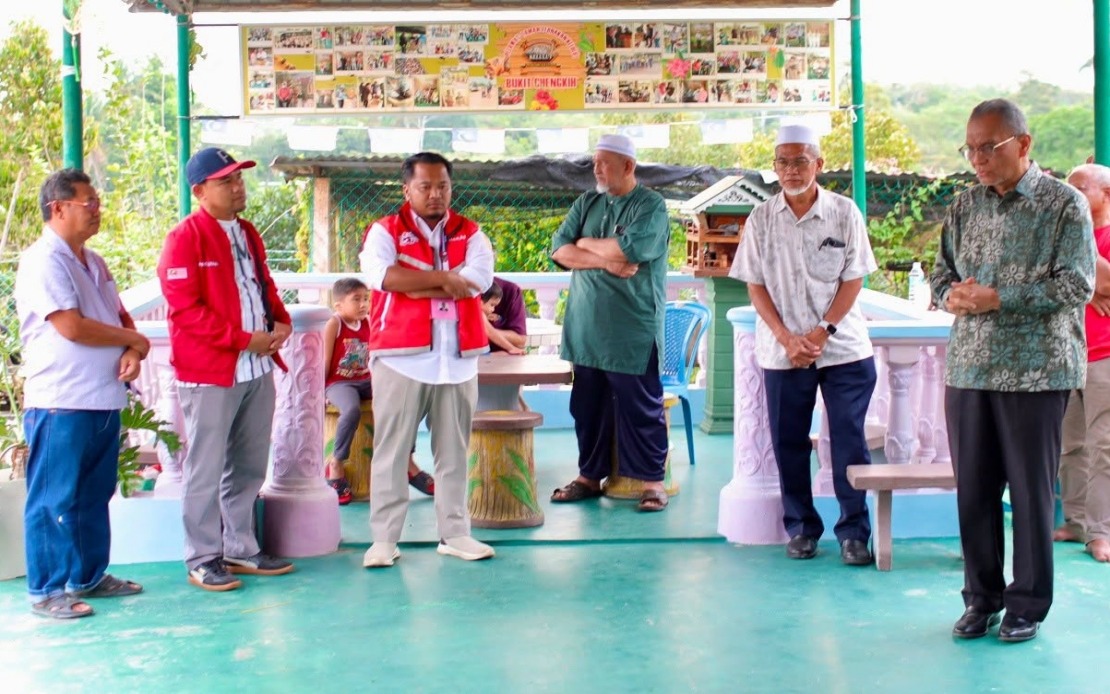
The Pakatan Harapan administration has greenlit a substantial healthcare investment package worth RM328 million for Negeri Sembilan, encompassing two dozen infrastructure and upgrading initiatives intended to broaden public access to medical services across the state. Health Minister Datuk Seri Dr Dzulkefly Ahmad, who serves as Amanah vice-president, unveiled the commitment during a public announcement, framing the expenditure as tangible evidence of the government's dedication to translating economic gains into direct welfare improvements for ordinary Malaysians.
Beyond the primary allocation, an additional RM26.6 million has been directed toward the Bitara MADANI programme, specifically targeting the rehabilitation and modernisation of 88 deteriorating clinics and medical facilities throughout Negeri Sembilan. This dual-track approach signals an attempt to address both major infrastructure gaps and the day-to-day operational challenges facing primary healthcare providers in the state. The clinic refurbishment scheme represents a systemic effort to ensure that even smaller health centres receive adequate resources for renovation and equipment upgrades.
Dzulkefly characterised the healthcare investment push as indicative of an administration fundamentally committed to transparent governance and genuine public-interest orientation, contrasting what he described as delivery-focused policymaking with the electoral promise-making typical of previous administrations. His statement carries particular weight given the proximity of the 16th Negeri Sembilan state election, during which such infrastructure commitments inevitably feature as campaign platforms. The framing suggests an effort to establish a record of substantive implementation rather than aspirational pledges.
The financial capacity to undertake these healthcare improvements stems partly from prudent budgeting at the state level, according to Dzulkefly's commentary. He credited Menteri Besar Datuk Seri Aminuddin Harun's fiscal management for enabling the state to post a revenue surplus of RM203 million, a figure he characterised as substantially exceeding previous administrations' financial positions. This 1,450-fold improvement over the prior surplus level—if accurate—would suggest either significant deterioration in previous governance or notably improved tax collection and spending efficiency under current leadership.
Meanwhile, the broader investment climate in Negeri Sembilan appears to have strengthened noticeably. Total invested capital has expanded to RM19 billion under the Pakatan Harapan tenure, representing a 6.6-fold increase by Dzulkefly's measure. Such expansion typically reflects improved investor confidence, better business conditions, or successful attraction of major economic projects. For a state comparable in size to Negeri Sembilan, this scaling-up of investment inflows carries implications for employment generation and long-term economic resilience, though the breakdown between industrial, commercial, and infrastructure investments remains unclear from available information.
These healthcare and economic announcements arrive amid heightened electoral activity in Negeri Sembilan, where nearly 860,000 registered voters—including just over 7,000 postal voters—are preparing to cast ballots across 36 state constituencies. The timing of major infrastructure announcements immediately before such contests is standard political practice in Malaysia, though the substance of the healthcare commitment itself merits independent evaluation of implementation timelines and project specifications. Voters considering their electoral choices would benefit from clarity on whether these initiatives represent new funding or reallocation of existing budgets.
The electoral landscape encompasses notably fragmented competition. Pakatan Harapan is contesting all 36 seats, whilst Barisan Nasional is fielding 25 candidates, Parti Pribumi Bersatu Malaysia 24, and Perikatan Nasional 11. Additionally, four independent candidates are running, alongside single representatives from Berjasa, ASLI, and PSM. This distribution suggests a three-way competitive struggle between the incumbent coalition, the traditional opposition, and the newer Perikatan grouping, with Pakatan's comprehensive candidacy offering voters a direct choice on state-level representation across all constituencies.
For Malaysian healthcare policy observers, the Negeri Sembilan package raises broader questions about resource distribution across states. Whether comparable investment levels are materialising in other states under both Pakatan and non-Pakatan administrations remains an important context. The emphasis on clinic refurbishment through Bitara MADANI also reflects recognition that primary healthcare accessibility—particularly in smaller towns and rural areas—remains a systemic weakness across much of Malaysia, despite the country's reasonably developed tertiary hospital infrastructure. Strengthening preventive and primary care capacity could reduce pressure on larger medical centres whilst improving early disease detection.
The healthcare initiatives also align with post-pandemic efforts to rebuild public confidence in government health services. Malaysia's experience with Covid-19 highlighted both the critical importance of responsive healthcare infrastructure and, in some quarters, concerns about capacity gaps during surges. Investments in facilities and clinic upgrades can contribute to pandemic preparedness and general health system resilience. However, the announcement focuses primarily on infrastructure rather than workforce expansion, which will determine whether physical improvements translate into tangible service enhancements for patients seeking treatment.
Dzulkefly's emphasis on ensuring this development momentum continues suggests awareness that healthcare spending represents a barometer of government credibility with voters. In Malaysian electoral contexts, health and education consistently rank among voters' top concerns, particularly for families with regular healthcare needs. Tangible clinic improvements and new facilities offer visible, accessible evidence of government investment in ways that higher-level policy reforms may not. The framing also implicitly acknowledges that equitable resource distribution between federal capital projects and state-level services has historically been a source of political tension across Malaysia.
Looking forward, the implementation trajectory of these 24 major projects and 88 clinic refurbishments will indicate whether the announced allocations translate into completed, functional facilities within a reasonable timeframe. Delays, cost overruns, or incomplete projects would undermine the transparency and people-focused governance narrative that Dzulkefly advanced. Conversely, successful delivery across these facilities would establish a tangible record upon which Pakatan can campaign in the state election and potentially in future national electoral contests.

