Petaling Jaya City Council (MBPJ) is preparing to transform a vacant parcel of land along Jalan PJS1/30 into a recreation park at an estimated cost of RM400,000, marking another step in the municipality's decade-long vision to expand green spaces across the affluent suburb in Selangor. The project, which awaits budgetary approval, signals the council's commitment to converting underutilised urban land into community-oriented facilities that address growing demands for recreational amenities in an increasingly densely populated area.
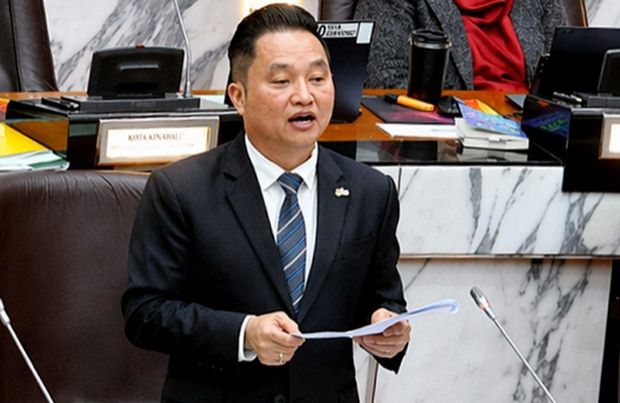
Datak Ng Suee Lim, the Selangor state assembly member who chairs the local government and tourism committee, disclosed the initiative during proceedings at Bangunan Dewan Negeri Selangor in Shah Alam on August 10. His remarks came in response to Dr Afif Bahardin, the Taman Medan state representative from Perikatan Nasional, who had raised concerns about the local authority's broader landscaping ambitions for Petaling Jaya. Ng indicated that the commencement of construction hinges on MBPJ securing the necessary financial allocation within its annual budget cycle, suggesting implementation could begin in 2024 or beyond.
The envisioned park will transcend basic recreational functionality by addressing multiple urban planning objectives simultaneously. Municipal authorities view the development as an opportunity to enhance public safety in the vicinity whilst creating an environment conducive to community gathering and outdoor activities. The initiative also aligns with contemporary urban design principles emphasising walkability, accessibility, and the integration of nature within residential neighbourhoods—considerations particularly relevant for established suburbs experiencing ageing infrastructure.
Ng articulated the broader environmental and social philosophy underpinning the project, emphasising that improvements to landscape quality and biodiversity would contribute to Petaling Jaya's evolution into a greener, more liveable urban centre with reduced carbon emissions. This messaging reflects a shift in Malaysian municipal governance toward sustainability frameworks, albeit one constrained by budget limitations and competing infrastructure priorities. The framing of parks as tools for achieving low-carbon development demonstrates how local authorities are incorporating climate resilience language into justifications for public spending.
The Taman Medan recreation park represents one component of a far more ambitious masterplan adopted by MBPJ. The Damansara Damai People's Park Landscape Masterplan, developed in alignment with the Petaling Jaya Strategic Plan 2030, outlines the creation of five distinct urban parks across the municipality. This staged approach reflects the financial constraints facing local government bodies in Malaysia, which typically lack autonomous revenue sources and depend heavily on state and federal budget transfers. By framing improvements as a long-term vision rather than immediate commitments, MBPJ has insulated itself from expectations of rapid delivery.
Taman Damai Belantara, designated as Urban Park 3 within the masterplan, will distinguish itself through a nature education focus. The facility's design incorporates spaces for urban farming, an amphitheatre suitable for outdoor performances or community events, and an information gallery intended to facilitate environmental learning. These elements reflect professional landscaping best practices that seek to integrate educational programming with recreational amenities, maximising the social utility derived from municipal investment. The phased development approach suggests portions could be operational within one to two years, with complete buildout extending across a longer timeline.
In parallel, Taman Damai Setia—classified as Urban Park 1—has already entered the upgrade phase, with work commencing during the current financial year and continuing across multiple phases into 2024 and beyond. This park will incorporate a family-oriented recreation zone, a multipurpose hall available for community rentals and activities, ecological infrastructure in the form of bioswale systems for stormwater management, a compost facility supporting organic waste reduction, and commercial stall spaces generating rental revenue for the council. The inclusion of revenue-generating facilities reflects municipal efforts to offset maintenance and operational costs through user fees and vendor arrangements.
Extending beyond individual parks, MBPJ is contemplating a linear green corridor project centred on the Sungai Klang riverbank and adjacent sections of the Sungai Penchala. This initiative seeks to activate reserve zones currently underutilised, transforming them into continuous recreational pathways and ecological corridors. The proposed infrastructure would include pedestrian walkways, linking riverbank amenities to commercial districts and residential neighbourhoods throughout the municipality. Such linear park projects have gained popularity across Southeast Asia as municipalities seek to reclaim riparian spaces whilst providing accessible outdoor recreation for urban populations.
The integration of riverbank upgrades with the broader park network reflects a comprehensive approach to urban green infrastructure. Rather than treating parks as isolated facilities, MBPJ envisions an interconnected system facilitating pedestrian mobility and ecological connectivity. This conceptualisation proves particularly significant in Petaling Jaya, where heavy vehicular traffic and limited green space availability have contributed to quality-of-life concerns amongst residents. Walkway networks alongside rivers provide alternatives to car-dependent commuting whilst offering mental health benefits associated with nature access.
Ng acknowledged that all projects—both the discrete urban parks and the riverbank linear park—constitute long-term aspirations dependent on MBPJ's evolving budgetary allocations and strategic priorities. This candid assessment reflects the financial realities confronting Malaysian local authorities, which frequently face constraints preventing simultaneous implementation of multiple capital projects. The staggered approach allows MBPJ to demonstrate progress toward Petaling Jaya Strategic Plan 2030 objectives whilst acknowledging fiscal limitations.
For residents and businesses in Petaling Jaya, these initiatives signal municipal commitment to environmental enhancement and community space development, even if realisation remains subject to funding availability. The projects address documented community needs for recreational facilities and green space whilst positioning the suburb as an environmentally conscious urban centre. However, the phased implementation timeline means visible transformations may require patience from stakeholders expecting rapid change.

