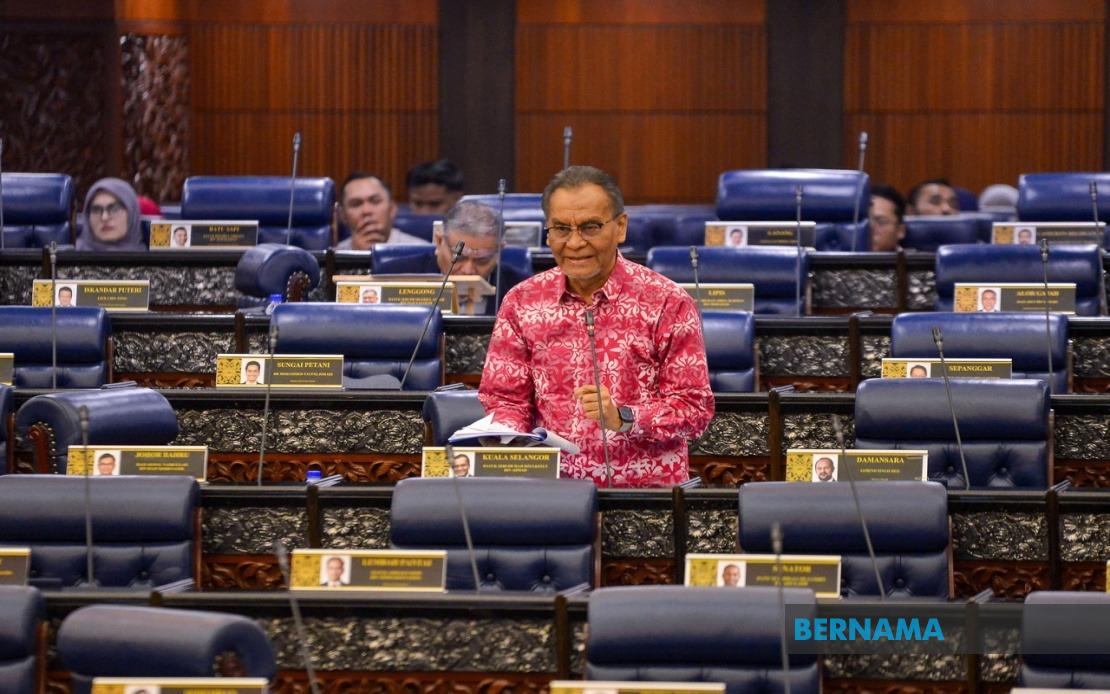
The Ministry of Health's handling of a RM500 million expenditure restriction has drawn scrutiny in Parliament, prompting Health Minister Datuk Seri Dr Dzulkefly Ahmad to provide detailed clarification on the measure's scope and implications. Speaking during question time in the Dewan Rakyat on July 2, Dzulkefly characterised the adjustment as fundamentally administrative rather than operationally disruptive, emphasising that the government has identified surplus allocations that cannot be deployed due to persistent staffing challenges.
The RM500 million restriction, formally imposed by the Finance Ministry on June 5, represents approximately 1.07 per cent of the MOH's annual budget allocation of nearly RM46.52 billion. While the figure appears substantial in absolute terms, the minister framed it within the context of the ministry's inability to recruit sufficient personnel to fill authorised positions. The Public Service Department has approved 18,641 positions for the MOH in the current year, yet recruitment efforts have proven insufficient to utilise the full complement of funded posts, creating a budgetary surplus that the restriction warrant aims to recapture.
Dzulkefly's explanation addresses a fundamental structural challenge within Malaysia's healthcare system that extends beyond simple budgetary cycles. The difficulty in filling authorised positions reflects systemic issues including inadequate remuneration relative to private sector alternatives, geographic constraints that discourage healthcare professionals from accepting rural postings, and the time-consuming nature of recruitment and credentialing processes in the public service. Rather than view this as a failure of planning, the minister presented the adjustment as an opportunity to recycle uncommitted funds while acknowledging the practical reality that vacancies exist despite official approval for their creation.
Crucially, the minister specified that the restriction does not affect operational expenditures, development initiatives, staff allowances, training programmes, or procurement of medical equipment and assets. This delineation proves significant for Malaysian healthcare stakeholders, particularly those concerned about sudden deterioration in service quality at hospitals nationwide and in underserved rural areas. The adjustment instead operates through a reallocation exercise that prioritises efficient deployment of available financial resources, suggesting that departmental management has undertaken internal reviews to identify sustainable cost reductions without compromising frontline capacity.
The parliamentary questions raising concerns about potential service disruption, fielded by Datuk Shahelmey Yahya from Putatan and Abdul Latiff Abdul Rahman from Kuala Krai, reflect genuine anxiety within both the government and opposition benches about health system vulnerabilities. Dzulkefly's response directly contested assertions that the measure would reduce capacity at hospitals, particularly in remote and rural regions where healthcare infrastructure already faces logistical and staffing pressures. His insistence that all fundamental services and established development projects will proceed unchanged appears intended to restore confidence among stakeholders already sensitive to funding fluctuations that might compromise coverage in disadvantaged areas.
Beyond the immediate budget adjustment, Dzulkefly announced significant healthcare policy initiatives that contextualise the government's broader approach to managing medical costs and service delivery. The MOH will introduce a basic health protection plan termed Base Medical and Health Insurance/Takaful (MHIT) beginning this month at selected hospitals, with nationwide rollout scheduled for January 2027. This development addresses accelerating private healthcare costs and insurance premium increases that have placed increasingly burdensome financial pressures on middle and lower-income Malaysian households seeking treatment outside the public system.
The MHIT programme represents an attempt to create an intermediate insurance product that bridges affordability gaps between expensive private healthcare and the capacity-constrained public system. By offering basic yet comprehensive coverage at accessible premium levels, the initiative acknowledges market realities: Malaysia's private healthcare sector has expanded significantly, and a substantial proportion of patients who can afford private treatment increasingly do so, both for perceived quality advantages and reduced waiting periods. The new plan targets consumers seeking protection against catastrophic medical expenses without requiring enrollment in comprehensive private insurance plans with premium costs that may exceed disposable income thresholds.
Complementing the insurance initiative, the government is implementing a Diagnosis Related Groups (DRG) payment system designed to standardise charges and create consistent benchmarking across Malaysia's fragmented hospital landscape. This system will encompass public facilities, private hospitals, university medical centres, and military hospitals, establishing a framework that promotes pricing transparency and prevents arbitrary variation in treatment costs. The DRG approach reflects international best practice in healthcare payment reform, introducing evidence-based cost assessment that links reimbursement to clinical complexity and resource consumption rather than facility prestige or market positioning.
For Malaysian patients and policymakers, these concurrent developments suggest a strategic vision extending beyond simple cost containment. The RM500 million adjustment must be understood not in isolation but as one element within a broader reformation of Malaysia's healthcare financing and delivery mechanisms. The government appears committed to maintaining public system functionality while simultaneously creating alternative pathways for private-sector engagement that do not exclusively serve affluent populations. This two-pronged approach acknowledges that neither pure public provision nor entirely privatised systems have proven adequate to address Malaysia's healthcare challenges across its economically and geographically diverse population.
The minister's parliamentary intervention ultimately sought to separate technical budgetary management from operational healthcare delivery, a distinction that carries particular importance for public confidence. In developing nations, healthcare infrastructure often attracts political controversy disproportionate to actual funding changes, as any perceived reduction generates anxiety about system-wide deterioration. Dzulkefly's detailed clarification, specifying exactly which expenditure categories remain protected while identifying the precise mechanism for achieving savings, represents an attempt at transparency designed to anchor public understanding in factual assessment rather than speculation or worst-case assumptions about service implications.
Moving forward, the success of both the MOH's budget adjustment and the concurrent policy initiatives will depend substantially on execution capabilities. The MHIT scheme must achieve sufficient uptake to create meaningful coverage without cannibalising private insurers' market share unsustainably. The DRG system requires meticulous implementation across diverse hospital environments with varying infrastructure and administrative sophistication. Meanwhile, recruitment challenges that necessitated the RM500 million adjustment will persist unless underlying structural factors—compensation, working conditions, professional development—receive sustained policy attention. For Malaysian healthcare consumers and practitioners alike, the coming months will reveal whether these announced initiatives translate into improved affordability, quality, and accessibility across the system.

