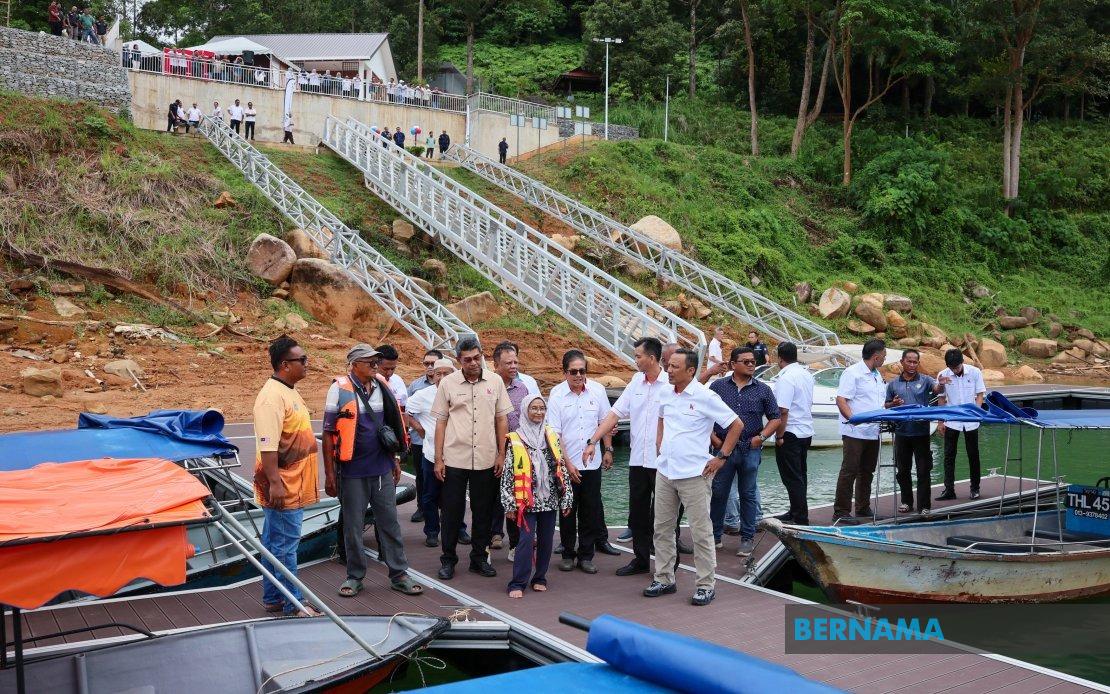
Terengganu's push to modernise its flagship ecotourism asset has crossed a significant milestone with the completion of the RM8.7 million Tasik Kenyir Jetty Development Project on July 6 this year. The infrastructure initiative, shepherded by the Terengganu Tengah Development Authority (KETENGAH) under the Third Rolling Plan of Malaysia's 11th Malaysia Plan, represents a watershed moment for the man-made lake's evolution from informal tourism hotspot to organised, internationally competitive destination.
The jetty's strategic importance lies in solving a persistent operational challenge that has plagued the lake for years. Previously, boat operators at Pengkalan Gawi berthed their vessels in an ad-hoc manner, creating congestion, safety concerns, and an untidy appearance that undermined the destination's premium positioning. Datuk Rozi Mamat, KETENGAH's chairman, articulated the authority's vision during the handover ceremony, emphasising that structured facilities are indispensable for transforming visitor experiences and attracting international tourism revenue. The completed jetty now provides moorings for more than 80 houseboats and speedboats within a clearly demarcated, professionally managed zone.
Beyond mere berthing capacity, the project incorporates comprehensive infrastructure reflecting contemporary best practices in waterfront tourism management. A 600-metre pedestrian walkway connects the jetty to surrounding attractions, improving accessibility and encouraging visitors to explore adjacent facilities. The addition of 86 parking bays addresses a persistent pain point for tourists arriving by private vehicle, while 24-hour guard services and dedicated public toilets elevate hygiene and security standards. Equally important are the behind-the-scenes systems: electrical substations and water supply infrastructure ensure houseboat operators can provide comfortable, modern amenities to their guests—a critical factor in commanding premium nightly rates in the competitive ecotourism market.
Tasik Kenyir's positioning as Southeast Asia's leading man-made lake ecotourism destination hinges on its ability to differentiate itself from competing venues across the region. Malaysia's natural attractions increasingly face competition from Thailand's limestone karsts, Borneo's jungle lodges, and Vietnam's emerging tourism circuits. Investment in modern, safe, and aesthetically pleasing facilities is not luxury but necessity. The jetty project signals KETENGAH's recognition that Terengganu can capture affluent domestic and international travellers seeking authentic yet comfortable nature-based experiences. The facility's operational efficiency—enabled by streamlined docking procedures, waste management systems, and organised queuing—will reduce visitor frustration and extend average length-of-stay, multiplying indirect tourism spending across the local economy.
The project emerges within a broader revitalisation framework. KETENGAH's 2024 development allocation of RM48.36 million encompasses 28 initiatives across Dungun, Hulu Terengganu, and Kemaman, with Tasik Kenyir absorbing a disproportionate share of strategic investment. Six concurrent projects target different visitor segments and experience tiers. Upgrading the Sungai Petang Kelah Sanctuary Complex caters to wildlife enthusiasts, while the Herbal Park redevelopment appeals to wellness-focused tourists. Slope repairs at established attractions address deferred maintenance, and the Pulau Petang tourism facility overhaul enhances island-based activities. The Gawi Point mini park introduces a community-centric dimension, suggesting authorities recognise that sustainable tourism development requires local engagement and benefit-sharing.
This multi-project orchestration reflects a shift in how Malaysian authorities approach tourism infrastructure. Rather than isolated marquee projects that occasionally flounder from poor maintenance or misalignment with visitor behaviour, the coordinated approach acknowledges that destination competitiveness depends on ecosystem-wide quality. A gleaming jetty loses appeal if beaches remain neglected or sanctuary trails fall into disrepair. Conversely, comprehensive upgrading creates synergies: improved parking encourages day visitors who support food vendors and guides; organised boat facilities reduce environmental stress; modern amenities justify premium pricing that raises operator incomes and reinvestment capacity.
For Malaysian tourism stakeholders, the Tasik Kenyir model offers instructive lessons. The lake's success in attracting roughly 400,000 annual visitors already positions it among Terengganu's leading revenue generators, yet the ceiling remains far below its potential. Regional benchmarking suggests similar-scale attractions in Thailand and Indonesia achieve 800,000 to 1.2 million annual visitors through sustained infrastructure investment and aggressive marketing. The jetty completion should catalyse capacity expansion along the entire value chain—from accommodation providers constructing additional houseboats to guide services and restaurant operators bidding to lease franchise spaces within the new facilities.
The project's timing reflects broader policy recognition that Malaysia's tourism sector requires stabilisation and growth following pandemic disruptions. While international visitor arrivals have recovered toward pre-2020 levels, the competitive landscape has hardened. Chinese tourists, historically Malaysia's largest source market, now face an expanding range of Southeast Asian alternatives. Domestic tourism from urban Peninsular Malaysia remains resilient but demands world-class facilities to justify travel time and expense. Tasik Kenyir's modernisation addresses both audiences: it appeals to quality-conscious international travellers while offering urbanised Malaysians an accessible, professional-grade ecotourism experience comparable to international standards.
Operational success will ultimately determine whether the RM8.7 million investment catalyses the projected economic multiplier effects. The jetty's physical infrastructure means nothing if management systems prove inadequate, maintenance is deferred, or pricing alienates local operators. KETENGAH's credibility rests on demonstrating that authority-managed facilities outperform private alternatives in balancing profitability, equity, and environmental stewardship. Transparent operator allocation procedures, fair fee structures, and visible reinvestment of revenues will be scrutinised by business associations and local communities already navigating the transition from informal to formal tourism economies.
Looking forward, Tasik Kenyir's evolved infrastructure should attract investment from houseboat operators and hospitality chains considering exposure to Terengganu's tourism economy. Improved boat facilities reduce operational friction; standardised amenities enable economies of scale; and professional management reduces regulatory and reputational risk. The jetty may thus serve as a catalyst for private capital inflow that expands accommodation supply and service quality beyond what government funding alone could achieve. Within five years, the destination could plausibly double visitor volumes, generating sustained employment and tax revenue that justify the initial capital outlay and support further infrastructure rounds.

